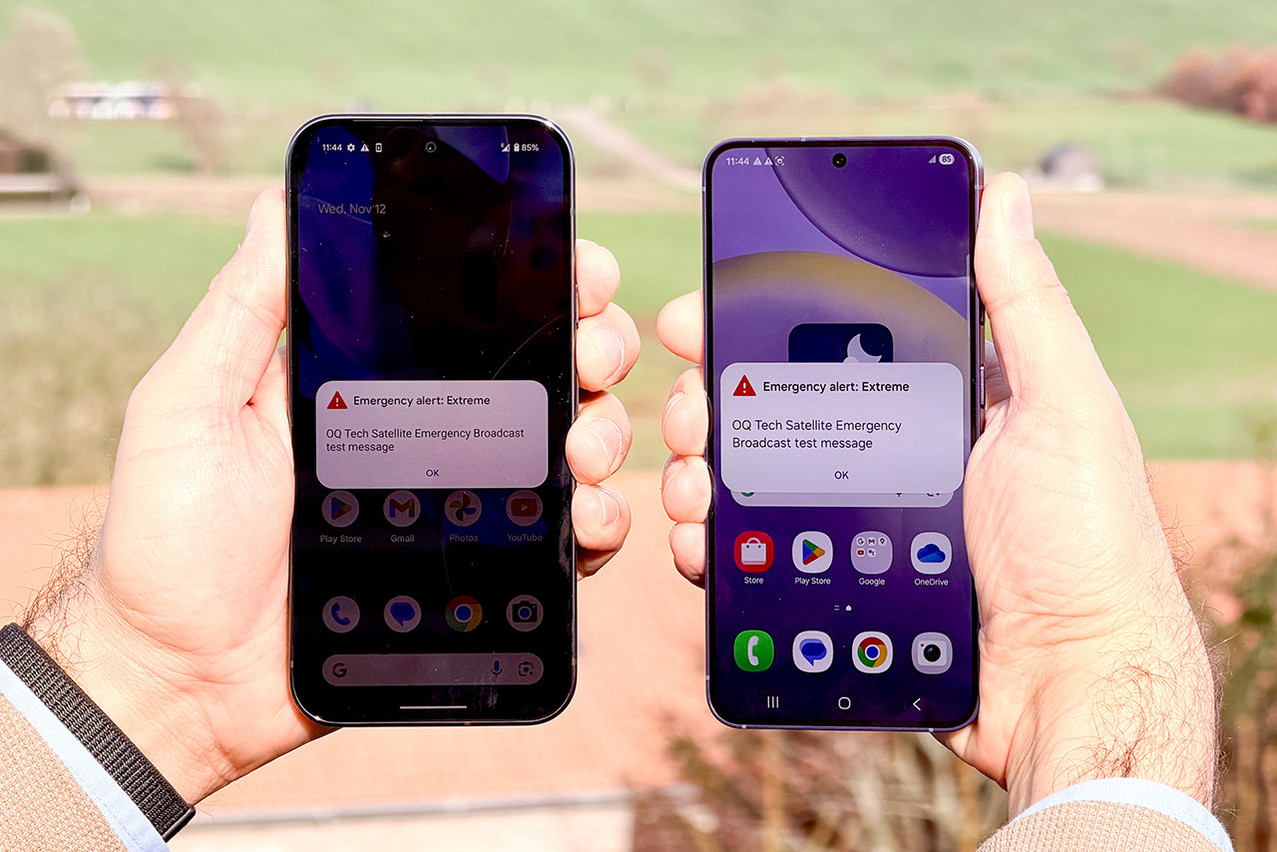
The story begins with a test, a test that could weigh heavily on European digital sovereignty. In Luxembourg, an emergency message was transmitted from a low-earth orbit satellite directly to ordinary smartphones—iPhone or Android—without any application, software update or specialised hardware. OQ Technology, thanks to its LEO (Low Earth Orbit) constellation and high-priority 60MHz S-band MSS (Mobile Satellite Services) spectrum, has achieved Europe’s first transmission of an emergency message directly from space to a standard mobile phone.
In this demonstration, OQ sent the signal uplink to the satellite after receiving, upstream, the message and authorisation from the public entity involved, such as civil protection. The satellite then sent the alert back downlink to the targeted geographical area. This architecture, based entirely on 3GPP NTN (Non-Terrestrial Network) standards, enables the phone to receive the message without any hardware or software modifications.
The plug-and-play character is not insignificant. It stems from the fact that OQ’s technology is already integrated into 3GPP standards versions 17 and 18, designed to enable existing devices to talk directly to satellites. OQ is therefore not using proprietary technology to be installed on smartphones, but a spectrum and protocol already recognised by the mobile industry.
A new layer, not an alternative
Contrary to popular belief, this technology does not bypass mobile operators. It does not replace terrestrial networks or create an independent parallel channel. On the contrary, Direct-to-Device is part of the 3GPP standards, which guarantees its integration into the existing ecosystem. The smartphone remains linked to its operator; the satellite only comes into play when the mobile network is unavailable or disrupted. The novelty therefore lies not in disintermediation of the market, but in the addition of a complementary layer, native and European, capable of ensuring emergency transmission even in the event of failure of the terrestrial network.
This success is a turning point for Europe’s sovereign space capabilities.
The demonstration in Luxembourg showed a smartphone tethered to a European space network, working as if the signal was coming from a terrestrial antenna, when it was actually being transmitted by a satellite. OQ points out that this capability is crucial when networks are down, overloaded or affected by a cyber attack, including for public alerts and disaster management.
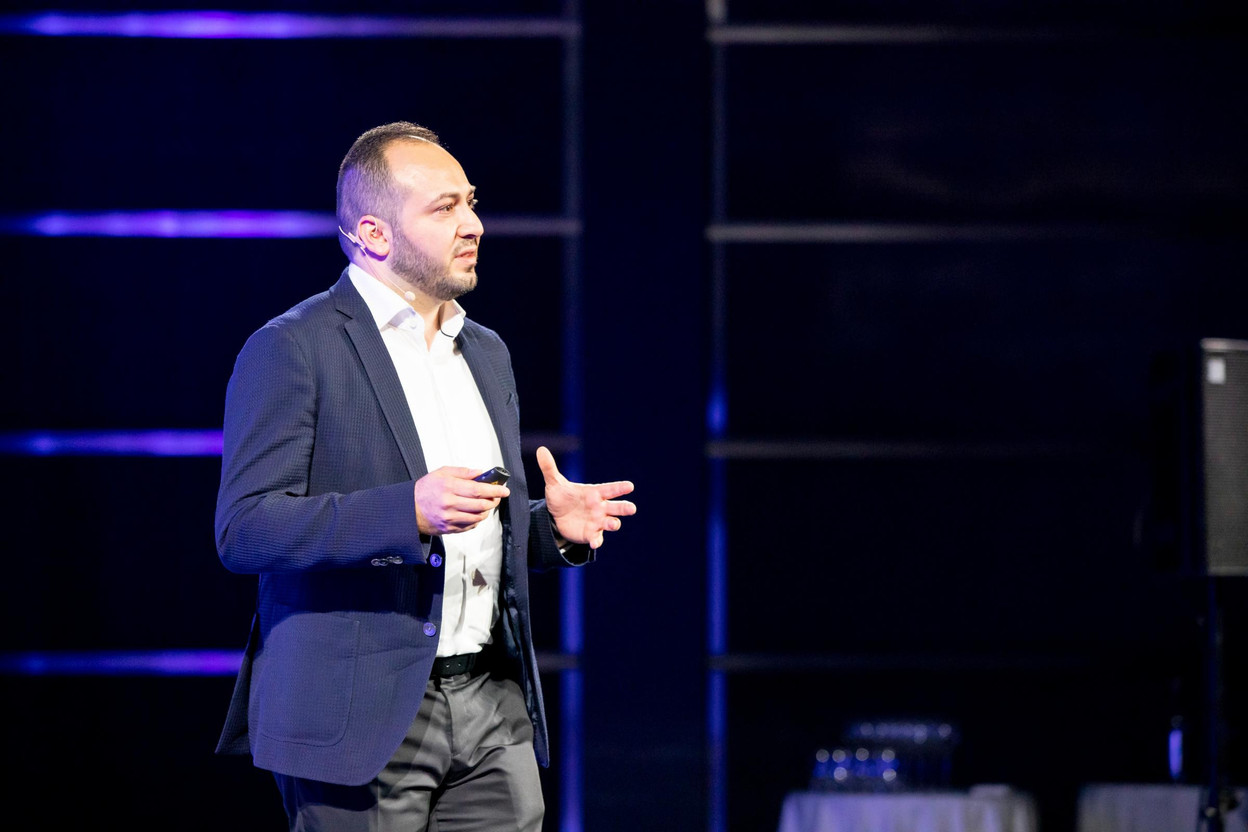
“This success represents a turning point for Europe’s sovereign space capabilities,” says Omar Qaise, founder and CEO of OQ Technology. He points to the combination of MSS spectrum, an operational LEO infrastructure and standardised technology that makes it possible to reach a smartphone “anytime, anywhere”.
A market in billions
The global context makes this European breakthrough all the more noteworthy. The D2D market is attracting record investment: recent agreements in the sector—EchoStar-SpaceX, Apple-Globalstar, Vodafone-AST SpaceMobile, Viasat-Space42 and Lynk-Omnistar—bear witness to a veritable race to master the spectrum capable of communicating directly with a telephone. According to public data, SpaceX paid $17 billion for access to D2D spectrum in its partnership with EchoStar. This trend has led to a surge in the value of satellite mobile frequencies. In this landscape dominated by American players, the demonstration by OQ, a European operator based in Luxembourg, is a strong strategic signal.
It remains impossible at this stage to assess the precise impact of this breakthrough on OQ’s valuation. However, the information confirmed in the press release shows that the company has all the essential building blocks: priority MSS spectrum, operational satellites, standard 3GPP technology, a European concession and IMT band partnerships. All these components make OQ one of the few players capable of offering a real, operational D2D service on the continent.
OQ is also part of the European standardisation ecosystem, participating in 3GPP working groups dedicated to non-terrestrial networks. The company claims that its integration into standards ensures native compatibility with existing smartphones and operators, promoting global interoperability and large-scale scalability.
Direct voice services under consideration
The rest of the roadmap has already been announced: after emergency messages, OQ plans to launch direct voice services to mobile phones next year, a step that would bring the user experience even closer to total continuity between terrestrial and satellite networks. Omar Qaise is talking about real-time text-to-voice services sent directly from space to ordinary devices.
Supported by the Luxembourg Space Agency, ESA, the European Innovation Council and the Cassini accelerator, OQ illustrates a well-identified Luxembourg dynamic: a small country that regularly finds itself ahead of the game in global technological niches, in this case those where European digital sovereignty is at stake. The company combines European spectrum, standardised technology, in-orbit infrastructure and industrial ambition, in a market estimated to be worth several billion dollars.
The message sent from space was just a test. But a test that could mark the start of a new era for European mobile communications, where connectivity no longer depends on the presence of a terrestrial network, but on the ability of a smartphone to talk directly to a European satellite. For Luxembourg, it’s another world first; for Europe, it could be the beginning of a new-found sovereignty in a critical area: emergency communications.