Last year, same venue, same event, it was Taylor Swift who, indirectly, invited herself onto the stage, via star speaker Ken Hughes, who urged registered professionals to emulate the Queen of Pop by pampering their clients as she herself does her fans.
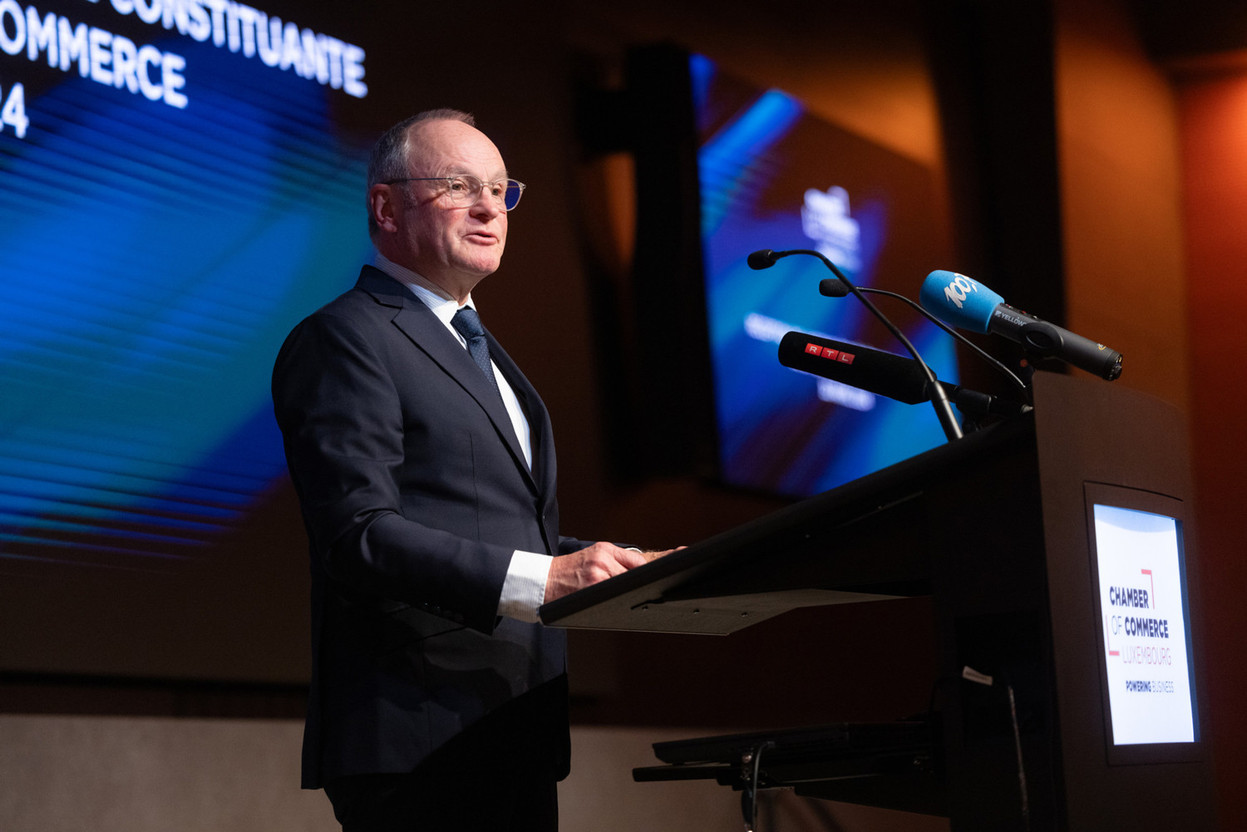
For the fourth edition of the Future of Commerce, organised on Tuesday 23 September at Luxexpo The Box under the aegis of Luxembourg Confederation, the more than 230 participants were treated to some rather more muscular speeches, designed to shake them up, at a time when technologies are changing our reference points at the speed of sound. The common thread running through this Future of Commerce 2025 was digital transformation.
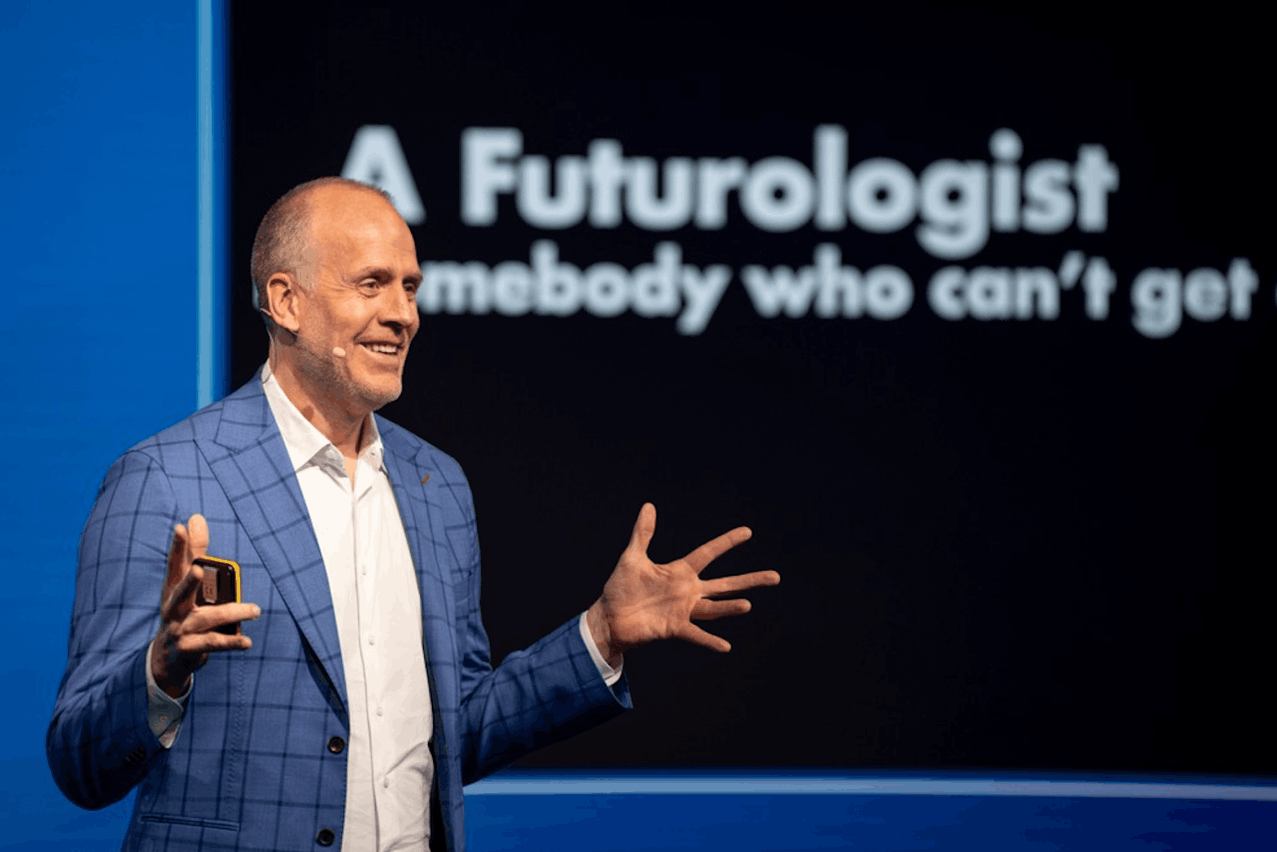
"Find the courage within yourself to be an idiot!" thundered Swedish futurologist Magnus Lindkvist (before explaining himself). "Spend less time cleaning up yesterday's m***!", then launched (before explaining himself) Belgian lecturer Peter Hinssen, who is also a professor at the London Business School (among others) and a best-selling author, during a keynote, arriving at this state of affairs: the future is now.
The artificial lawyer surpasses the human
Magnus Lindkvist also came up with this idea. The first to address the audience, the Scandinavian dwelt on the many revolutions brought about by AI and its uses. He gave many examples. Like that of "a major law firm that has created an AI lawyer. To prove its effectiveness, they made it compete against a human lawyer. They designed a big American contract, full of traps, mistakes, ambiguities, all the things that lawyers hate. The human lawyer found about 88% of the mistakes. The AI found 95%. The human lawyer took 90 minutes, which represented two billable days' work for him. The AI took just under a second..."
"This is radically changing the way we look at work. And this is just the beginning. In the next decade, for the same amount of money, you'll have the mental capacity of all humanity - a god in your pocket," he continued.
"Dancing" with uncertainty rather than enduring it
Crises are multiplying, every morning a new war breaks out, a new geopolitical disorder emerges: The times, he explained, are thus characterised by "an index of turbulence higher than at any time for 200 years". But the same applies to these uncertainties and fears of tomorrow as to the regulations, directives and other pieces of legislation that are piling up in the cupboards of decision-makers: rather than endure them, Magnus Lindkvist invites us "to dance with them", by being creative.
Innovation, between caterpillar and butterfly
"My most important message is that, as a civilisation, we have forgotten our experimental roots, in favour of risk management, trying to avoid, control, secure. Yet experimentation is crucial. He uses the image of the caterpillar that becomes a butterfly. Not a sexy caterpillar at first. But then it becomes majestic. But you have to try. Like Redbull or Nespresso, which experienced "20 years of financial losses before George Clooney"... and before achieving success. "Too many companies are only interested in beauty and success - in what's already working - when they should be looking for the slimy, strange, ugly caterpillars." Dreaming of the butterfly.
Try, then. And be a pioneer. Magnus Lindkvist recalls a conference organised in Norway. The room was filled, not with chairs, but with Pilates balls. "Nobody dared sit down, nobody wanted to be the first. And then someone did, soon joined by one, two, 20 people, then the whole room. You all know this person. The idiot. There's an idiot in every company. If you don't know who it is in yours, it's you. Above all, find the courage within yourself to be that idiot who sits on the ball. It's not just about success and money. It's also about one day being able to say to the next generation, and generations to come: 'We were there when the future began.'"
"The 'never normal' is the new reality"
Following him, entrepreneur and lecturer Peter Hinssen used much the same language. "I'm obsessed with big changes", introduced the man who also teaches and produces books. "You may know the story. The writer Ernest Hemingway goes bankrupt. A journalist asks him how it happened. He replies: 'In two ways: gradually... and then suddenly. That's exactly the world we're entering." Industrial revolution, railways, telecommunications, digital... All these changes follow "the same pattern": slow start, rapid acceleration, then installation in our lives as something "normal". "But in reality, things are happening faster and faster. And the question becomes: can you handle the speed?" he asked the audience. "What if 'never normal' is the new reality? In a world of volatility, you can do two things: either say 'I want to protect myself, I'm going to hedge, I'm going to mitigate the risks', or 'You know what? I'm going to use that. I want to take advantage of the potential of the normal never'."
Before it's too late...
"Timing is more important than ever," hammered Peter Hinssen. "Whatever you do in life, you follow this pattern: you start, you grow, you peak, then you decline. You can apply this to a product, a brand, an organisation. To life itself. In the past, any of you could wait until you were at your peak and then innovate. But that doesn't work any more. In this never normal, you have to innovate when you can, not when you need to. Because if you wait until you need it, it will be too late."
In relation to AI, "I have never seen a technology become mainstream so quickly", he said. For Peter Hinssen, there are two points to remember: "Reasoning and agents."
On reasoning, "these models don't just generate content, videos, text, images. They're starting to get smarter. They have logic."
The agent takeover
As for the agents... "I spent last week in Silicon Valley. It's all they talk about: agentic AI. A lot of people think that today we build websites for humans, because it's humans looking at them. But, in the future, you'll ask an AI to buy a mattress, a coffee maker or some furniture, and it will look for the best deals for you. And maybe 90% of the traffic to your site won't be humans: it will be agents working for humans, on their behalf. So what we really want to do is find ways to become more productive. We all use digital tools, but are we really that much more productive? No."
"If I were to give you just one piece of advice: don't just look at opportunities to use AI to do interesting new stuff. But also get rid of what I call 'yester work'. And companies are full of it." Peter Hinssen explains: "Today is very important. Tomorrow is even more important. The day after tomorrow is crucial if you want to reinvent yourself. Spend less time cleaning up yesterday's mess! Project yourself onto the day after tomorrow."
Conclusion: "I think we need to innovate faster than ever. This is an opportunity. It's important to paint a positive story, narrative matters. We're going to have to pull out all the stops. But the problem is that we have a limited amount of time. Consider this quote from Winston Churchill: 'If you don't take change by the hand, it will take you by the throat.'
This article was originally published in French.