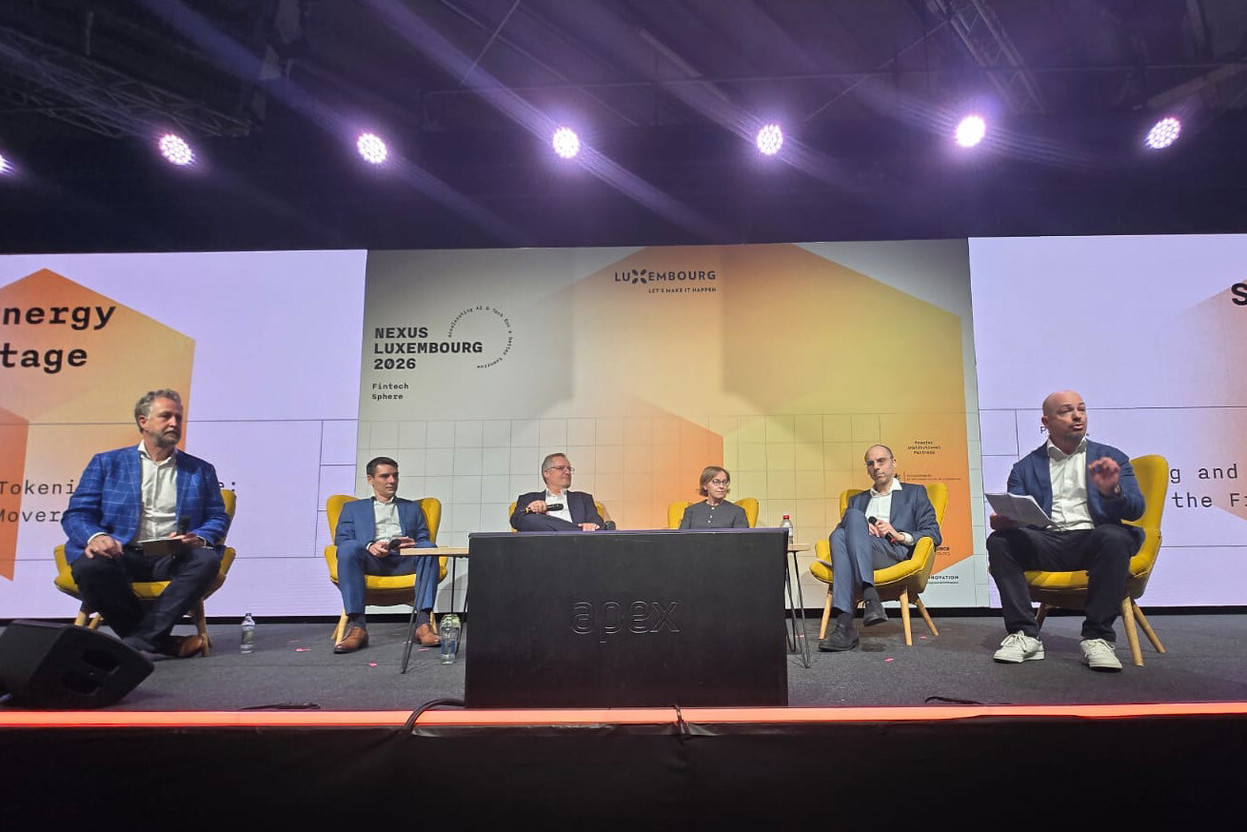
For Fidelity International, the next phase of tokenisation will not be won by putting existing investment products on a blockchain simply for the sake of it. The technology needs to offer investors something they cannot already obtain through traditional fund infrastructure. That is one of the main lessons Fidelity has drawn from the launch of its first tokenised liquidity fund.
“Tokenisation is primarily a distribution topic. It is about digital distribution,” says Emma Pecenicic, Head of Digital Asset Distribution at Fidelity International.
Based in Hong Kong, Emma Pecenicic describes Fidelity’s digital asset strategy as a bridge between traditional and digital finance. One side consists of providing cryptocurrency investment exposure to traditional investors. The other is bringing traditional investment products into digital markets through tokenisation. The latter is now becoming increasingly tangible.
Going beyond the token
Fidelity’s tokenised liquidity fund targets institutional investors and has been designed to allow subscriptions and redemptions around the clock, including at night and during weekends. That required considerably more than issuing a token representing a fund share. “Tokenisation is good, but it is not enough, because you also need to deliver the money to the client,” Emma Pecenicic says.
Fidelity therefore had to build an operational infrastructure capable of functioning 24/7, involving its transfer agent and fund administrator as well as external technology and payment partners. The fund can deliver US dollars through tokenised payment infrastructure, while clients looking to remain within the digital asset ecosystem can also receive stablecoins through Fidelity’s partner Sygnum.
The distinction is important. Fidelity does not want the success of a tokenised investment product to depend on investors adopting one particular form of digital cash. “We want to be agnostic,” Emma Pecenicic says. Whether an investor ultimately wants to use a stablecoin or another form of digital money, Fidelity wants these different forms of cash to operate as access points to the investment product.
Around six months after launch, the fund has approximately $50m in assets under management, according to Emma Pecenicic. Its current investor base is predominantly institutional and digital-native. It includes stablecoin issuers, crypto trading platforms and organisations within the crypto ecosystem that need to manage their treasury assets.
Fidelity has also structured the fund with two tokenised share classes: an accumulation token, where income is reflected in the value of the share, and a distribution token, where income is distributed. The structure reflects another ambition: building tokenised products capable of operating across borders rather than remaining confined to individual domestic markets.
Finding the product-market fit
Luxembourg could have a role in that development. Fidelity’s current tokenised fund is not a European product, but Emma Pecenicic says the asset manager is actively considering opportunities to launch tokenised funds in Europe, including Luxembourg. She rejects the idea that the Grand Duchy is fundamentally behind on tokenisation.
“Luxembourg has always been, I think, ahead of the market on tokenisation,” she says, pointing to the successive legislative steps taken by the country to clarify the legal treatment of blockchain-based securities and the actors involved in their issuance and servicing.
The bigger issue, she argues, is no longer whether it is legally possible to tokenise a fund. It is whether investors have a reason to use one. “The problem is product-market fit,” Emma Pecenicic says. Simply replicating an existing fund on blockchain infrastructure provides little incentive for an investor to change behaviour, particularly when that investor needs to adopt new technological infrastructure to access it.
“If we don’t deliver real features to clients — 24/7 access, for example, or a dividend paid daily — what is the interest for the client in going towards a token?” This is where Emma Pecenicic believes some of the industry’s earlier experiments reached their limits. Tokenisation generated attention and demonstrated that the technology worked but did not necessarily solve an investor problem.
Fidelity is consequently approaching tokenisation as a new distribution infrastructure. Today, the immediate target is crypto-native institutional investors. Tomorrow, Emma Pecenicic expects digital-native retail investors to become increasingly important. A generation of investors accustomed to digital assets is entering a stage of life where wealth preservation and investment products become more important.
Fidelity’s bet is that these investors will expect financial products to be available through the digital platforms and infrastructure they already use. The current institutional product therefore also functions as a way of testing the operational model before potentially reaching a much larger audience.
From sandbox to real money
This shift also changes how Fidelity approaches experimentation. Emma Pecenicic says regulatory sandboxes and pilot projects have generated valuable lessons across the industry. But there comes a point where testing technology in isolation is no longer enough. “When you have to confront real money, that is when you have real conversations with regulators,” she says.
It is also when asset managers need to negotiate contracts with service providers, assess operational risks and obtain internal approvals. Fidelity took slightly more than a year to develop and launch its tokenised fund — a timeframe Emma Pecenicic says is considered relatively quick for bringing such a product to market.
The asset manager chose an outsourced operating model, relying on external infrastructure for some functions while retaining oversight of the product. That oversight involved cybersecurity reviews, risk assessments and the appointment of a smart-contract auditor. The process has therefore consequences beyond the product itself.
“The big learning from the product is not necessarily the launch,” Emma Pecenicic says. “It is that we brought the whole organisation behind the product and increased knowledge and education.” That experience illustrates the distance between announcing a tokenisation project and operating one.
Regulation is gradually clarifying what is possible, but asset managers still need to define the operating models required to issue and manage tokens at scale.
Cybersecurity remains the biggest risk
For Emma Pecenicic, cybersecurity is now the main obstacle the industry needs to address. “The principal risk for me is really cybersecurity,” she says. Interoperability between different blockchain networks comes second.
Fidelity’s fund currently operates on Ethereum. Rather than immediately making the product interoperable across multiple blockchains, the asset manager deliberately chose to limit that complexity because connecting different networks can introduce additional cybersecurity risks. Ethereum was selected because of its existing activity and ecosystem, which Fidelity believes can support distribution.
But it also illustrates the trade-offs that remain. Settlement on Ethereum is not instantaneous. Emma Pecenicic estimates the process at around 15 minutes in the current setup. For the institutional investors targeted by the fund, this is acceptable. Future retail applications may require faster infrastructure, potentially using blockchains capable of settling transactions in minutes or even seconds.
Providing 24/7 liquidity also comes with an economic cost. Fidelity uses liquidity facilities to allow investors to redeem during periods when the traditional underlying markets are closed. Investors seeking liquidity at night or during weekends therefore bear an additional cost. The important distinction is that 24/7 does not mean frictionless or free.
Fidelity nevertheless believes this primary-market model can remain more attractive than forcing investors seeking weekend liquidity to trade their holdings on a secondary market.
Cash comes first
Liquidity funds have emerged as one of the most visible areas of tokenisation, and Emma Pecenicic believes there is a structural reason for that. Before bonds, equities and other securities can move efficiently through blockchain-based capital markets, those markets need a digital form of cash or cash-equivalent liquidity. “The first layer of a tokenised market is cash,” she says.
Stablecoins, tokenised bank deposits and central bank digital currencies can all potentially provide different ways of accessing tokenised investment products. Europe has made progress, but Emma Pecenicic notes that stablecoin adoption remains lower than in Asia or the United States.
That matters because digital cash provides an entry point into the wider tokenised financial ecosystem. For Luxembourg, recent regulatory clarification allowing certain stablecoins to be used in connection with fund investment is therefore a positive development, she says. The next challenge is adoption.
Asia provides useful lessons. Emma Pecenicic points to Hong Kong and Singapore, where regulators have sought to develop not only tokenised funds but the broader ecosystem around them, including stablecoins, digital money and crypto assets.
Luxembourg operates within the wider European framework, which creates different constraints. But Emma Pecenicic sees similarities in regulators’ willingness to clarify rules and enable the industry to move forward.
Fidelity sticks with tokenised liquidity
The tokenisation market is simultaneously expanding beyond liquidity funds. Private assets were among the earliest candidates because blockchain technology promised greater transparency and potentially greater liquidity through secondary markets. More recently, attention has turned towards tokenised ETFs and other listed securities.
Fidelity, however, does not intend to chase every possible use case. “We think there is enough to do on the liquidity side for the moment,” Emma Pecenicic says. With around $50m currently in its tokenised fund, she stresses that Fidelity itself has not yet reached scale. That makes distribution and adoption more important than launching a large number of new tokenised products.
“There is an opportunity, I think, in Europe and in international products around liquidity,” she says. “We are going to play more to our strengths, and for us that will be tokenised liquidity.” Over time, the boundaries between different investment wrappers may also become less obvious. A tokenised fund available on a secondary market and a tokenised ETF, for example, could ultimately provide investors with increasingly similar forms of access.
What will matter is the liquidity surrounding those products and the support provided by asset managers and liquidity providers. For all the complexity of blockchain infrastructure, Emma Pecenicic ultimately returns to a simple test. “It has to bring value to the end client. Otherwise, there is no point.”
And for those trying to determine whether the tokenisation market is moving beyond announcements, she recommends watching one metric above all: the amount of assets genuinely issued on-chain. That is where the gap between experimentation and adoption becomes measurable.