The Dutch government triggered an emergency measure at the end of September by taking control of the governance of semiconductor company Nexperia, despite it being owned by Chinese group Wingtech. The Dutch Minister for Economic Affairs, Micky Adriaansens, invoked a rarely used emergency law because of risks to national and European security. This decision is intended to prevent a situation where the products manufactured by Nexperia would become unavailable in the event of an emergency, she explained. In other words, the authorities feared that a sudden disruption in the supply of Nexperia components could paralyse strategic sectors.
According to the official statement, the trusteeship was decided following "recent and acute signals of serious governance failures" within Nexperia, which threatened "the continuity and preservation on Dutch and European soil of crucial technological knowledge". This trusteeship measure - described by The Hague as "highly exceptional" - enables the Dutch state to block or reverse any internal Nexperia decision deemed to be contrary to the strategic interests of the company and of Europe. It is strictly targeted at Nexperia and presented as temporary (initially lasting one year), the aim being to ensure business continuity without disrupting current production.
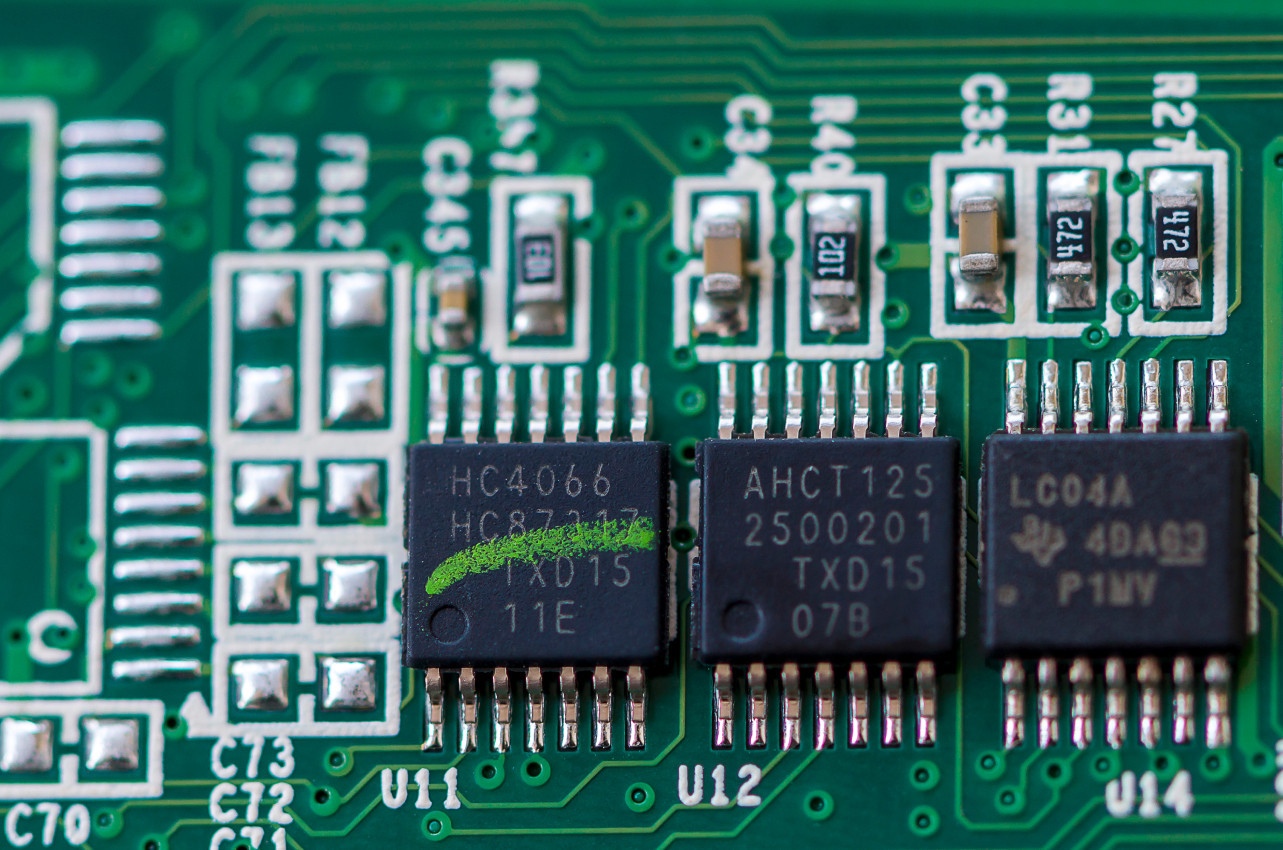
Nexperia is a European company at the heart of the core semiconductor industry, with a heritage dating back to Philips. Formerly a division of NXP Semiconductors specialising in standard components, the company was acquired in 2018 by Wingtech, a Chinese group, for $3.6 billion. It is headquartered in Nijmegen (Netherlands) and has several production sites around the world, including a major factory in Hamburg, Germany - its largest manufacturing site - and another in Manchester, UK. Nexperia specialises in 'essential' semiconductors: components such as transistors, diodes or Mosfet, which are less sophisticated than microprocessors, but essential in large quantities in automotive, industrial or consumer electronics.
With more than 110 billion components shipped per year and almost 10% of the world market share in its segments, Nexperia is one of Europe's leading players in power and signal chips in terms of volume. Its inexpensive but vital components are found in a multitude of equipment - from cars to smartphones - and perform basic electronic functions. The company generates annual revenues of around $2 billion and employs more than 12,500 people worldwide, a significant proportion of them in Western Europe (Netherlands, Germany, UK). This economic and technological importance explains why its fate is of close interest to the European authorities.
These concerns are part of a tense geopolitical context surrounding semiconductors. Washington had already blacklisted Wingtech in December 2024, accusing the group of helping Beijing acquire sensitive chip assets. At the end of September 2025, a few days before the trusteeship, the US tightened its export controls to target any subsidiary more than 50% owned by a blacklisted entity - a rule indirectly aimed at Nexperia because of Wingtech's status. This pressure from the US raised the risk of cuts in supplies of American technologies essential to Nexperia, and therefore a potential handicap for its European factories. Faced with this threat of double dependence (on China for its owner and on the United States for certain technologies), the Netherlands chose to act preventively to lock in local control of Nexperia.
Finally, Nexperia's impact on the European economy - particularly in the automotive sector - weighed in the balance. The Dutch government points out that the company manufactures chips that are used "in the European automotive industry and in consumer electronics". A sudden interruption in these components would have knock-on consequences for many factories in Europe.
Official reactions: tensions between the Hague and Beijing
The Dutch decision has provoked strong reactions from Beijing and parent company Wingtech, reflecting the highly sensitive nature of the case in the context of the Sino-Western technological showdown. As soon as the receivership was announced, the Chinese authorities denounced it as an abusive measure. The influential China Semiconductor Industry Association (CSIA), a lobby group backed by the Chinese government, said it was "firmly opposed to the abuse of the concept of 'national security' to impose selective and discriminatory restrictions on foreign subsidiaries of Chinese companies". For his part, the spokesman for the Chinese Ministry of Foreign Affairs condemned the "excessive use of the concept of national security" and said that China was "determined to defend its legitimate rights and interests" in the face of such actions. The Chinese Ministry of Commerce also reacted by stating that it "opposes interference in the internal affairs of enterprises by administrative means" and that it "will take the necessary measures to safeguard the rights and interests of Chinese enterprises". These words reflect Beijing's position, which sees the Dutch intervention as an act of disguised protectionism and a dangerous precedent that could be used against other Chinese firms abroad.
From Nexperia itself, the discourse is more measured and reassuring. The interim management (now led by CFO Stefan Tilger following the suspension of CEO Zhang) insisted on the continuity of operations. "The [government] order is focused on ensuring business continuity", said Nexperia, which says it is confident in its ability to continue daily production smoothly. A company spokesman said: "We hope to resolve all these challenges quickly, in the interests of everyone", stressing that discussions were under way with the Chinese authorities to obtain an exemption from the restrictions imposed. Indeed, Beijing has retaliated by triggering export-control measures targeting Nexperia: on 4 October, the Chinese Ministry of Commerce banned Nexperia China and its subcontractors from exporting certain finished components and subassemblies produced in China. This ban, issued a few days after the guardianship, puts Nexperia in a delicate situation, caught between two jurisdictions.
Nexperia has informed its European customers that it "can no longer guarantee the delivery of its chips" in the quantities expected. This warning came as a cold shower for many equipment manufacturers and carmakers. ACEA, the European automobile manufacturers' association, said it was "deeply concerned about the risk of significant disruption to vehicle production in Europe if the disruption to Nexperia chip deliveries cannot be resolved immediately". Although they are not 'high-end' semiconductors, Nexperia components are used in large numbers in car ECUs, sensors and electronic systems. "Without these chips, European automotive suppliers can no longer manufacture the parts needed by manufacturers, which threatens to lead to production stoppages", ACEA warned. Major groups such as Bosch (equipment supplier) and the manufacturers Volkswagen, BMW and Stellantis are among Nexperia's customers for various electronic parts. They have all set up crisis units to map the risks and look for alternative solutions. In mid-October, BMW and VW said that their production had not yet been affected, but that they were monitoring the situation "closely" and assessing the stocks available from their indirect suppliers. A spokesman for Bosch confirmed that it was "in contact with Nexperia" to find out how the problem was progressing.
Nexperia does manufacture some of its chips in Europe (notably the silicon wafers in Hamburg), but most of them are assembled and tested in China before being shipped as ready-to-use components. It is precisely this last stage that has now been compromised by the Chinese retaliatory measure, making it difficult to export Nexperia's finished products out of China.
At European level, this case reinforces the advocates of "strategic autonomy" in semiconductors. The EU has already launched an ambitious plan for 2022-2023, dubbed the European Chips Act, with €43 billion of public-private investment to reduce dependence on foreign suppliers. The stated aim is to double Europe's market share of global chip production by 2030 - taking it from around 10% today to 20%.
As summarised in a Fedil press release, Europe urgently needs to "diversify its sources of supply towards reliable partners and speed up the implementation of the European Chips Act", while adopting "a balanced approach combining openness and resilience". In other words, the strategic autonomy advocated aims to be able to act and produce independently when necessary, "while remaining connected and cooperative" with the rest of the world. Fedil expressed its "deep concern about the expected disruptions in the semiconductor supply chain", which are "likely to affect many European industrial sectors, and Luxembourg in particular". In particular, Fedil cites the automotive, industrial electronics, mechatronics and sensor technology sectors as potentially affected in Luxembourg.
Faced with this, Fedil is calling on the Luxembourg government to take action. It recommends working "in coordination with the European Commission" and "getting actively involved in crisis coordination at European level" to assess the impact of the situation and support the introduction of contingency measures. In other words, Luxembourg wants the EU to organise a collective response to prevent the suspension of deliveries by Nexperia (or other chip suppliers) from paralysing entire sectors of the industry. Among the contingency measures being considered could be: finding alternative sources of components outside China, sharing critical stocks between countries or sectors, or even temporary state aid to help companies overcome the shortage.