Will a road built today be able to withstand tomorrow’s floods? Will a hospital remain operational during a prolonged heatwave? Will the electricity grid be able to cope simultaneously with high demand for air conditioning and the effects of the heat on its equipment? These are the kinds of questions the European Commission wants public authorities to answer before making decisions and investing.
Unveiled on 27 October, its framework for climate resilience combines a proposed European law, decision-making tools and several initiatives still in the pipeline. Its aim is to integrate the consequences of global warming into the day-to-day management of local areas and the economy.
This approach complements policies aimed at reducing emissions. These policies are designed to limit the scale of climate change; adaptation is intended to enable us to cope with the effects that are already being felt and those that lie ahead.
A single reference point for anticipating risks
At the heart of the proposal lies a common global warming trajectory: +1.5 degrees Celsius by 2030, +2 degrees Celsius by 2050 and +3 degrees Celsius by 2100 compared with pre-industrial levels. This would serve as a benchmark for Member States to assess risks and prepare their decisions. These levels constitute a working assumption for adaptation, without replacing emission reduction targets. The idea is to plan investments whilst taking into account the conditions under which they will have to operate for several decades.
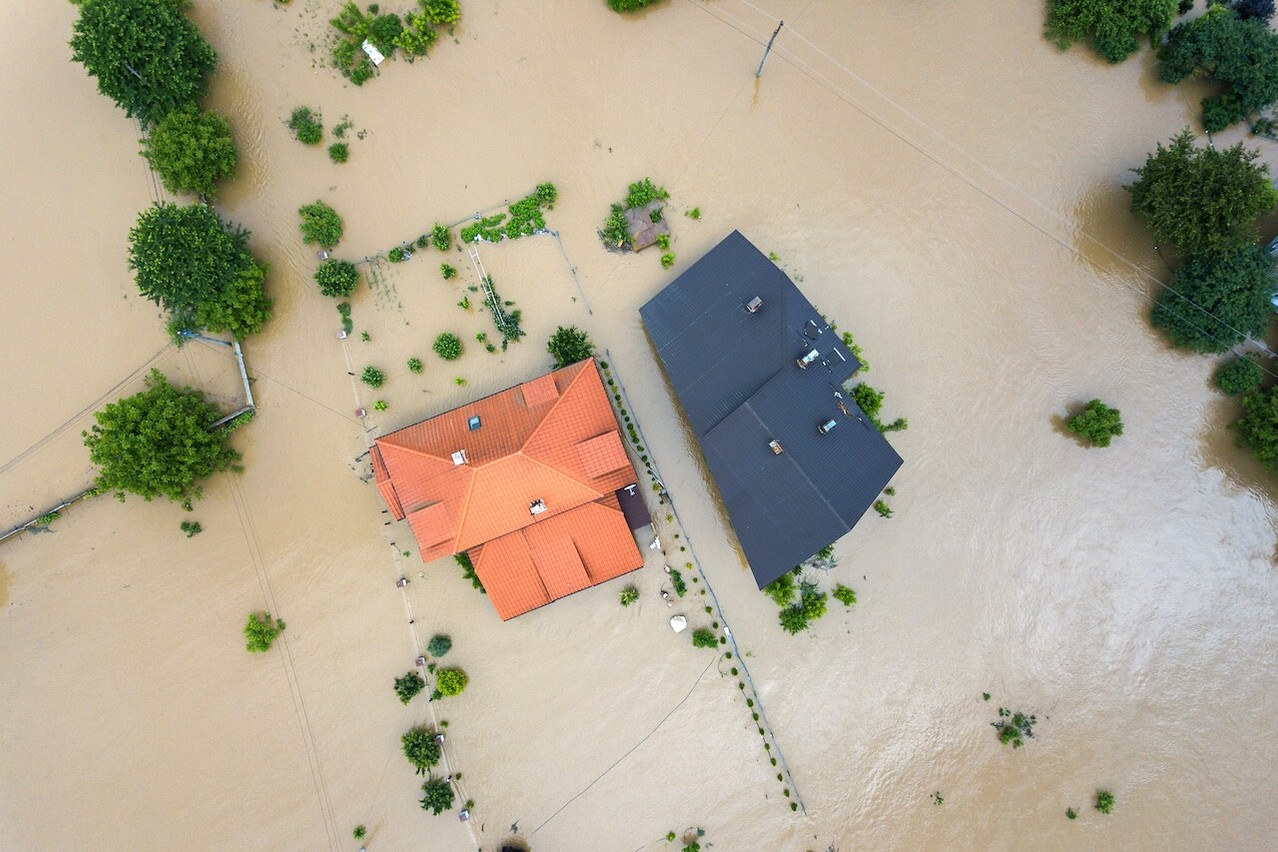
In practical terms, this approach could lead to a review of the design of a flood defence structure, the protection of a water catchment, or the cooling systems in a healthcare facility. The Commission intends to make taking future climate conditions into account a standard practice right from the project design stage. However, Member States would retain the freedom to choose their own responses. The needs of a region prone to wildfires are not the same as those of an area threatened by flooding or water shortages.
A national plan to coordinate action
The proposal provides for more structured national planning, accompanied by more regular and comparable risk assessments. Member States could bring together several existing European obligations into a single national strategic plan.
The issue goes beyond the production of yet another document. Climate-related risks cut across sectors and borders: a drought can affect agricultural production, river transport, energy supply and access to water all at once. Responses must therefore be coordinated.
To assist the authorities and businesses, three digital tools are planned: an interactive map of future climate risks, a directory of adaptation tools, and a platform showcasing solutions that have already been tested in European cities and regions. These should make it easier to move from assessment to deciding on an investment.
A requirement of € 70bn a year
The Commission is also championing its initiative in the economic sphere. According to its estimates, climate-related damage amounted to around €200bn in Europe between 2022 and 2025, or €50bn per year. The EU’s investment needs for adaptation and resilience are estimated at around €70bn per year.
This figure does not represent a new European budget allocation. It reflects the level of investment deemed necessary. To finance this, Brussels is relying on existing European instruments, national support schemes and the mobilisation of private capital. Public funding is intended, in particular, to help stimulate additional investment by businesses.
The Commission emphasises that certain adaptation measures can prevent losses amounting to more than ten times their cost. It also sees this as an industrial opportunity: equipment, technologies and services designed to protect buildings, infrastructure and economic activities.
Better protection for those most at risk
The other area of focus concerns risk distribution. A disaster does not affect all households or all regions in the same way. The most vulnerable people may face a high level of exposure combined with limited resources to protect themselves or rebuild.
The framework thus introduces a principle of ‘fair resilience’, designed to take better account of these disparities. In particular, the Commission plans to identify 100 European regions that are particularly vulnerable to climate change.
It has also announced a climate insurance alliance. This alliance will be tasked with exploring solutions to reduce gaps in cover against natural disasters, encouraging prevention and ensuring sufficient insurance capacity. At this stage, the documents do not set out any new compensation schemes.
A European plan to tackle heatwaves and an initiative on water are set to round off the package. The latter will focus, in particular, on the efficient use of water resources, their reuse and resilience to droughts and floods.
Implementation still to be developed
The framework set out here does not mean that all these measures are already in force. The legislative proposal still needs to be examined by the European Parliament and the Council, whilst several initiatives will be presented separately.
The Commission plans to draw up an implementation plan within six months of the law being adopted, followed by a first European strategic plan in 2028, to be updated every five years. The aim is clear: to make climate change preparedness a permanent criterion in public and economic decision-making. How this is put into practice will now depend on the obligations adopted, the capacity of local authorities to take action, and the resources allocated to prevention.