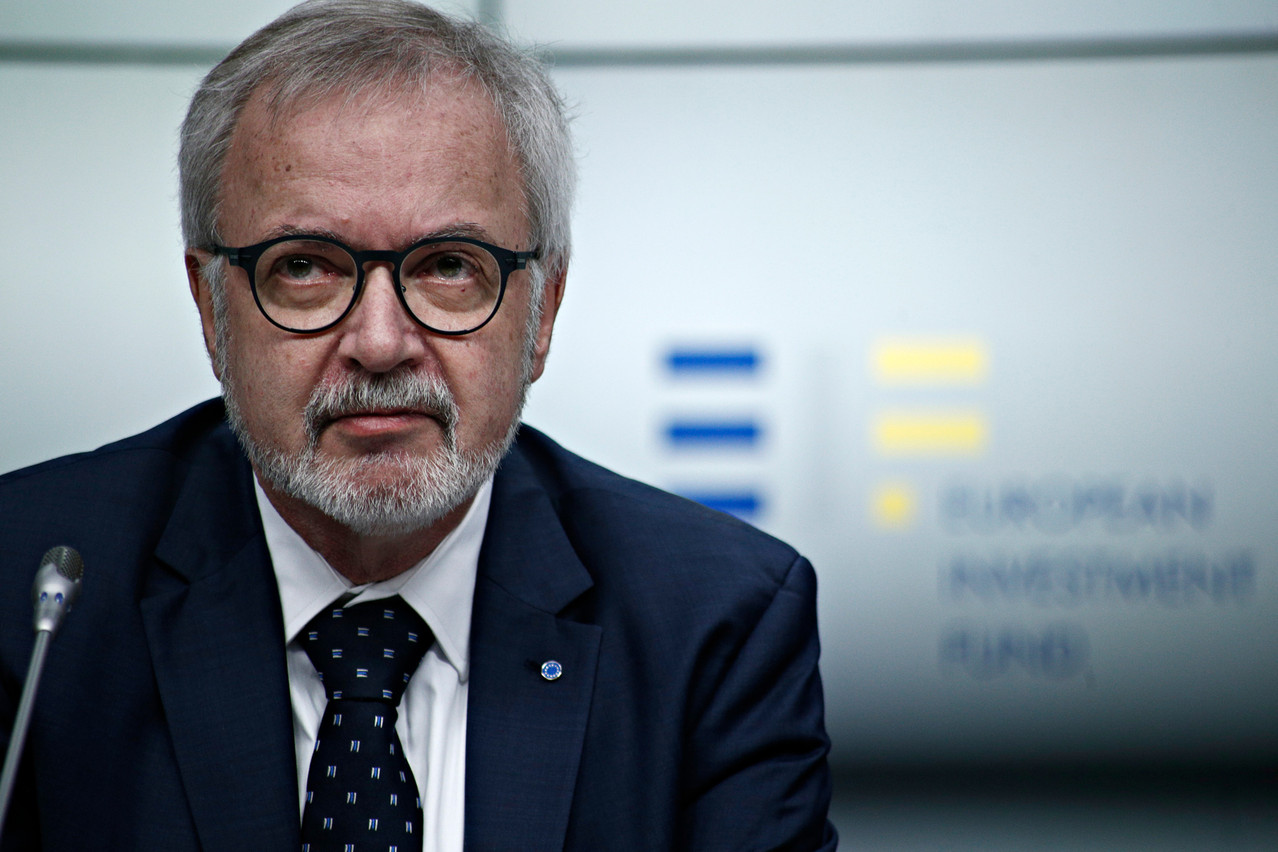
The day after the announcement of the Russian invasion of Ukraine, the EIB had hinted that it might provide financial assistance to the Ukrainians. “We stand ready to urgently mobilise further financial support to the country as part of a coordinated EU and international response to this unprecedented crisis,” said EIB president 
No sooner said than done… Or, at least, in the process of being decided. This Wednesday, before the European Economic and Financial Affairs Council (Ecofin), Hoyer said: “We are very determined to do everything we can to support Ukraine and demonstrate European solidarity with the country... and we will do that with an immediate and significant financial package.”
A package of €700m will be discussed this Friday by the EIB's management committee. The sum should be made available “by redirecting existing credit lines”, said Hoyer, adding: “Once we get the final greenlight expected on Friday, we can start disbursing without delay and within three days the Ukrainian authorities will start to receive these funds on their bank accounts--and that is under the current war conditions.”
We will help rebuild whatever the Russian army knocks down and help put in place the new critical economic and social infrastructure needed.

€1.3bn in a second phase
According to information obtained by Delano's sister publication Paperjam, this funding will have a broad purpose and will be used for the most urgent needs, such as the purchase of food and medical equipment. Under these conditions, the bank will not waste time commissioning technical expertise and other types of due diligence, explains one source close to the case: “We have to move quickly. The urgency of the situation does not allow the normal procedure to be followed.”
Adding to this, the EIB president explains that the €1.3bn initially allocated to infrastructure projects in Ukraine will be reallocated "to meet immediate investment and reconstruction needs". The funds will be used to finance transport, energy, urban development and digital projects. “This can be done very quickly, as soon as the Ukrainian authorities are in a position to sign-off on amendments to existing contracts,” notes the EIB president. But it will depend on the direction of the war in the coming days, sources tell Paperjam.
Going even further, the EIB's financial package should also include medium to longer term support: “We will help rebuild whatever the Russian army knocks down and help put in place the new critical economic and social infrastructure needed.” Teams are reportedly already investigating the Ukrainian government's medium-term needs to see how best to redirect funds already committed to other projects.
We are looking potentially at a double shock to the EU economy. An energy price shock and a shock caused by massive uncertainty, influenced by the war and the ripple effect of sanctions.

Anticipating the consequences of war in Europe
The EIB has been engaged in some €8bn in projects in Ukraine since 2007, including transport infrastructure and the reconstruction of regions affected by the 2014 war. However, sources close to these projects are not very optimistic about their condition after the war.
Protecting the EU's external interest, however, is only part of the strategy. “We are looking potentially at a double shock to the EU economy. An energy price shock and a shock caused by massive uncertainty, influenced by the war and the ripple effect of sanctions,” said Hoyer.
In such circumstances within the EU, the EIB points to a risk of economic divergence between the most impacted regions and those that may be less so, “a divergence that central banks may not be able to cushion because of the risk of rising inflation,” Hoyer stresses, calling on other multilateral banks and international financial institutions to join in these efforts. This invitation comes at the same time as the announcement of the extension of the general derogation clause of the Stability and Growth Pact, which was initially due to expire in 2022.
This article was originally published on Paperjam and has been translated and edited for Delano.