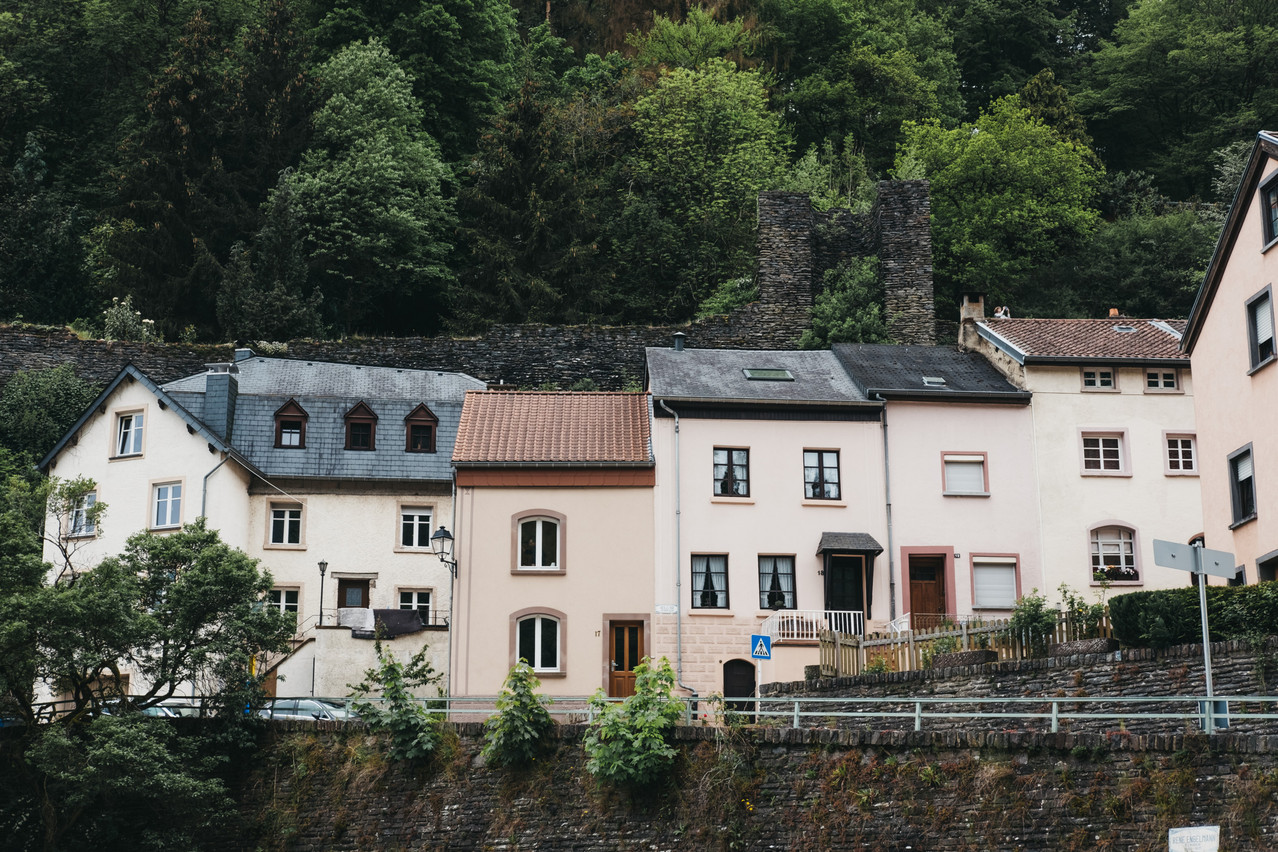
Luxembourg is a pretty tiny place, nothing more (one could say) than a pomegranate seed in the vast European cornucopia. And even though everyone knows this, such an observation is still perpetually welcome in places where small talk is fuelling the conversation, including awkward networking events or family gatherings where only one attendee lives in the grand duchy.
“It’s… I mean, it’s tiny tiny.”
“I can see France from my bedroom window!”
“People think it’s part of Germany but it’s not.”
And so on.
The smallness of Luxembourg isn’t really that weird, except when juxtaposed with grapefruits like Germany and France--or even the clementinesque Belgium. But thanks to the relative stability of borders and plate tectonics, such a state of juxtaposition is in fact essentially permanent, which means that the smallness is too. And thus the weirdness.
And one of the nearly infinite ways in which this weirdness is expressed, I argue, is in the adjectivisation of the country’s name: Luxembourgish.
A defensible [ish] theory
To be Luxembourgish carries more relative horsepower than being Italian or American does, or so a columnist might argue. But to get a sense of what those horses look like, we must look first at the nation’s rival descriptor: Luxembourg.
This, you see everywhere: “a Luxembourg company”, “a Luxembourg presence”, “a Luxembourg politician”. Without bothering to consult even an amateur linguist on this matter, I will hazard to say that dropping the ish in these instances creates a modifier that is inclusive of people or things associated with the country, but who/which are not necessarily “native” thereto.
In other words, a “Luxembourg journalist” is more likely to be someone who works in the country but grew up outside of it (hello), whereas a “Luxembourgish journalist” probably spent their childhood here. A “Luxembourg company” suggests nothing more than a company domiciled in the grand duchy, while it’s easier to assume that the founders of a “Luxembourgish company” know on which day the Hämmelsmarsch comes through their native village.
In other words, the “ish” carries notions of cultural authenticity.
(No, no, no, no, no, not all the time, exceptions exist, fine. I know.)
You can furthermore test the theory by looking at things that lack a Luxembourg-but-not-Luxembourgish version, like food or wine. There is no “Luxembourg wine”… if a wine is associated with the grand duchy then it’s Luxembourgish; if a wine isn’t Luxembourgish, it isn’t associated with the grand duchy. Right? But not so with people or firms.
So what?
So nothing, really. I just find it interesting that we in the grand duchy have created a handy code for expressing a person’s or entity’s deeper relationship with the country (the word “native” keeps floating into my head, problematic though it is). Or, opposite that on the same coin, a way for an outsider to claim association with the place without crossing cultural lines or resorting to a lot of hoola-hoopy relative clauses (“I’m an American journalist who lives in Luxembourg and who’s, like, settled here for good.”)
And you couldn’t have this phenomenon without the weird smallness of which I spoke, because it’s much easier to cram little countries full of foreigners, and to a point where outside cultures are as commonly found as the inside one. Big countries, in contrast, can more effortlessly maintain their cultural hegemony.
To wit: you’d never speak of an “Italy journalist”. That would sound stupid. Either the journalist is Italian, or it’s an American (for example) journalist working in Italy.
If it’s something in between, then fine. But you still wouldn’t say “Italy journalist”. I mean… Brazil politician, Thailand company, Norway presence? Come on.
Nation-crazy
The final enabling factor for this little linguistic adventure I’m having, caused again by that magnificent smallness, is probably the fact that the mind of the Luxembourg resident (see what I did there?) naturally defaults to a nationwide frequency. In other words, we often think of the country as its own unit of importance, frankly because it’s not that hard to do so. When you live in the USA, it’s much less relevant on a daily basis to discuss the entire USA, since the entire USA is an incoherently gigantic multi-timezoned beast of areas and climates and so on. Not that we don’t, but there are intervening regional units that take up our attention, too.
But need for a Luxembourg-wide regional identifier is quite real. So real that we, the Luxembourg people, have two of them.