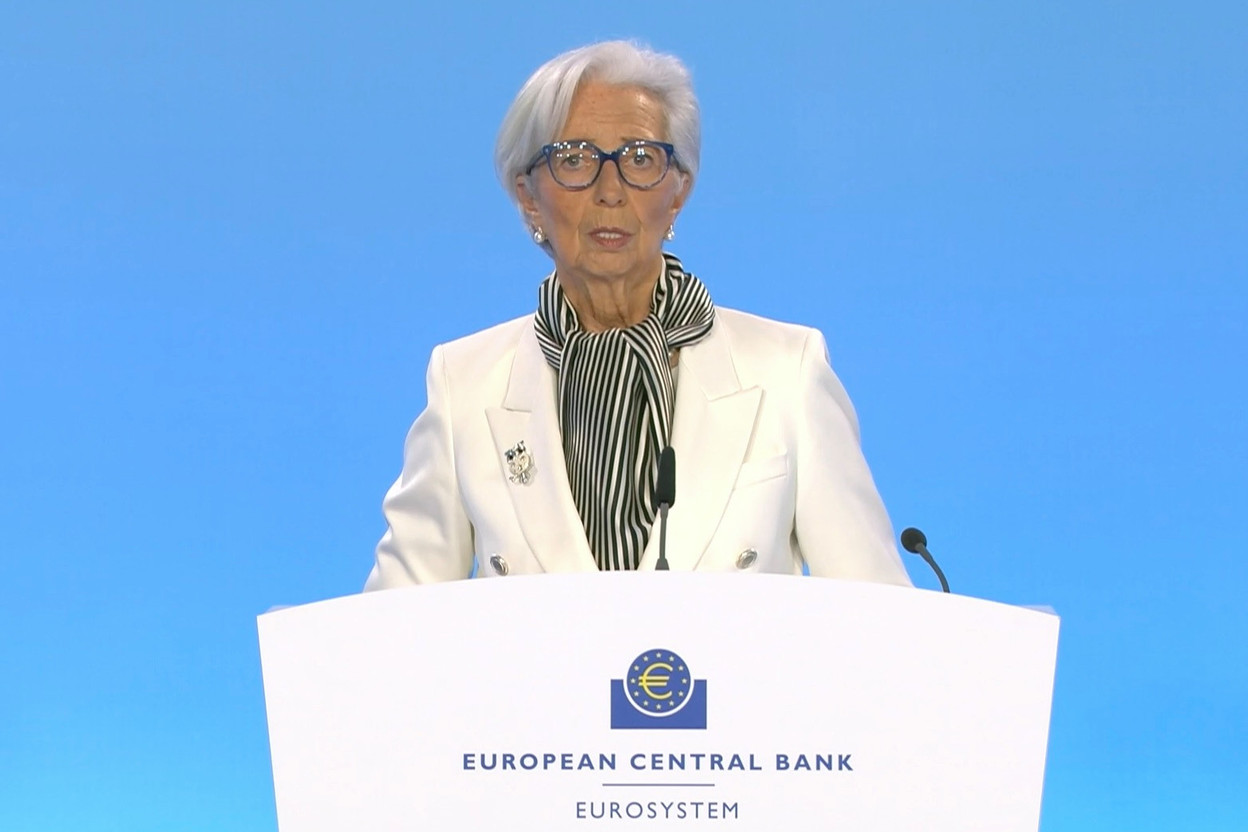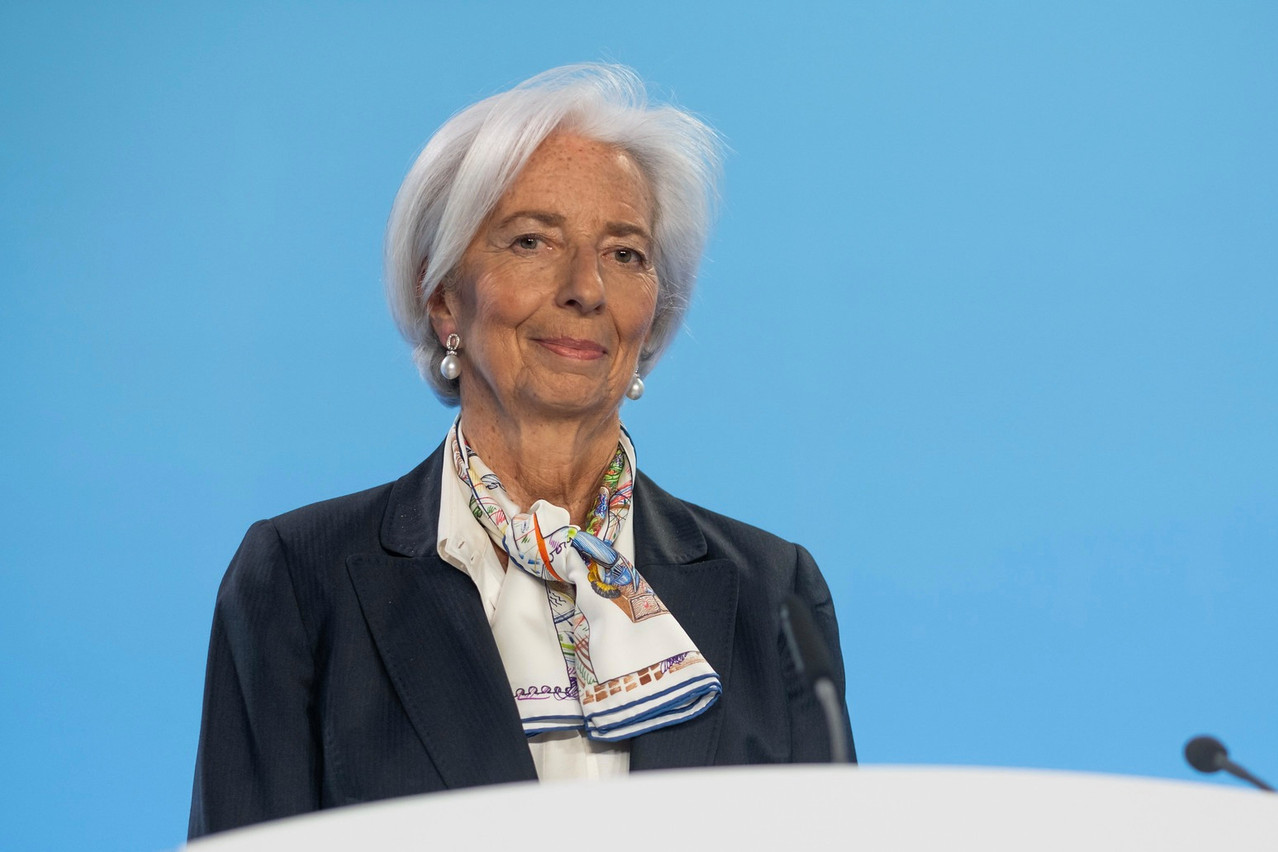
“The governing council today decided to keep the three key ECB interest rates unchanged,” said Christine Lagarde, the president of the European Central Bank, on Thursday 7 March, marking the fourth instance since October 2023 that Lagarde made this exact statement in her monetary policy press briefings.
This decision, fully aligned with the predictions of economists and experts, underscores the institution’s unwavering dedication to achieving a 2% inflation rate over the medium term. The rate-setting governing council “will continue to follow a data-dependent approach to determining the appropriate level and duration of restriction,” added Lagarde.
The interest rates on the main refinancing operations, the marginal lending facility and the deposit facility will remain unchanged at 4.50%, 4.75% and 4.00%, respectively.
Lagarde acknowledged a continuous decline in inflation figures since the council’s last meeting in January, which has led to recent ECB staff projections being adjusted downward, especially for 2024, largely due to diminished energy price effects. The staff now predicts an average inflation rate of 2.3% for 2024, decreasing slightly to 2.0% in 2025, and then to 1.9% in 2026. Likewise, projections excluding energy and food prices have been revised to average 2.6% in 2024, 2.1% for 2025, and 2.0% for 2026, noted Lagarde.
Despite the easing of various measures of underlying inflation, significant wage growth continues to exert high domestic price pressures, Lagarde underlined. She elaborated that restrictive financing conditions, exacerbated by prior interest rate increases, have dampened demand, further reducing inflationary pressures. The ECB staff has consequently lowered their growth forecast for 2024 to 0.6%, with expectations of muted economic activity in the near term. Nevertheless, a gradual recovery is anticipated, with the economy expected to expand by 1.5% in 2025 and 1.6% in 2026, initially fueled by consumption and later by investment. The council asserted that maintaining the current key ECB interest rates for an adequate period will considerably aid in achieving the inflation target, Lagarde affirmed. Furthermore, the council has once again vowed to adjust policy rates to sufficiently restrictive levels for as long as necessary to return inflation to its target.
Regarding the asset purchase programme (APP) and the pandemic emergency purchase programme (PEPP), Lagarde recalled the decisions taken during the January meeting. She stated that the ECB intends to sustain a controlled and predictable reduction of the APP portfolio by ceasing the reinvestment of principal payments from maturing securities. The Governing Council agreed to continue fully reinvesting the principal payments from securities acquired under the PEPP until the first half of 2024. However, the PEPP portfolio will be decreased by an average of €7.5bn per month in the latter half of the year, aiming to cease PEPP reinvestments by the end of 2024.
The next monetary policy meeting of the ECB is scheduled for 11 April.