The European Central Bank debated another interest-rate increase on Thursday but decided unanimously to hold steady as rising market borrowing costs complicated its response to energy inflation. The Governing Council maintained its deposit rate at 2.50%, following increases in June and September, with its other benchmark rates unchanged at 2.65% and 2.90%.
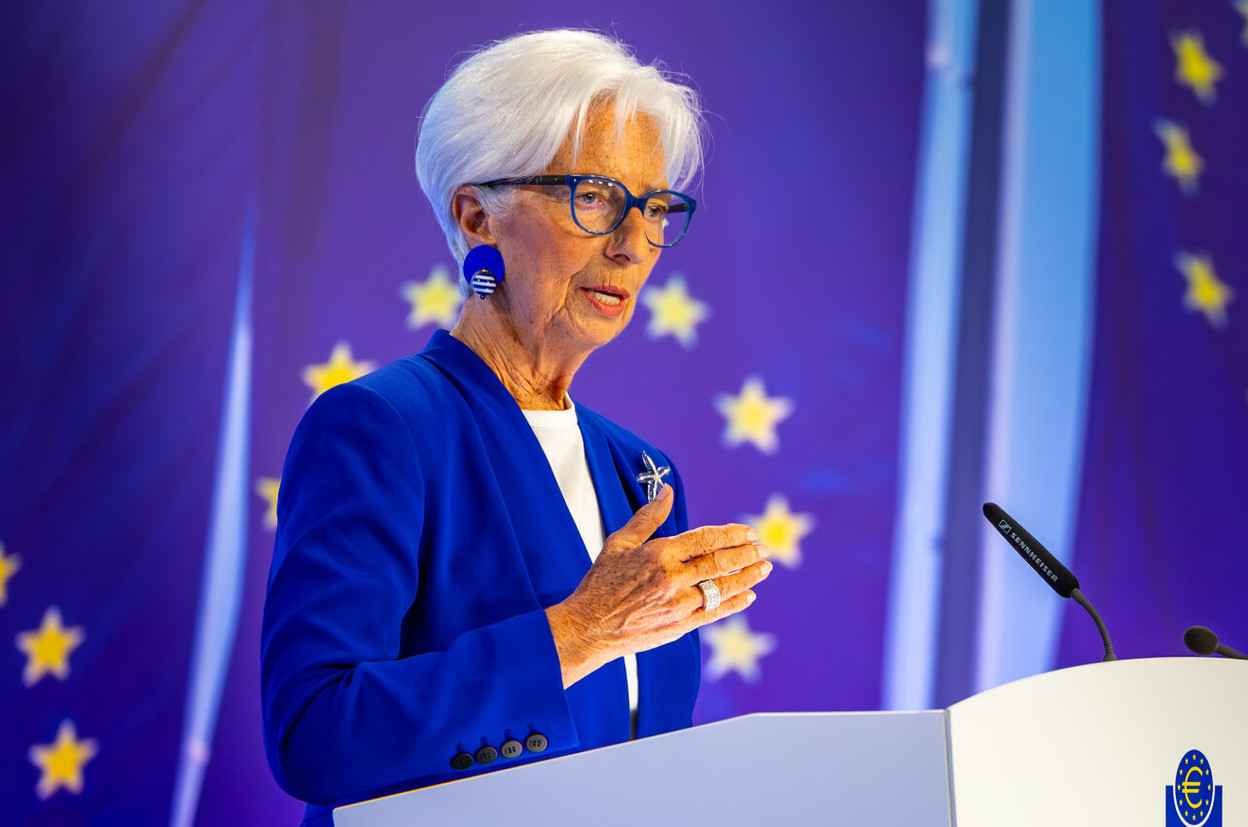
“The Governing Council unanimously decided that we were well positioned enough at this stage to hold and that a measured approach at this point in time remained appropriate,” ECB President Christine Lagarde told journalists after the meeting.
The decision leaves another increase possible in December. Although energy prices are pushing inflation further above the ECB's 2% target, higher government bond yields are already tightening financing conditions. Luxembourg faces both pressures, with rising fuel prices affecting household budgets and investment weakened in the latest quarterly economic figures.
Energy shock threatens to spread
Euro-area inflation reached 3.8% in September, up from 3.2% in August, as energy prices rose by 18.9% over the year. Petrol and diesel prices reached new peaks, partly reflecting elevated refining margins.
“The longer energy prices stay high, the more likely they are to drive up broader inflation through indirect and second-round effects,” Lagarde warned. Higher production and transport costs can feed into other prices, while wage settlements may respond to lost purchasing power.
Yet the ECB has not identified material second-round pressures beyond those incorporated into its September projections. “We are very attentive, and at this point in time, we are not seeing risk of second-round effects in addition to what is already included in the projections,” Lagarde said.
Inflation excluding energy rose to 2.3% from 2.1% in September, although broader measures of underlying inflation remained relatively stable. Compensation per employee increased by 3.3% in the second quarter, down from 3.6% in the first. The central bank expects the prolonged energy shock to keep headline inflation above target over the coming quarters.
Higher yields alter the calculation
Average 10-year government bond yields have risen by approximately 35 basis points since the cut-off date for the ECB's September projections, according to Lagarde. Market borrowing costs can rise independently of official interest rates, restraining economic activity even without another ECB increase.
The effects are already visible in credit conditions. Market-based borrowing costs for euro-area firms reached 4.1% in August, while banks tightened lending standards for companies in the third quarter. Corporate loan demand declined despite increased financing needs for inventories and working capital.
“So if you combine these two factors, actually, the Governing Council debated whether a hike was appropriate,” Lagarde said, referring to energy prices and long-term financing costs. Policymakers ultimately judged that waiting for more evidence was appropriate.
Higher bond yields also create risks for heavily indebted governments. Asked about market pressures, particularly in France, Lagarde said the ECB had instruments available if unwarranted and disorderly movements threatened the transmission of monetary policy. She did not announce an intervention.
Fed pauses amid resilient US growth
The US Federal Reserve reached a similar rate decision on Wednesday, maintaining its target range at 3.75% to 4.00%. Unlike the ECB's unanimous decision, the Fed voted 10–2, with Governor Lisa Cook and Cleveland Fed President Beth Hammack favouring an immediate quarter-point increase.
“Economic activity is expanding at a strong pace,” Fed Chairman Kevin Warsh said in his prepared statement. “While uncertainty remains—owing, in part, to geopolitical developments—domestic spending has been resilient.” He also reported robust capital investment, particularly in technology, and favourable employment conditions.
However, inflation remained above the Fed's 2% objective. “Energy and related prices have moved higher again in recent weeks. And our job is to ensure that relative price changes in some sectors do not broaden out across the economy, and that inflation expectations remain as they are anchored,” Warsh said.
The two central banks share concerns about persistent inflation, but face different economic conditions. The Fed reported strong US activity, while the ECB expected the euro-area economy to continue expanding, supported partly by technology investment and public spending, despite renewed risks to growth from energy prices and financing costs.
Luxembourg faces pressure on prices and credit
Luxembourg's national inflation rate reached 2.9% in September, up from 2.2% in August, according to STATEC. Heating oil was 61.4% more expensive than a year earlier, diesel 44.2% and petrol 25%.
The country's harmonised inflation rate reached 5.2%, against 3.8% across the euro area. Unlike the national index, the harmonised measure includes purchases by non-residents, notably cross-border fuel buyers. The national index determines automatic wage adjustments, with STATEC's October dashboard still forecasting the next indexation in the third quarter of 2027.
STATEC reported on 27 October that wholesale gas and electricity prices had also begun rising. Suppliers' advance purchases had so far delayed the impact on household bills, although some businesses could feel market-price increases sooner, depending on their contracts.
Luxembourg's GDP contracted by 0.9% quarter-on-quarter in the second quarter, principally because of weaker investment and net trade. Earlier quarters were revised upwards, however, and STATEC still considered its 1.2% growth forecast for 2026 attainable. It warned that energy and financing pressures could weigh on demand towards year-end.
For homebuyers, the Banque centrale du Luxembourg reported that the average variable rate on new mortgages reached 3.19% in August, compared with 3.17% in July. Loans fixed for between one and five years averaged 3.75%. These figures predate Thursday's ECB decision and do not measure its effects.
December decision remains open
The ECB will meet again on 17 December, with updated economic projections and fresh inflation, growth, wage and lending figures. Lagarde said underlying inflation measures would become increasingly informative as the energy shock worked through the economy.
She acknowledged that the available evidence could already have warranted another increase and said confirmation from incoming data would strengthen the case for action. “And in that case, the sense of direction is quite clear,” she told journalists.
The ECB has not committed to a particular rate path. Its December assessment will depend on whether inflationary pressures are becoming more persistent and how financing conditions evolve.