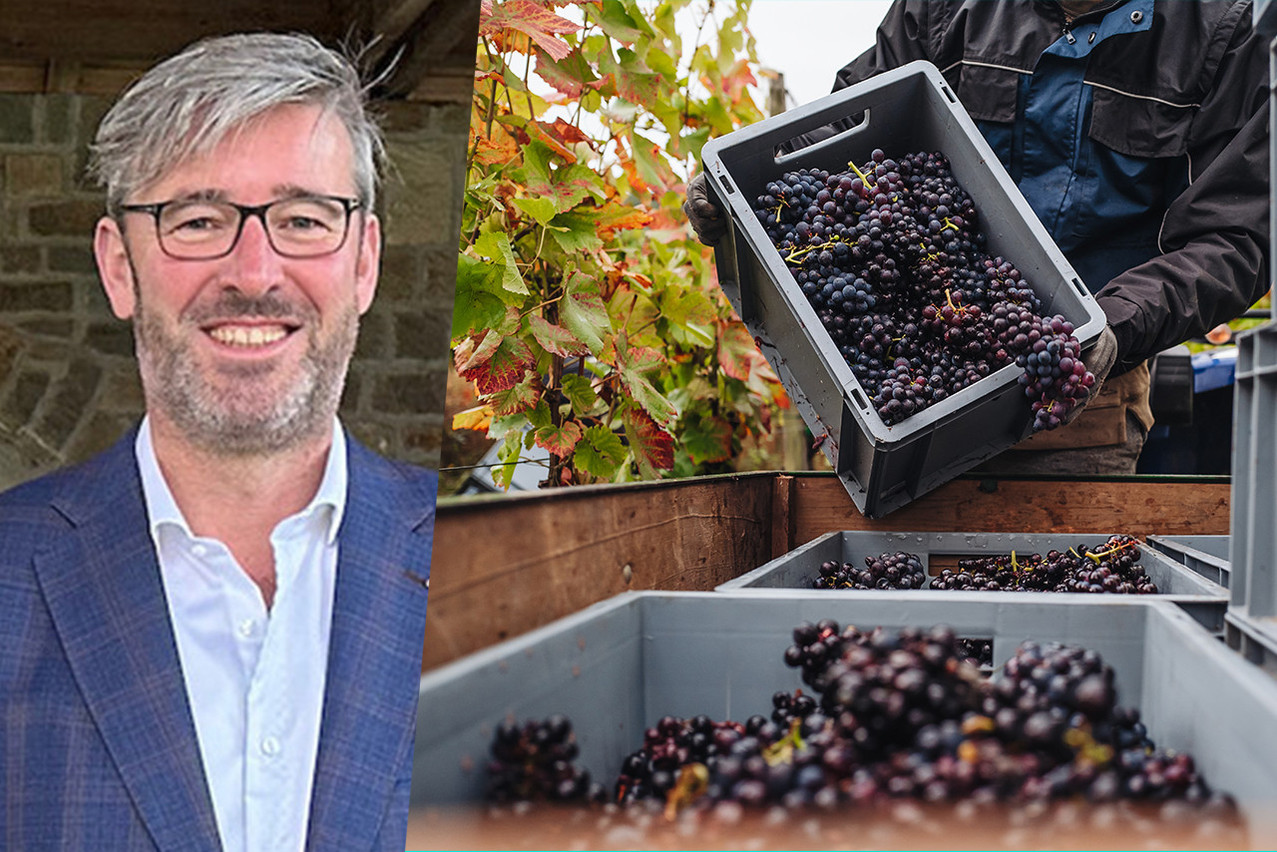
Domaines Vinsmoselle, which has 170 members and markets four brands of wine and crémant produced on 600 hectares in the east of the country, has received the Fair’n Green certification. With this its commitment to “sustainable and reasonable” viticulture has been recognised by the label, which promotes wine production that can be practised “in the same place over the long term, i.e. over several generations.”
Unlike organic viticulture, which is characterised by the absence of chemical products in the cultivation of the vines, sustainable viticulture is a more global approach to land management. Its focus isn’t only on vines and the winemaking process, but also on the preservation of biodiversity, maintenance of soil and water health, and reduction in fossil fuel use.
It was this global approach that appealed to Domaines Vinsmoselle. “Glass has a catastrophic CO2 footprint. We’re now working with lighter bottles and cardboard packaging, producing much less CO2,” says André Mehlen, managing director. The cooperative banned insecticides 15 years ago, along with (on certain crops) herbicides. It has replaced 40% of its chemical fertilisers with natural fertilisers and limits the use of phytosanitary treatments to cases of extreme necessity. “We generate 50% of our electricity consumption on our production site and, next year, we want to install even more to reach 75%,” Mehlen comments.
Good business sense
While Mehlen believes that protecting the planet should drive winegrowers towards sustainable practices, he adds that from a business point of view it also makes strategic sense, thanks to regulations and consumer demand. “We have to adapt, modernise our structure and look to the future… we are convinced that, in a few years’ time, more and more countries will require this type of certificate. It’s already the case in Scandinavia. We can see that consumers are increasingly opting for more sustainably designed products.”
Generally speaking, European consumers nowadays are drinking less but drinking better, i.e. opting for quality over quantity. “Today, the organic label is clearer [than a sustainability label] to consumers,” says Mehlen. “They know what it is; it’s better identified. But consumers also understand more and more what it means to produce in a more sustainable way, and I believe that [the Fair’n Green label] will become increasingly important.”
As for prices, the certification shouldn’t affect them. “We review prices every year,” explains Mehlen. “We haven’t made any decisions yet, but if we were to raise them, it wouldn’t be because of certification.”
Ultimately, says Mehlen, producing more sustainably does not mean cutting back on profitability. “We have to go for it [i.e., producing sustainably], because eventually we won’t have the choice. At one point it may not be about making more money, but about avoiding a loss of market share.”
In illustration of these changing norms, he adds that, a week or so ago, a Belgian retailer announced that it would soon be asking producers to prove their commitment to sustainability.
The cooperative currently plans to carry out an internal analysis and redefine its priorities. “This may involve costs and investments,” says Mehlen, “but it’s too early to say what will have to change as a priority.” The certificate is good until 31 December 2024, when progress will be measured and the label must be renewed.
This article was originally published in Paperjam. It has been translated and edited for Delano.