(Article updated Friday 6 June at 14:30 with comments from the Luxembourg ministry).
According to a study by the Steer consultancy quoted by L’Echo touristique, the current rules, particularly those relating to compensation for delays and cancellations, cost European airlines almost €10bn in 2024. This figure is rising sharply and is contributing to the pressure to rebalance the obligations imposed on the sector.
Until now, a delay of three hours was sufficient to claim compensation. From now on, this threshold will rise to:
- Four hours of delay for intra-European and short-haul flights (less than 3,500km). Passengers will benefit from €300 of compensation.
- Six hours of delay (or more) for flights longer than 3,500km. Passengers will benefit from €500 of compensation.
This means that compensation will no longer be automatic in the event of delay. But it is still possible, and the rules are clearer. This measure could significantly reduce the number of passengers eligible for compensation, from 100% to just 15%, according to some estimates.
Furthermore, compensation in the event of flight cancellation can be automated, which will considerably facilitate the procedures for consumers, Luxembourg’s mobility and public works ministry noted in a press release issued Friday morning.
Airlines must offer passengers rerouting at the earliest opportunity, including the possibility of being rerouted via flights operated by other carriers or alternative modes of transport, if available. Furthermore, if an airline fails to provide appropriate rerouting within three hours of a disruption, passengers may arrange their own rerouting and request a refund of up to 400% of the original ticket cost.
The text imposes transparent information on baggage rules, acceptance in the cabin of small instruments (subject to conditions) and free declaration of actual value for mobility aids.
What if you don’t take your outbound flight? You retain the right to return. The practice of “no show” denials (the refusal to let a passenger use a return journey on a ticket if the outbound journey has not been used) will be partially prohibited: passengers who are denied boarding on the return journey because they did not take the outward journey will be entitled to compensation.
Cancellations and compensation
Passengers who are informed of their flight cancellation less than 14 days before departure are entitled to compensation. In the event of cancellation, the airline must provide passengers with pre-filled forms to request compensation.
Passengers have up to six months from the disruption to submit a request or complaint to the airline. A 14-day deadline from the submission of the request will be introduced for airlines to pay compensation or to provide a clear and justified response to a passenger.
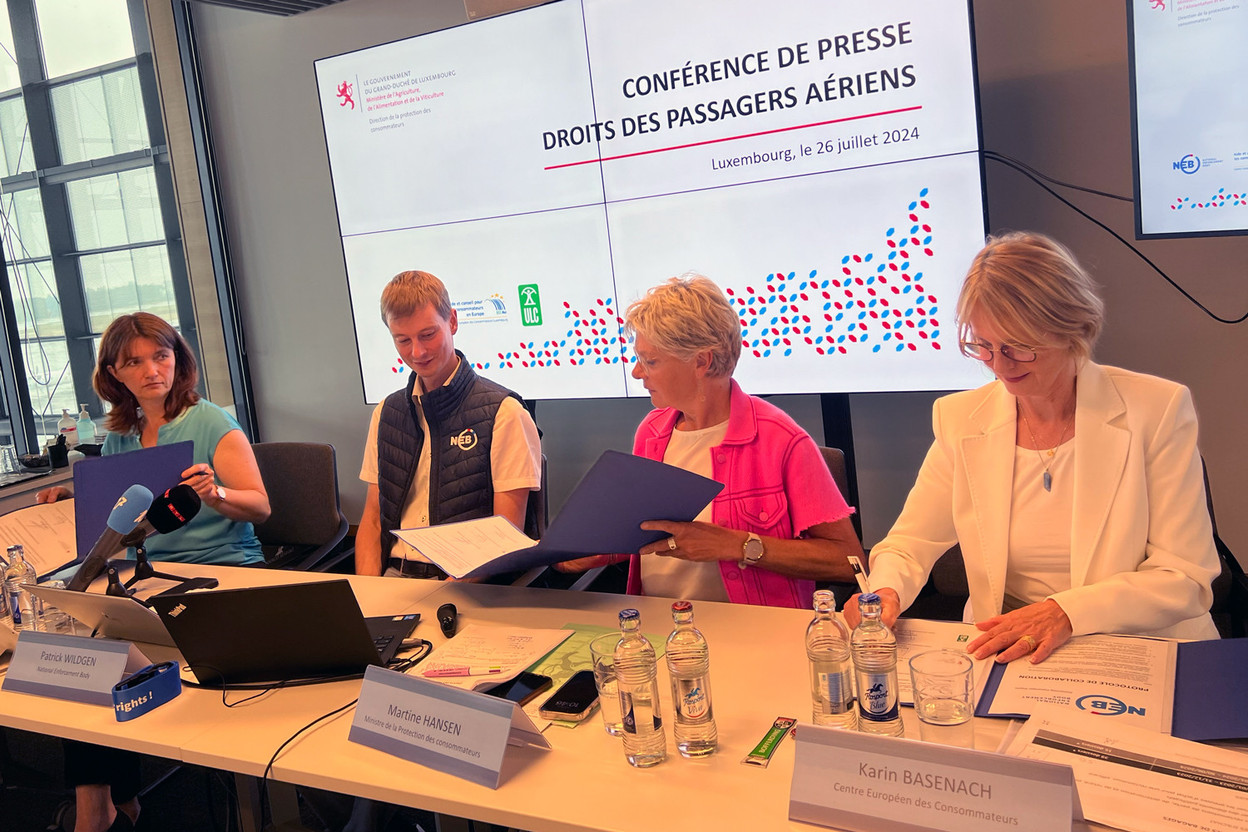
In its press release, the mobility and transport ministry stated, “Luxembourg supported this political agreement, believing that it represents a reasonable balance between the strengthening of consumer rights and the need to preserve the supply and connectivity of air links, which are essential for citizens and the Luxembourg economy, and whose flight supply depends mainly on regional airlines. An overly rigid framework could, in fact, result in a reduction in flight frequencies, to the detriment of users.”
“It should also be noted that the system currently in force in Luxembourg, allowing passengers to submit their individual complaints directly to the Consumer Protection Directorate, constitutes a practice that differs favourably from the situation in many other member States,” the ministry added.
Next stage: the text will still have to be negotiated with the European Parliament, before final adoption probably by the end of 2025 or early 2026. “We cannot allow member states to undermine the hard-won rights of air passengers. The current rules have been in place for many years. Weakening these rights would betray the trust that citizens have placed in the EU to defend their interests,” MEP Andrey Novakov, the EPP’s chief negotiator for air passenger rights, has said. The EPP is the largest political group in the European Parliament.
This article was originally published in French.