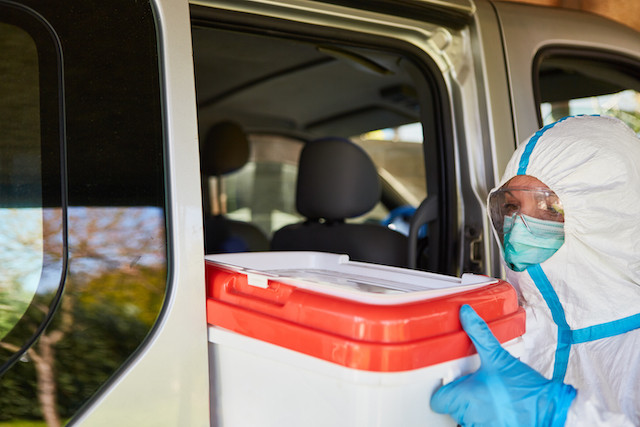
In the EU alone, 34,000 organ transplants are performed in one year. Yet covid-19 restrictions have led to the sharp decline in the number of available organs from deceased donors which has sent surgical transplant activity plummeting as far as 80% in some member states.
Stop and think about this for a minute: just under 2m people globally live with a transplanted organ. Prior to the advent of the virus, the numbers of donors were not meeting the demand of recipients--some of whom die while waiting for an organ transplant. The repercussions of the pandemic have only aggravated the plight of those currently on agonisingly long waiting lists. This holds true for the 60,000 patients at risk currently on the EU transplant waiting list.
The risk
Numerous warnings have been issued about the virus, however all too often the stratified risk of the population is neglected. Living in a perpetual state of pandemic since February, populations grow increasingly complacent--however, vulnerable groups still exist. Members of society who are pregnant, diabetic, suffering with cancer or transplant patients all require our collective effort to remain vigilant. Healthcare officials are concerned about the susceptibility to infection transplant recipients have to the virus; to add to this the resources to thoroughly manage such patients post-procedure are being redistributed to focus on covid-19 patients.
Is this true everywhere?
As the UK government announced restrictions on 23 March earlier this year, the acceptance criteria for deceased organ donors was changed. The NHS was preparing to protect its ICU bed capacity by maximising the availability for potential organs to transplant. An example of this is the reduction in the maximum age for donation post-brain death. Initially set at 85 years, this figure was lowered to 60. Furthermore, a transplant priority list was established for patients needing urgent liver and heart transplants. The number of referrals for transplants however only declined, as the potential donor pool reduced. Trauma and other emergencies were facing record low attendance, with the UK experiencing a reduction as large as 50% in A&E departments during the lockdown.
Both France and the US echoed this marked decline in transplant procedures, as the rate of covid-19 infections rose steadily. France saw a 90.6% reduction in deceased donor transplantations, while the US saw figures lowering by 51.1%. The US figures could also vary due to the fluctuation in lockdown measures implemented state-by-state.
Driving forces
Yes, with strict lockdowns it is true that road accidents reduced (Rome saw as much as a 60% reduction in RTAs). With people confined at home they were less likely to be a danger to themselves. The consequence of which was a reduction in the pool of cadaver donors. However, this did not preclude the need for organ transplants. As ICU units reached full capacity, staff including doctors and transplant nurse specialists were redeployed to other units, needing their skills urgently to care for critical covid-19 patients. So again, transplant surgeries dwindled.
The chinks in the armour
Where a healthcare system ran satisfactorily, covid-19 exposed the chinks in its armour globally: uncovering skeletal staffing, poorly funded hospitals and disjointed clinical protocols. As testing for the virus was required in both donor and recipient transplant patients--during the pandemic this testing was limited in access for this at-risk group. The lack of PPE, alongside organisational obstacles for both organ retrieval and transport, meant transplant teams found it difficult to travel.
Despite surgical figures picking up in the UK with the initial ease of lockdown measures, experts anticipate darker times ahead. This global health crisis has tested healthcare systems and demonstrated that they were unprepared. The Lancet in May warned that negative repercussions on organ donation and transplantation have still yet to manifest.
What is the course of action that best serves this understanding?
Atul Gawande quite simply puts into context the need to understand the driving forces behind a problem before setting sail to solve the issue in haste. In this case a coordinated effort is required. Within a statement on organ donation, the EU national competent authorities on organ donation and transplantation outline the procedures that must be implemented to salvage organ recipients.
The EU must organise local care pathways specifically for transplant patients that can furthermore translate across all vulnerable at-risk groups. Member states need to collectively harmonise standards and protocols. This will also help facilitate cross border exchange of organs – which impacts Luxembourg’s supply. Digital systems within medicine can no longer be cast aside for later. In order to monitor and track all organs, data collecting, and monitoring systems need better and swifter solutions. More crucially, healthcare professionals need to increase awareness on the topic to their patients, so that the patient becomes fully involved as opposed to isolated.
We need to be ready yesterday--this outlines the Herculean task of bringing foresight and planning into patient care pathways. There is a pandemic, we know of its effects. No at-risk group should have been neglected. We are wiser now than we were in February. Hospitals should be divided where possible into covid-only and non-covid hospitals to maintain a safe centre of care for those at risk. This said, there is a strong need to ascertain the level of mortality and morbidity due to covid-19 in both transplant recipients and those vulnerable awaiting transplants. Covid or no covid, doctors have stressed that emergency care and life-saving treatment should not be neglected. Just as patients should be triaged according to level of urgency, it follows that no patient should be left waiting for life-saving care.
It's possible to apply for an organ donor card in Luxembourg through Guichet.lu, the health ministry, Luxtransplant or by inquiring with your doctor or commune.