“Tytanik”--what a pseudonym!--predicted it on Bitcointalk back in 2011: the price of bitcoin would exceed $100,000. That threshold was reached, for the first time, on 4 December 2024. Each new jolt from the first cryptocurrency in history has brought its share of disbelievers, new followers and shrugs of the shoulders. They’ve pointed to a Ponzi scheme or complained that attention is no longer being paid to blockchain, the technology underlying these products and which could be useful for many other things. Each new rise in the price of these products has sparked a new wave of Sunday investors. In 15 years, the Wild West of crypto has remained the Wild West of crypto... but a number of players have tried to do things right and Luxembourg has been at the forefront of regulation to reassure those who would like to invest.
Before you start, as with many other investments, it’s best to know who you are: a cautious investor, who prefers bitcoin or ethereum over the long term; an intermediate investor who explores other corners and staking to generate passive income; or an active trader, who practices daily trading or swing trading hoping to take advantage of the extreme volatility of certain assets.
Crypto strategies: choosing between stability, performance and risk
Each of these three profiles comes with advantages and disadvantages. The “HODL” (“hold on for dear life”) investor will be less stressed by the sometimes spectacular daily fluctuations and, in Luxembourg, will be able to benefit from a tax exemption on capital gains after six months of holding as long as they can document this holding... but the funds may be tied up for long periods.
The slightly bolder “dollar-cost averaging” strategy involves investing small sums at regular intervals. It reduces the risks of buying at the wrong time but will benefit from lower performance. The more experienced “buy-the-dip” investor buys after a sharp market correction, aiming for a large capital gain... provided they know how to identify a real dip and not buy too soon. Two other profiles already require a better understanding of the dynamics and certain reflexes, whether the staker who can generate passive income of 5 to 15% a year but whose funds may be blocked or at risk on centralised platforms or the one who deposits cryptos in defi protocols to earn interest.
Where to start? Let’s keep it simple. It’s been more than ten years since Luxembourg began regulating certain platforms, so perhaps that's where it would make the most sense to start looking at bitcoin. The registration forms are still pretty much the same: you have to pass the sacrosanct KYC process before you can deposit a sum in euros from your bank account or use a credit card and buy your first bitcoins.
Regulated crypto platforms to know
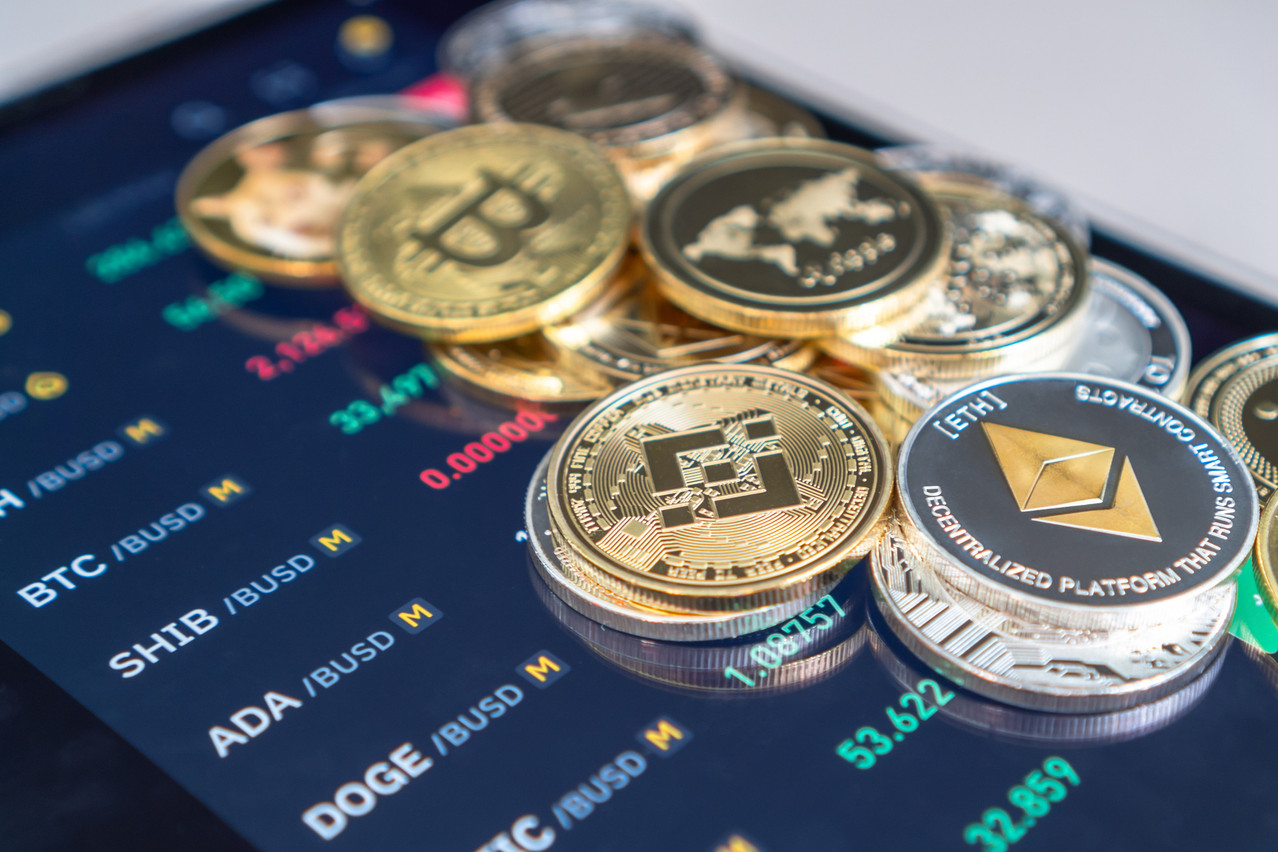
These regulated players can be found in Luxembourg’s Bitstamp, which offers 131 “currencies” and the commission payable varies according to the amount “traded” over the last 30 days; or Bitflyer. But you can also buy crypto from Swissquote, Binance, Coinbase, Kraken or, for the more experienced, OKX or Bybit. Neobanks like Revolut, N26 or Trade Republic also offer cryptocurrencies. As with traditional banking, the better a name is known in the marketplace, the more reassuring it is and the easier it is for investors to take their first steps.
The other aspect is that these companies have storage solutions for your cryptos and save you from online wallets, like Metamask or Trust Wallet, or cold wallets like Ledger--also supervised by the Financial Sector Supervisory Commission (CSSF)--the crypto equivalent of a hard drive for photography. The are risks associated with these technologies--someone, for instance, could empty your online wallet after finding your codes somewhere. You might also lose access to your cold wallet, like James Howells, a 35-year-old software engineer in Wales who threw away his hard drive containing 7,500 bitcoins in 2013--worth $280m at the time and $3.8bn today.
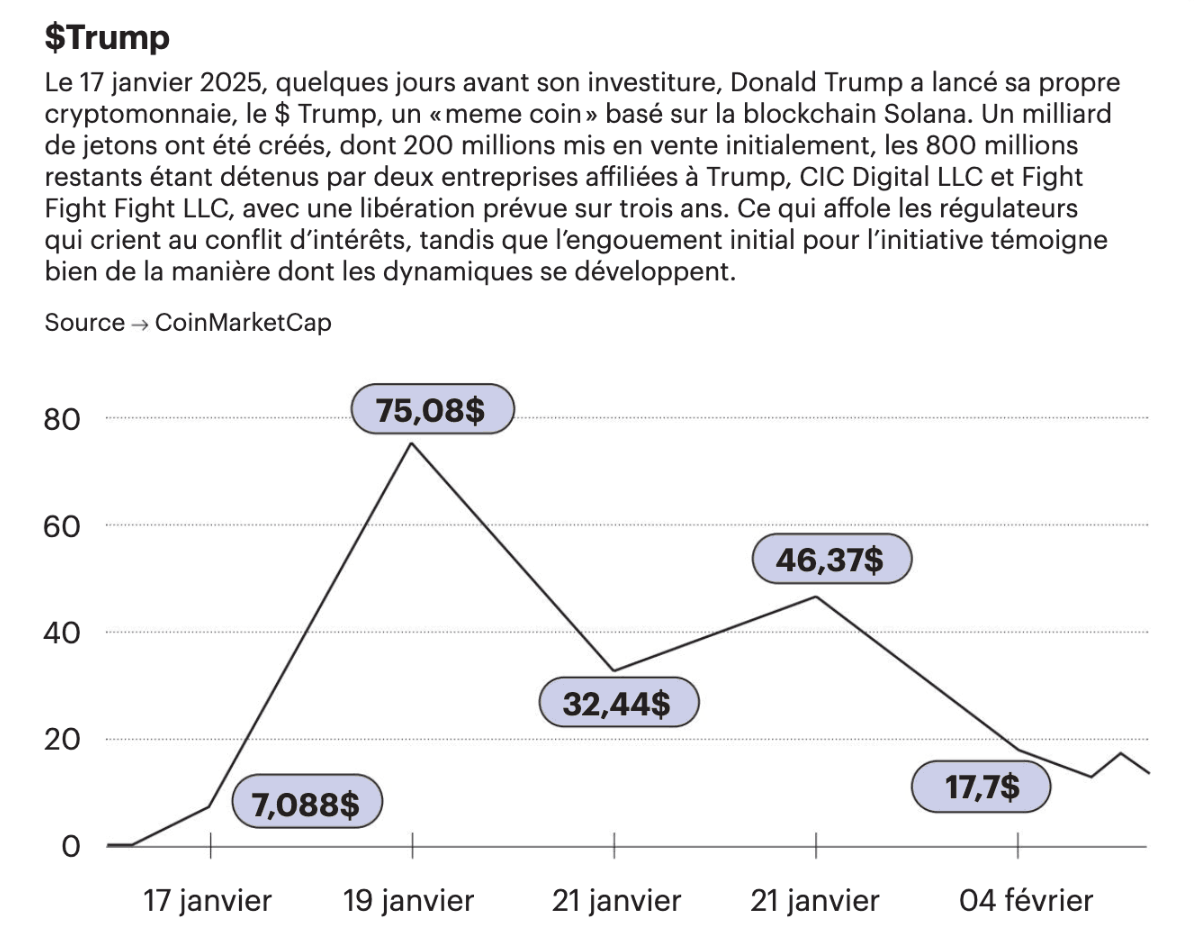
$Trump launch. Source: Coinmarketcap
The age of tokens
There are “currencies” but also tokens, which can represent different things. In Luxembourg, Anote Music markets music catalogue rights on a sort of secondary exchange, Letztoken property rights on real estate and Stokr for business financing projects. Elsewhere, amongst the best-known, we also find shares in paintings at Masterworks, membership cards for football supporters’ clubs at Fan Tokens and even carbon credit derivatives. Each time, the same principle: make financial assets that are normally locked up for years more liquid.
Eight questions for the hothead
Eager to take on more risk by seeking out products that seem juicier and have charms often touted on social networks? Then start by using two-factor authentication, complex and unique passwords and not clicking on suspicious links sent by email in an attempt to protect your portfolio. Then prepare a modern-day due diligence:
-Does the project have a security audit (at Certik or Hacken, for example)?
-Is the white paper--which does not have the legal status of a stock market prospectus--longer than four pages?
-Is it well-written? (i.e., no spelling or grammar mistakes)
-Is it written in your language?
-Does the team featured there exist?
-Does it have a Linkedin profile, for example?
-How is the release of tokens presented?
-Can developers withdraw liquidity (via Token Sniffer)?
Too many “no’s” should make you say... “no.”
This article was written in French for the Investor’s Guide supplement to the March 2025 issue of Paperjam magazine, published on 26 February. The content of the magazine is produced exclusively for the magazine. It is published on the website as a contribution to the complete Paperjam archive. Click here to subscribe to the magazine.
Is your company a member of Paperjam Club? You can request a subscription in your name. Let us know via club@paperjam.lu