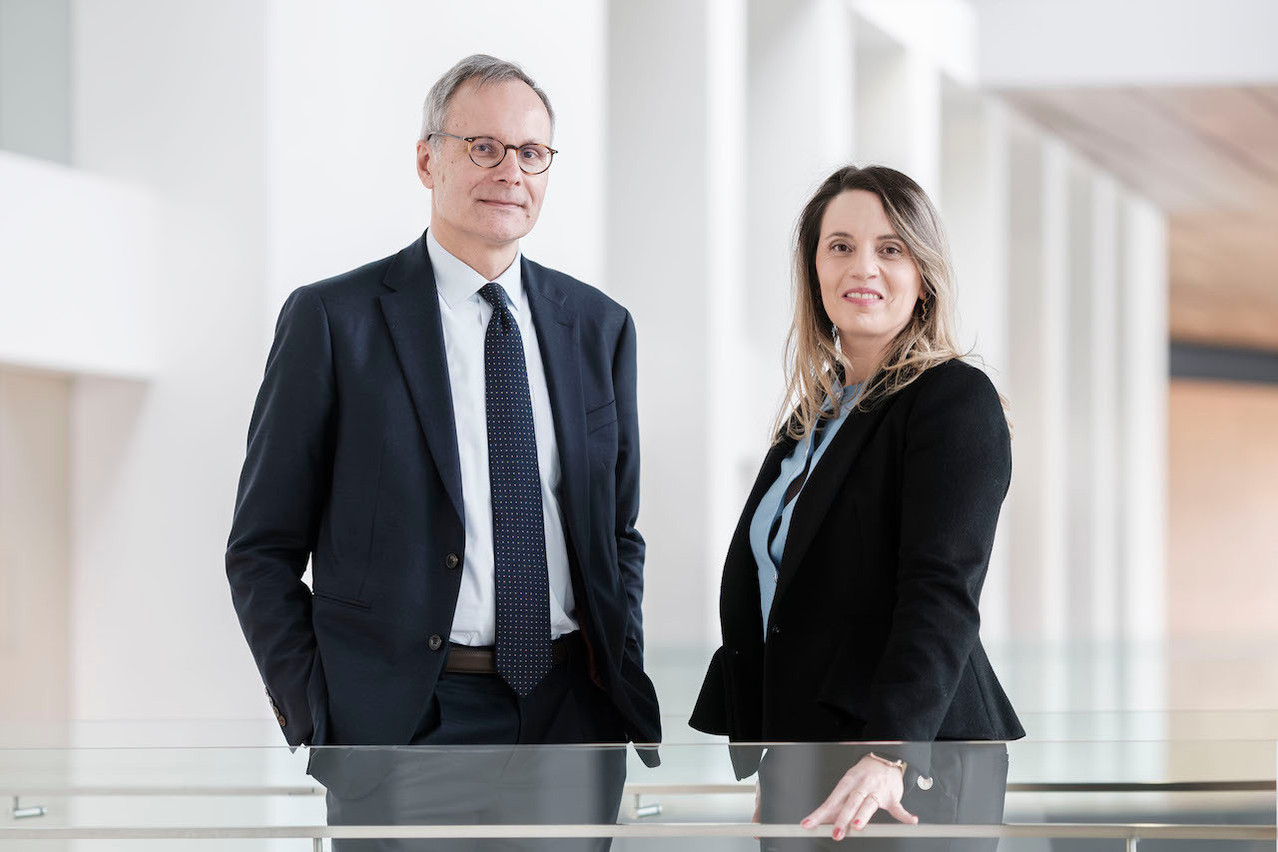
The CEOs of Cardif Lux Vie and Convex Europe, Alexandre Draznieks and Julie Dubuisson, on the cover of Paperjam's new Insurance supplement. (Photo: Paperjam)
From cross-border competitiveness to the future financing of long-term care, via digital transformation, Paperjam’s new Insurance supplement, published this Wednesday 10 December, sheds light on the reshaping of this key sector of the Luxembourg insurance market.
In international insurance, Luxembourg walks on two legs: life and non-life. Two markets where attractiveness is based on the ability to offer tailor-made solutions to mobile and demanding customers. In the cross-talk that opens this supplement, the CEOs of Cardif Lux Vie and Convex Europe, Alexandre Draznieks and Julie Dubuisson, stress the need to remain competitive despite rising regulatory requirements. For Alexandre Draznieks, the weight of these obligations is akin to a “Himalaya of requirements”, necessitating industrialisation and automation to preserve service quality.
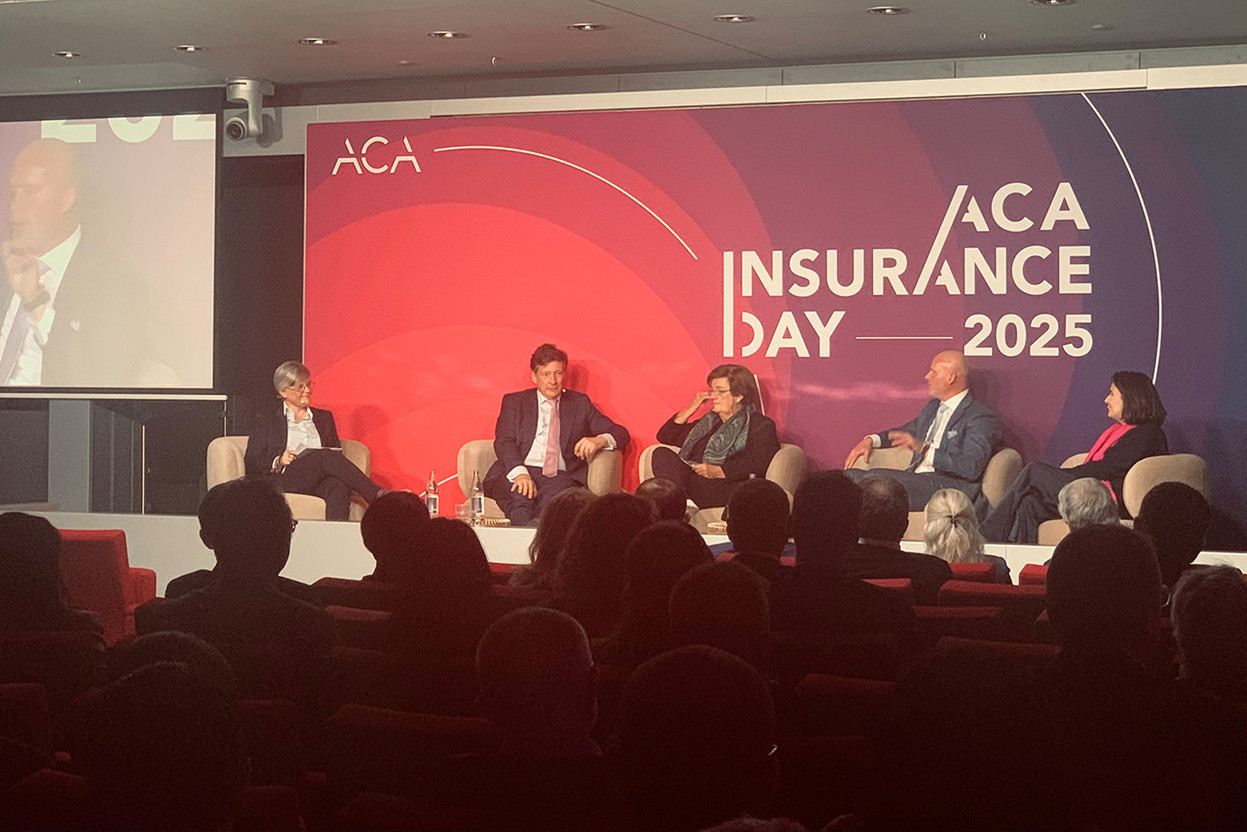
Customer relations in the digital age are the focus of a round table discussion involving the three vice-presidents of Aca, the trade association for Luxembourg-based insurers and reinsurers. Marc Lauer (Foyer), Christian Strasser (Lalux) and Octavie Dexant (Axa) want to see technology as a reinforcement that will make the process smoother without distorting advice or support. Particularly at sensitive moments, stresses the chairman of Foyer’s board of directors: when faced with a claim, “you want someone to say, ‘calm down, we’ll take care of everything.’”
A cross-disciplinary conversation between Alexandre Draznieks (Cardif Lux Vie) and Julie Dubuisson (Convex Europe) opens this supplement devoted, among other things, to changes in Luxembourg’s international insurance industry. (Photo: Jan Hanrion/Paperjam)
Reinsurance and demographic risk
Annick Felten, general manager of Swiss Re Europe, presents reinsurance as a discreet but essential foundation of stability, absorbing major shocks to enable insurers to invest and innovate. She points out that international diversification is “the essence of reinsurance”, and that Luxembourg has made its mark thanks to pragmatic supervision and long-term expertise. In an environment marked by a structural increase in risks, this ability to anticipate is becoming central to maintaining economic and societal resilience.
In closing, Joël Wagner, professor of actuarial sciences at HEC Lausanne, warns of the demographic urgency associated with the expected doubling of the population aged 80 and over by 2050. The last three years of life in an institution represent “incompressible” costs that are often overlooked, but are crucial for public and private finances. The Luxembourg professor calls for funding solutions to be prepared now, ranging from new pension products to investment in care infrastructure, in order to avoid a future capacity deficit and protect the sustainability of the system.