With its almost unlimited computing resources, the cloud represents a major asset for artificial intelligence. In finance, this makes it possible to carry out complex analyses, such as predicting market movements or assessing credit risks, quickly and efficiently. Add to this the fact that cloud service providers often offer the latest AI innovations, such as predictive analytics or machine learning, as out-of-the-box services.
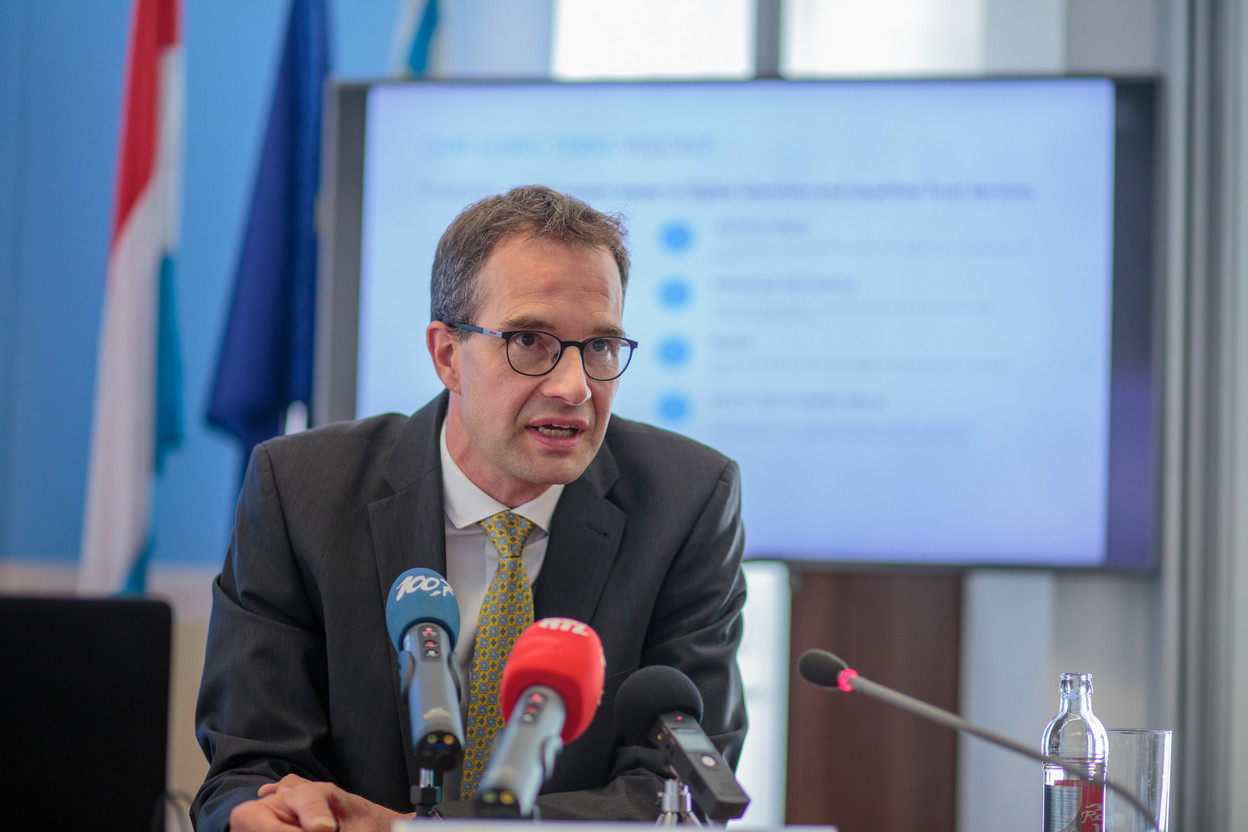
“Their capabilities in image recognition or translation are impressive,” notes Telindus disconnected cloud product manager Jean-François Terminaux. “If a local company tried to develop this in-house, it would face enormous challenges, especially in terms of R&D. The cloud giants invest billions every year in this area, a sum that few companies can afford. What’s more, the number of qualified engineers needed is colossal.”
Data stored in the United States
Then there is the tricky question of data sovereignty. A few years ago, it was estimated that over 90% of European data was stored in the United States. “Even with progress, it is unlikely that this percentage will have fallen drastically,” says Terminaux. While the cloud giants are beginning to propose solutions to increase data sovereignty, Europeans remain cautious--particularly perhaps in Luxembourg, where traditions of confidentiality have outlived banking secrecy.
At Proximus/Telindus, data sensitivity is analysed from several angles, including the requirements of the General Data Protection Regulation, or GDPR. “Where things get sticky is when we talk about the tasks to be carried out,” observes Terminaux. “A simple translation of a contract may seem trivial, but if it is sent to the cloud, despite encryption, the information travels around the world with no absolute guarantee of confidentiality.”
So how can we maximise the use of these technologies while guaranteeing data security and sovereignty? This is the question addressed by the Clarence solution, created by Luxconnect and Proximus Luxembourg. “It’s a platform based on Google Cloud technologies, but totally disconnected from the global network,” explains Terminaux. “Your data is processed and stored exclusively in data centres in Luxembourg. Even translations into 35 languages are carried out locally, without your data leaving your secure environment.”
Opportunities for Luxembourg
The Telindus representative sees opportunities for Luxembourg in the areas of cloud and AI: “We have a good technical understanding and a real ability to innovate with solutions tailored to current needs. There are no technological or skills bottlenecks, despite a shortage of talent--a common problem in many countries. Luxembourg has all the necessary solutions, from local to global, to make progress in these areas.”
All that’s needed is for something to click for everything to accelerate. “Often, all it takes is for one key player to take the first step for the others to follow,” emphasises Terminaux. “It is also essential that we in Luxembourg are more open to promoting our successes. We need to be more active in inviting companies and talent to join our ecosystem.””
The advantage of regulation
“In Luxembourg, we have the knowledge and mastery of regulation.” Terminaux sees this as a considerable advantage in the areas of cloud and AI. “We have just celebrated 20 years of the law on support PFS. With the arrival of Dora [Digital Operational Resilience Act] and NIS2 [Network and Information Security directive], risk analysis is more than ever at the heart of concerns. The challenges posed by these new regulations are opportunities for Luxembourg to demonstrate its skills and experience.”
This article was first published in French on Paperjam. It has been translated and edited for Delano.
This article was written for the magazine edition of Paperjam of July 2024, published on 19 June. The content of the magazine is produced exclusively for the magazine. It is published on the website to contribute to the complete Paperjam archive. Click here to subscribe to the magazine.
Is your company a member of the Paperjam+Delano Business Club? You can request a subscription in your name. Let us know via club@paperjam.lu