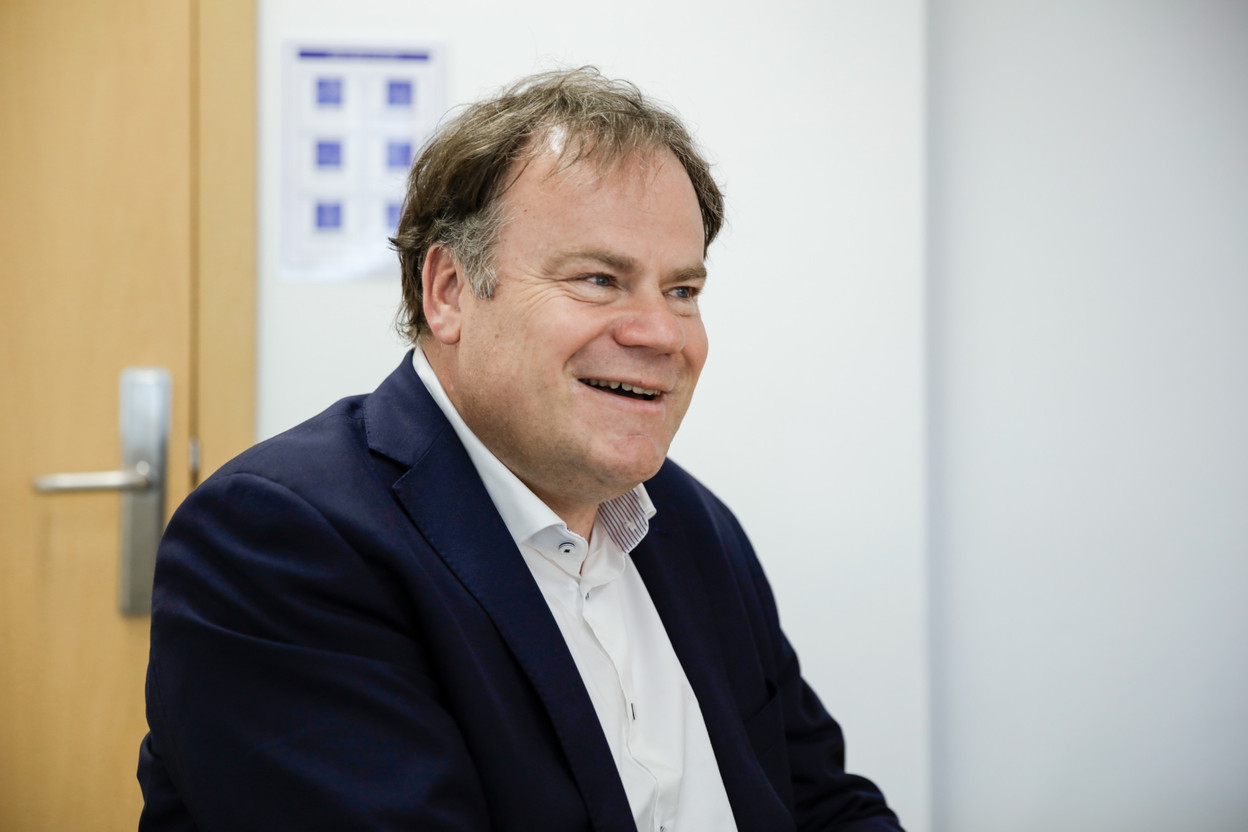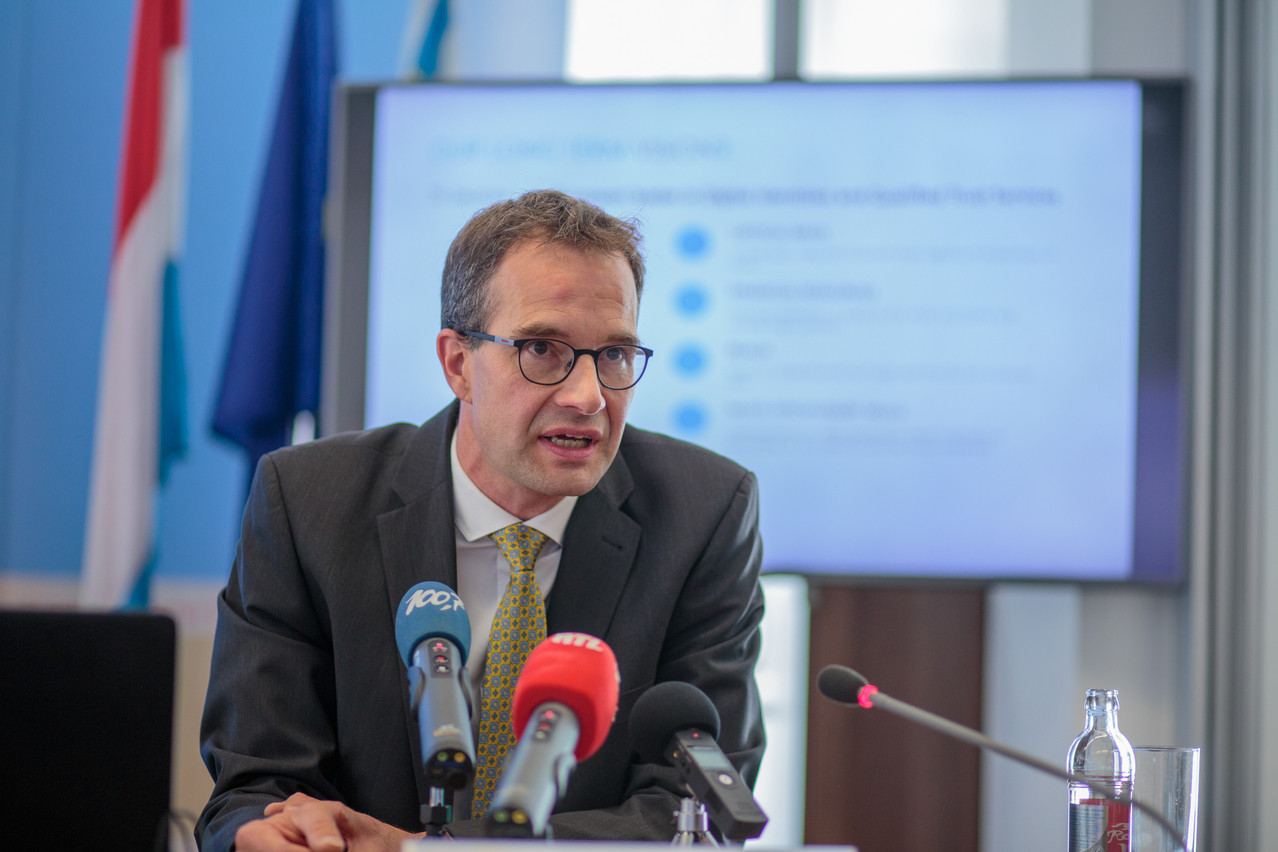
Clarence had a name. The joint venture between Luxconnect and Proximus now has a face: that of 
“I learnt a lot from the internationalisation of sensitive and critical business at Rhea”, he explained on the eve of his appointment. “In Clarence’s new context, that’s very interesting.”
Presented in October, Proximus and Luxconnect’s new disconnected sovereign cloud offering has aroused interest... and sniggering. “We’ve had interest from far beyond the Benelux, which was our target market at the start. Interest from Europe and elsewhere. Perhaps even to replicate the model elsewhere, which we will only do if we can put Luxembourg at the heart of developments”, Rogiest said during an interview. He will not remain the company’s first director and first employee for long--the business is expected to grow to 30 people fairly quickly.
The sniggers sometimes came from those who hadn’t read the pitch properly: the cloud offering is sovereign and disconnected. “That’s important, disconnected. There is no connection to the internet. What’s more, the data is not in a Luxconnect data centre but in two data centres operated by Proximus to ensure redundancy,” he said.
Airgapped
Chances are that Rogiest will regularly have to take up his pilgrim’s staff to insist on this point, just as he will have to insist on the role that Google’s engineers will not play in the Luxembourg offering. The system has an ‘airgap’: the technology belongs to Google, of course, but Google’s engineers have no access to the data centres and the updates are not made by them or even automatically from a remote location; they arrive in a technological airlock where they will be meticulously checked by the Luxembourg operators before the update is carried out. It is in this precision that the Luxembourg offer really makes sense, and this is also the sinews of war in the marketing of the product that is about to begin.
The potential customers of the offering are the public sector--primarily Luxembourg, of course--but also defence, healthcare and the financial sector, all areas where data has a particularly high value on the digital black market. And these same customers are subject to a whole host of rules that lengthen the time between interest and finalisation of the contract, which is why Clarence is starting to sell its offering today, which should be available by the end of the year. The target is two customers this year, and two or three more next year. The figure may seem small, but if the customer has data in the millions or billions, it makes sense.
Could we imagine commercial strategies similar to those that saw Luxembourg sell e-embassies to Estonia or the European Commission? Or where Luxembourg has booked satellite capacity to make it available to Nato? Yes, according to the company’s press release, referring for example to the demand for data sovereignty within a European framework. “Clarence comes at a time when the demand for data sovereignty is growing due to the current geopolitical environment coupled with the continuing increase in cyber threats and other cyberterrorist risks. The Clarence disconnected cloud solution offers an operational maturity and value proposition appropriate to today's business needs,” Rogiest stated in the press release.
“The acceleration of AI offers new opportunities for our customers to process and analyse data closer to where it is generated. We offer a variety of public AI models such as Gemma, Llama and many others on Google Disconnected Cloud. Today, we are pleased to confirm that all of these Gemma-powered generative AI packaged solutions will be available on the Clarence platform in Q4 2024. All the implementation and operational maintenance stages are planned accordingly,” stated Gérard Hoffmann, CEO of Proximus Luxembourg.
A final point emphasised by the new general manager of the company, which has received an initial capital injection of €5m, of which €1.25m has already been made available, is that Clarence is not an isolated offering: it complements Luxembourg’s existing cloud offering, with one feeding into the other and vice versa.
Originally published in French by Paperjam and translated for Delano
Updated to correct the stakes held by Luxconnect and Proximus, and Pascal Rogiest’s previous job title