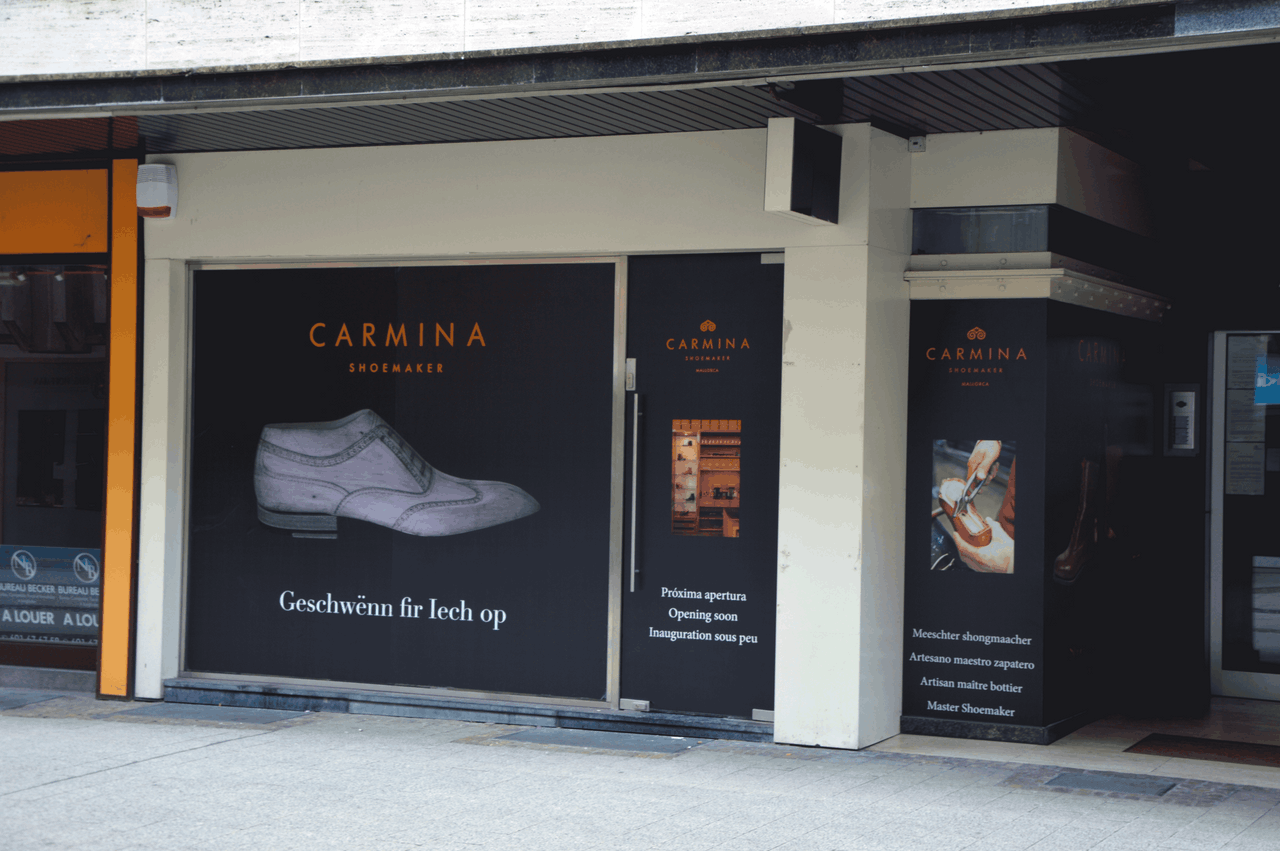
London and Luxembourg: These are the two locations chosen by historic shoe brand Carmina to set up new shops and grow its sales by 15%. Sales topped €20m in 2024. In the upper town, Carmina has chosen Avenue de la Porte-Neuve as the location for its first shop in Luxembourg. It is due to open in May or June. Right next to the Pharmacie du Cygne, the window is entirely covered with a flock of banners announcing "a forthcoming inauguration." One step closer to success.
Carmina Shoemaker Luxembourg was registered in Luxembourg in March and is managed by Abordador Capital, also registered in Luxembourg and headed by Grégoire Bontoux-Halley. He comes from the Halley family, a French business family who founded Promodès, which merged with the Carrefour group at the end of the 1990s.
Carmina is banking on its direct channels, in other words, direct sales in shops, of which there are seven worldwide (Spain, Paris, and the United States). These account for a third of the company's revenue. Another third comes from wholesale, via luxury boutiques, and the final third from its global online platform. This balanced distribution strategy has enabled the company to continue to grow at a steady pace. After Luxembourg, Carmina plans to open a boutique in London before the summer. By next year, other points of sale could open in Germany and Japan.
The shoes, which can be made-to-measure and/or personalised, are manufactured in Carmina's Spanish factories in Mallorca. Richelieus, derbies, boots, or heels: around 60,000 pairs are produced each year, with an increasing number of women's models, unlike the brand's historical offering, which is more geared towards men. The brand makes a point of selecting quality materials, in particular leather skins carefully chosen in tanneries, to design models that stand the test of time. The company also plans to roll out its scan tool for modelling bespoke shoes.