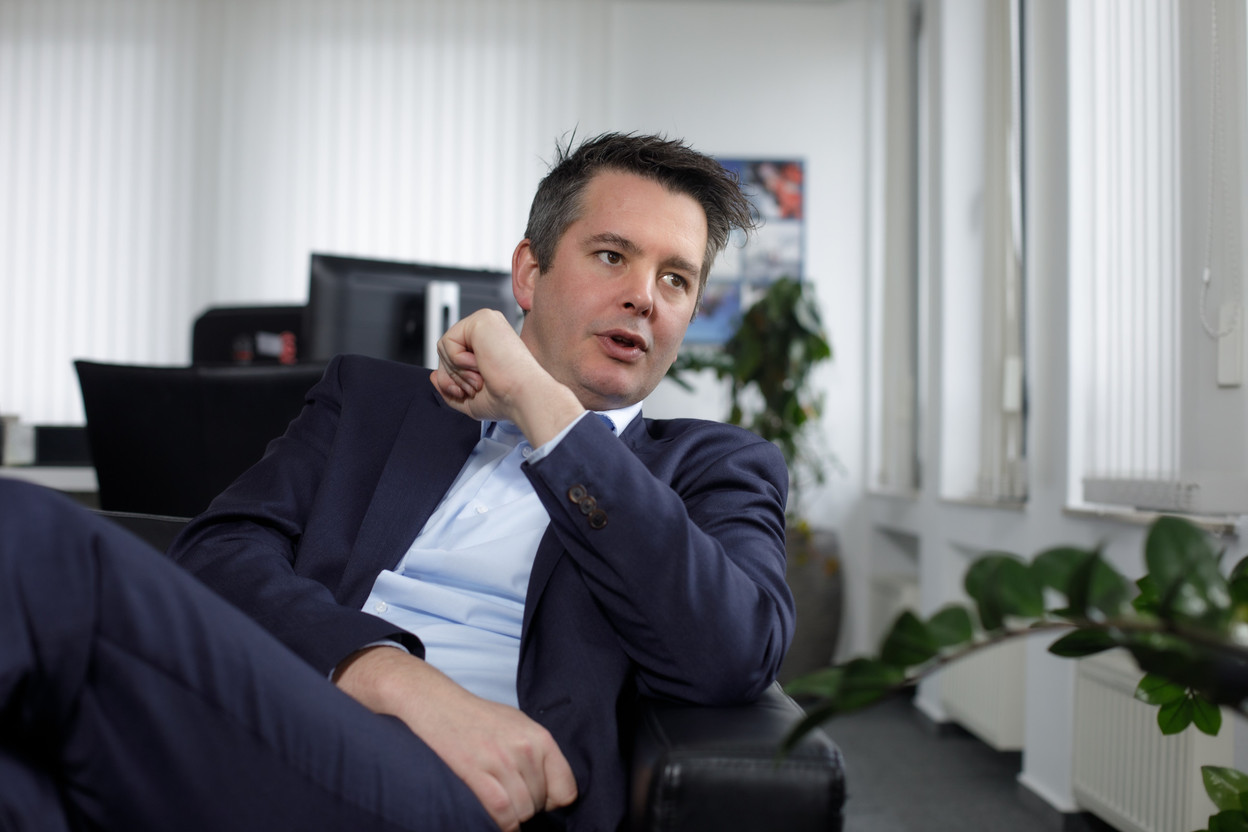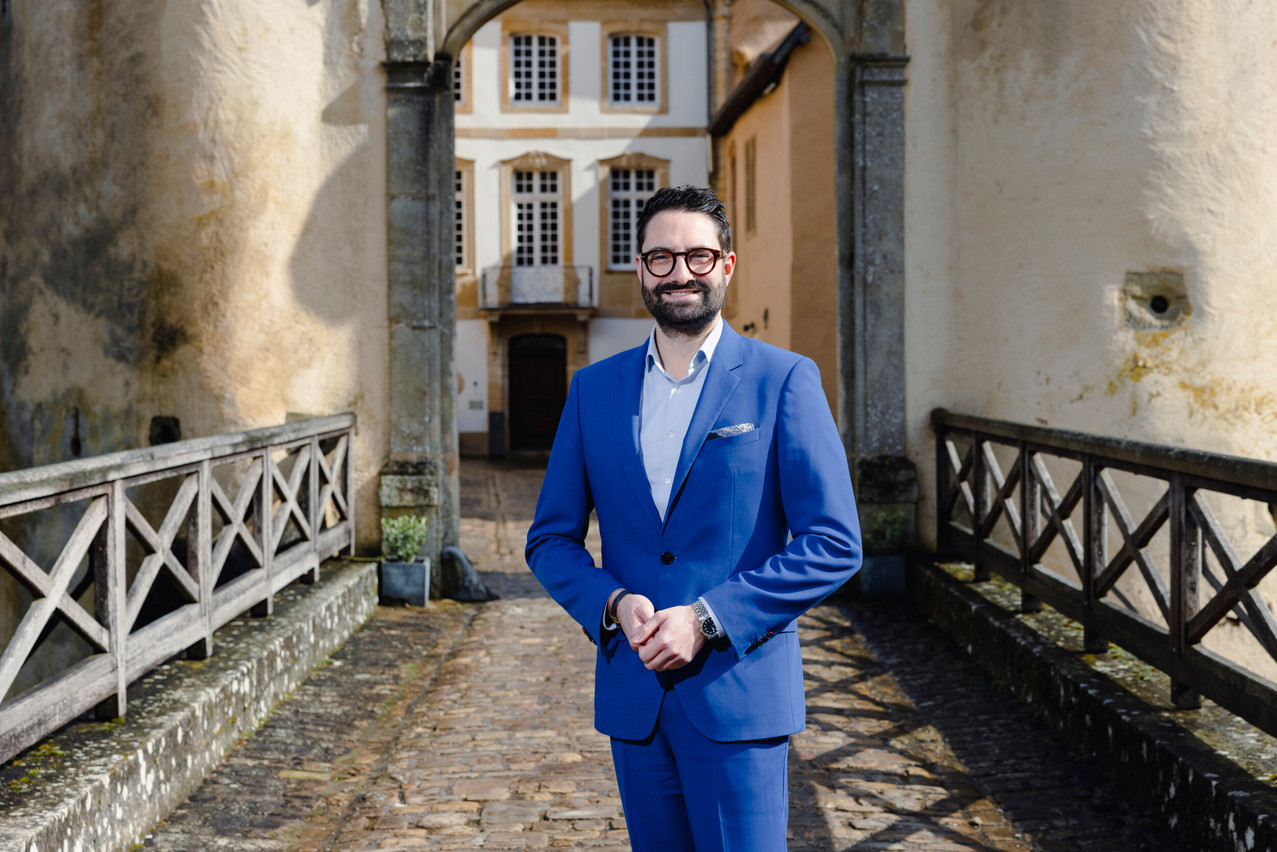
How has Luxembourg’s position as a business events destination evolved in recent years?

The creation of the Luxembourg Convention Bureau (LCB) six years ago has also helped structure this strategy. Initial results are already visible, with several international conferences confirmed in the coming years, including EUSEA (European Science Engagement Association) in 2026, Gen-E – the largest European festival dedicated to youth entrepreneurship – in 2027 and the annual congress of the European Society for Vascular Surgery in 2028.
What is the economic weight of the sector today?
“Congresses and professional events play an increasingly significant role in Luxembourg’s economy. Beyond the international visibility they bring, they mobilise a broad local ecosystem: hotels, event venues, specialised agencies, technical service providers, caterers and transport services.
The economic impact is also growing. Between 2023 and 2024, revenue generated by international business events rose by 14%. The average length of stay increased from 1.5 to 1.8 days, with participants spending around €450 per day on average – including accommodation, food, transport and activities. These indicators confirm the rising importance of this segment in the national economy.
The Business Events 2030 strategy was launched in 2023. Where does its implementation stand today?
“The Business Events 2030 strategy now serves as the roadmap for the development of professional events in Luxembourg. Several initiatives are currently underway.
The first concerns the creation of a business events barometer, developed in collaboration with the Luxembourg Convention Bureau. This tool will help measure the sector’s economic weight more precisely, track market developments and provide reliable indicators to fine-tune the strategy. The first results are expected before the summer.
Strengthening the skills of industry stakeholders is another key focus. Luxembourg has hosted the CityDNA Summer School, a leading European programme in event development, as well as several ICCASkills training modules dedicated to the international congress industry.
In the coming months, the Congress Ambassadors programme will also be launched. It aims to mobilise people from academic, scientific, economic and institutional circles whose expertise and international networks can help attract major congresses and events to Luxembourg.
Between 2023 and 2024, the number of international association conferences organised in the country increased from 19 to 32.

Luxembourg aims to enter the ICCA top 50 ranking. Where does the country currently stand?
“According to the 2024 ranking of the International Congress and Convention Association (ICCA), Luxembourg currently ranks 60th worldwide. Between 2023 and 2024, the number of international association conferences organised in thecountry increased from 19 to 32, reflecting progress in this highly competitive segment.
One interesting statistic from the latest ranking concerns the sectors attracting the largest number of conferences and congresses. With 17% of events, the medical sector stands out, followed by technology and science. These are among the country’s key economic sectors, confirming Luxembourg’s potential to compete with major European cities. The results of the next ranking, covering 2025, will be announced in May at the IMEX international trade fair in Frankfurt.
Is the ICCA ranking really a good indicator for guiding the national strategy?
“The ICCA ranking is based on specific criteria. To be included, an event must take place in at least three countries, gather more than 50 participants and be organised on a regular basis (annual, biennial or triennial).
Exhibitions, trade fairs and corporate events are not included. Yet these formats – such as corporate seminars, internal conventions or team-building events – are far more numerous. However, they are more difficult to track in a standardised way at the international level and do not fall within ICCA’s scope, which primarily measures a destination’s attractiveness for international associations.
The ranking is therefore not used as the sole tool to steer national strategy. Rather, it serves as a positioning indicator, allowing Luxembourg to compare itself with other European destinations of similar size and identify areas for improvement.
Luxembourg does not seek to compete in volume with major European capitals, whose hotel and event capacities are significantly larger.

Faced with major European capitals, what strengths underpin Luxembourg’s strategy?
“Luxembourg does not seek to compete in volume with major European capitals, whose hotel and event capacities are significantly larger. Nevertheless, the country has infrastructure capable of hosting large-scale events, including those exceeding 1,500 participants – already a substantial figure at national level.
Rather than seeing this limitation as a constraint, Luxembourg turns it into an advantage. The country’s compact size, accessibility, ease of mobility and high level of safety are often seen as benefits compared with larger, more congested and expensive metropolitan areas. Added to this are a rich heritage and omnipresent nature, offering visitors an environment conducive to both work and leisure.
To stand out, Luxembourg focuses on specialised international congresses aligned with its sectors of excellence. The objective is not to host more events, but to attract those with real scientific, economic or institutional impact. In other words, prioritising quality over quantity.
Luxembourg is historically associated with finance. Which other sectors do you want to highlight through business events?
“Beyond finance, business events are seen as a lever to increase the visibility of other key sectors in the country’s economic diversification strategy. These include space, cleantech, sustainable construction, industry, logistics and supply chain 4.0, information technologies, health technologies, as well as smart mobility and drones.
75% of Business Events take place in Luxembourg City. Should events be more evenly distributed across the country?
“The concentration of business events in Luxembourg City mainly reflects a structural reality: the capital hosts the country’s largest and best-connected infrastructure. That does not prevent a diversification strategy. On the contrary, Luxembourg can rely on a network of venues across the country – museums, castles, hotels and cultural centres – that broaden the possibilities available to event organisers.Some locations outside traditional circuits, such as the Château de Bourglinster, offer interesting potential for conferences, workshops and professional events. The objectiveis to better highlight these venuesoutside the capital by increasing theirvisibility, integrating them more intoprospecting efforts and making themeasier for organisers to access.”
From Delles to Thill
The Business Events 2030 strategy was launched in March 2023 by 
Bleisure: still underexploited
Business events can also serve as a gateway to tourism. Luxembourg aims to encourage “bleisure” – trips where visitors extend a business stay to discover the destination. Today, only 37% of business travellers do so, compared with a European average of 51%, according to the LCB. Better connecting professional events with the tourism offering is now among the government’s priorities.
This article was written for the Business Events & Teambuilding supplement of Paperjam magazine’s April 2026 issue, published on 25 March. It is published on the site to contribute to the full Paperjam archive.
Click this link to subscribe to the magazine.
Is your company a member of the Paperjam Club? You can request a subscription in your name. Please let us know via club@paperjam.lu