Mudam Luxembourg was born as a foundation. With more than 80% of its funding coming from the State, but shielded from direct ministerial oversight, it operated under that status for nearly two decades after its inauguration in July 2006. That changed on 1 January 2024, when a law passed in July 2023 transformed Mudam into a full public institution, with a new board, new contracts for all staff and a new governance framework.
The transition proved turbulent. An external review documented structural problems and staff tensions; its conclusions reached the parliamentary Culture Committee, as well as the pages of RTL and Reporter.lu. In January 2025, chair of the board president Patrick Majerus resigned mid-mandate. 

The cost of transformation
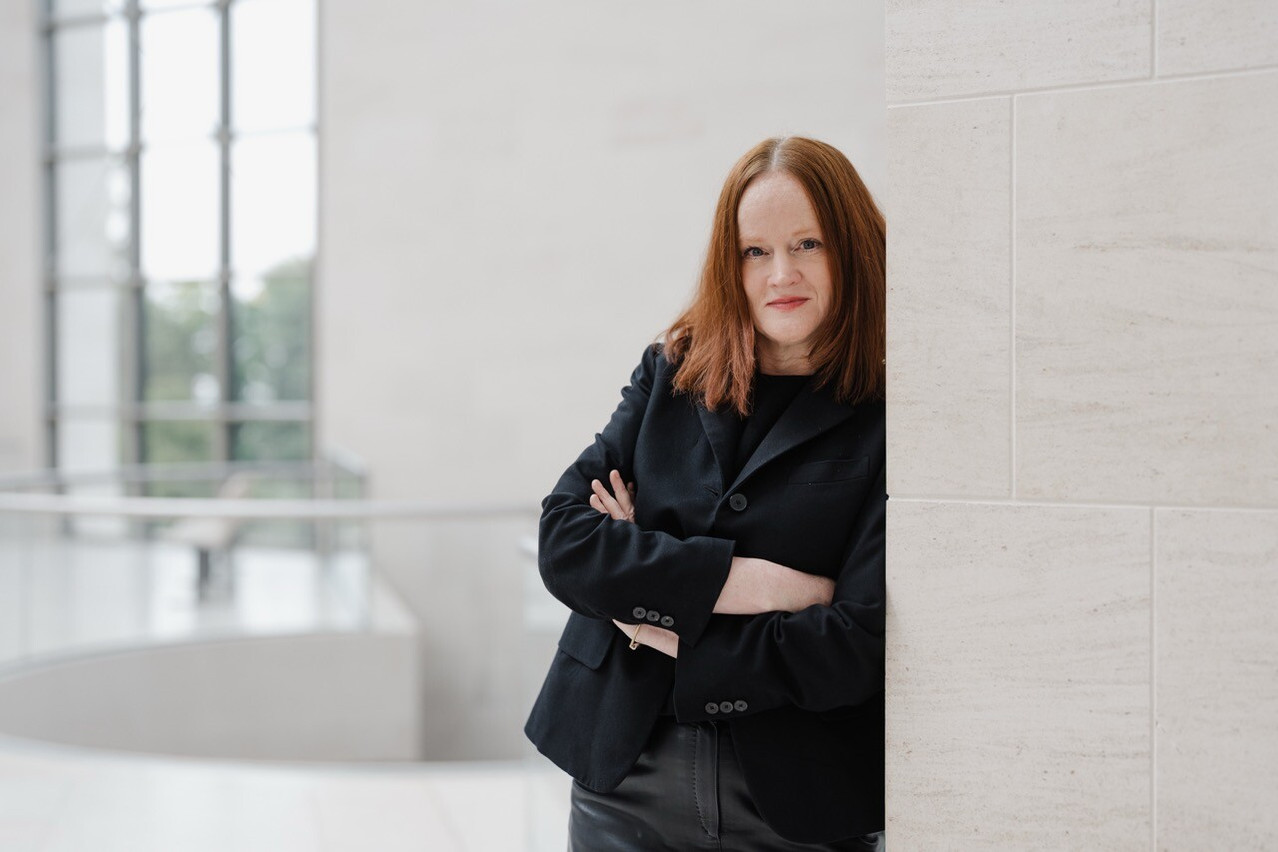
«Looking back, I think we could have communicated the process more clearly and more consistently from the outset.» Bettina Steinbrügge does not deflect. Asked whether the turbulent period at Mudam was the cost of necessary change or a sign that something in the transformation itself went wrong, she takes a moment, then answers directly.
Transformation, she says, almost inevitably creates friction. But at Mudam, the roots of that friction ran deeper than her own tenure. The museum had accumulated structural ambiguities over the years: over who held decision-making authority, and where the boundary between the director and the board actually lay. When Steinbrügge arrived in April 2022, bringing more clarity to those lines was part of the job from day one. «One of my tasks when I arrived was to bring more transparency, clarity and structure to communication.»
In hindsight, we could have done better on the change management side; particularly through more regular communication, training and open dialogue. That is probably the biggest lesson I learned in the process.

Then, in January 2024, everything changed at once. A law passed in July 2023 transformed Mudam from a foundation into a full public institution; a shift with sweeping practical consequences. Every staff contract had to be renewed. The board was reorganised under a new legal framework. The respective roles of the director and the conseil d’administration had to be redefined from scratch.
«In hindsight, we could have done better on the change management side; particularly through more regular communication, training and open dialogue. That is probably the biggest lesson I learned in the process.» Some people left. Steinbrügge is measured about it, but does not minimise what that means. «It is generally a pity to see people leave. But transformation also means that some people will realise this isn't the right environment anymore. That can be a fair outcome, even if it is a difficult one.»
Today, she says, the picture looks different. «I believe we have the right people and the right mindset to move forward and ultimately to support the museum's ability to deliver ambitious artistic projects.»
A different vision of a national museum
«For me, a national museum is not defined by the nationality of the artists it shows, but by the relationship it builds with the society that sustains it.» The statement cuts to the heart of a debate that has followed Mudam since its founding. With a collection numbering 850 works and an increasingly international programme, the question of what Mudam owes Luxembourg has never gone away. Steinbrügge's answer is both conceptual and concrete.
On one hand, Dodeka, launched in May 2026, is taking twelve works from the collection will travel to all twelve cantons of the country for the first time in the museum's history. On the other, a deliberate effort to build the local ecosystem: a programme for young curators developed with Kultur|lx and l’Oeuvre, a workshop for artists based in Luxembourg set up together with Casino, and collaborations with the Philharmonie and the Théâtres de la Ville through the Red Bridge project. «The collection belongs to the public. This is also why we are doing shows like Dodeka. It embodies a collective memory as well as a shared identity.»
In 2025, only 41 of Mudam's 850 works were on display inside the museum; a figure that reflects a deliberate pause rather than neglect, she says. «We took a break in order to reflect on the collection; how we want to show it, how we want to connect it to the museum. Because next year, we are going to start a bigger collection display, in which we show the collection all the time in changing displays. The collection has now reached a critical size that allows us to work with it in much more dynamic ways. Rather than presenting it as something fixed, we want it to become an increasingly active part of the museum's programme.»
Roles have evolved organically over the years. This has its merits, but also created friction and confusion at times.

On the international versus local question, she is direct. «On one side, we go global. On the other side, we are building up a significant collection of art from Luxembourg. […] We want Mudam to be a place where people in Luxembourg recognise themselves, feel welcome and participate – while remaining open to ideas, artists and audiences from around the world. The stronger our roots are in Luxembourg, the better we can also be on an international level.»
The next twenty years
The governance work of 2025 was not done alone. Steinbrügge describes a year of collective reckoning: the board, the management team and the departments worked through what the museum's foundations should look like going forward. Roles were redefined, communication lines clarified, and decision-making processes made transparent. And at the centre of that process was a new board president, Jean-Paul Olinger, who also leads the modernisation of Luxembourg's tax administration.
«What we did last year was work together; the conseil d'administration, headed by Jean-Paul Olinger, the management team, all the department heads. And Jean-Paul Olinger was very invested in all of this. Sometimes it is interesting when somebody comes from outside and asks the right questions. He asked many of the right questions and had fantastic ideas. It was actually a very good year because we grew together; all of us. And this is an amazing process in the end.»
Mudam is not built around English, she says at one point; unprompted, almost as an aside. It is based on its own identity, rooted in Luxembourg. The remark feels like something she has been thinking about for a while. She signs her editorial in the 2025 annual report with two words in Luxembourgish: «Merci villmools». «I wasn't born here, and I will never be a Luxembourger. I have my own history. But Luxembourg is really embracing.»
The gesture, she says, is heartfelt; not an imitation, but an expression of something genuine. «Using 'merci villmools' was really heartfelt. I don't want to imitate something, but I also want to show my respect to a country I deeply admire. It is a small, but also a symbolic gesture. And the fact that they also place it in the hands of a foreigner is a big step.»
Mudam celebrates its 20th anniversary with a week of free events from 1 to 5 July 2026. On 1 July, the museum opens its doors from 10:00 to 21:00 with guided tours, curator talks and a «Wednesday Night Fever» quiz evening hosted by CELL. On 3 July, a day-long Party takes over the building — from artist talks and a participatory tattoo performance by Marco Godinho to concerts and DJ sets running until 1:00am, with Alva Noto headlining. On 4 July, Kids Day offers a full programme of workshops, guided tours and performances for families and young visitors. All events are free. Full programme at mudam.com.