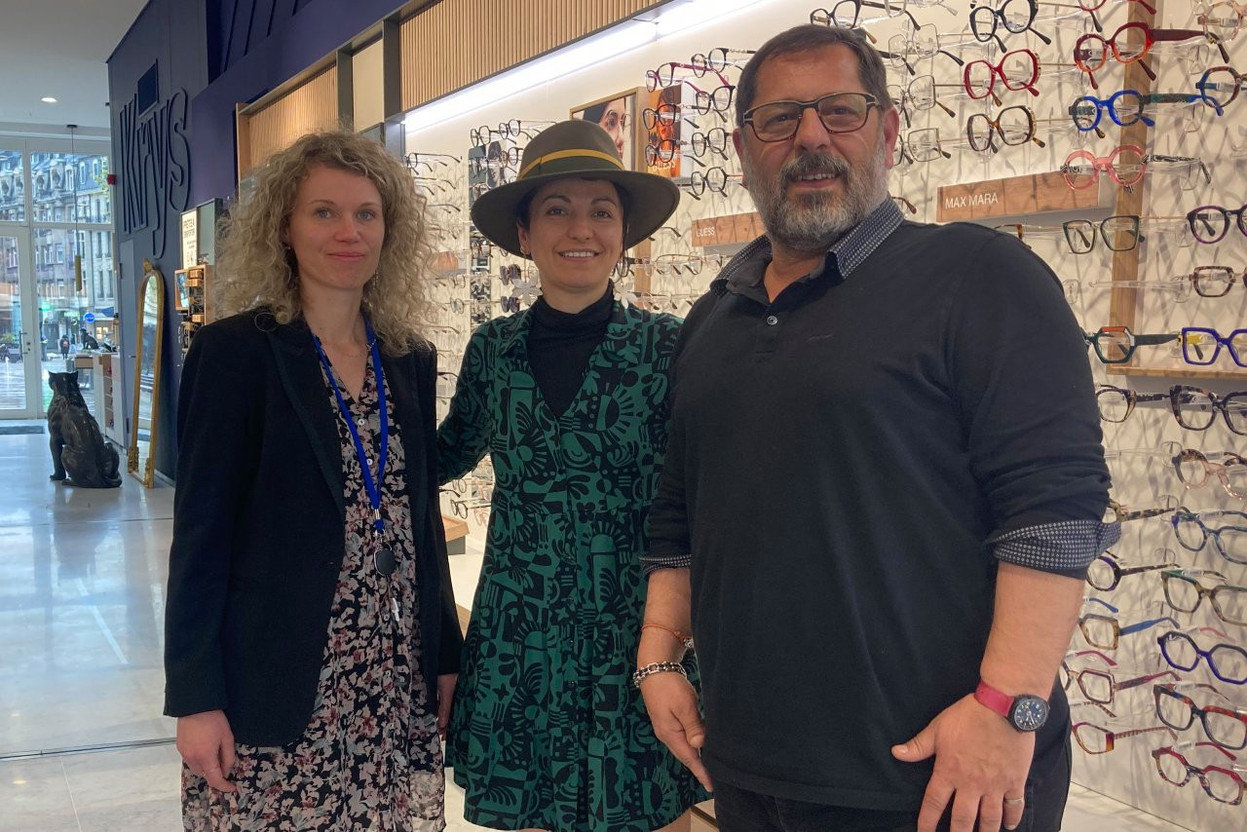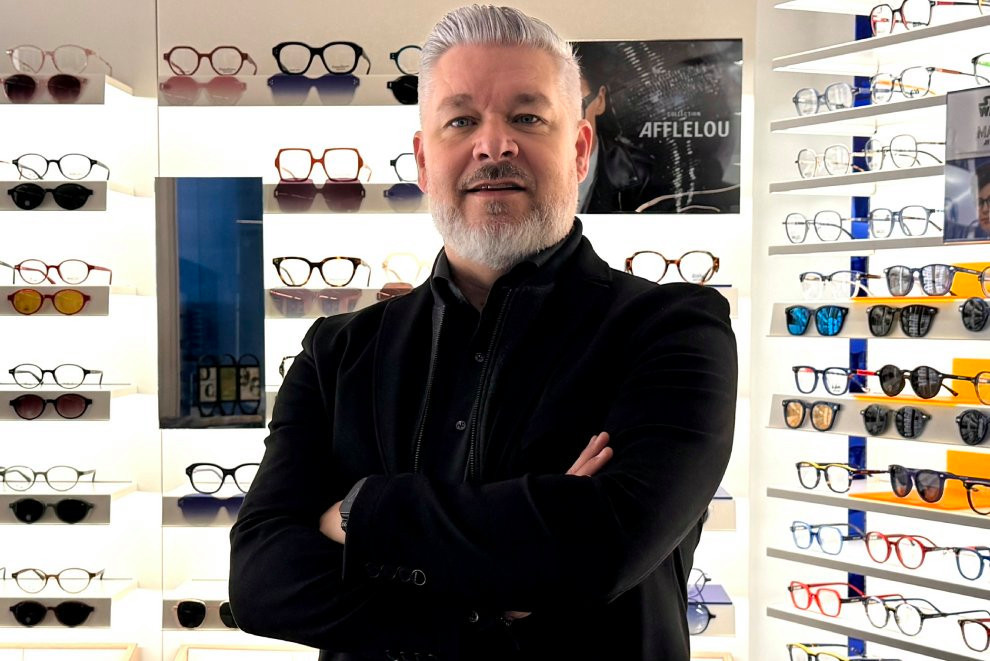
After Foetz, in 2002, Mersch, Weiswampach, Esch-sur-Alzette and the station area in Luxembourg City, the Grand-Rue shop is the sixth Alain Afflelou outlet in the country. It won’t be the last, the company’s Belux general manager Bernard Englebert has already announced.
What is it that sets the Luxembourg optical market apart from its neighbours?
Bernard Englebert. —“The market is characterised by a fairly high level of demand in terms of quality and by a great mix: a more multilingual population, but also intergenerational. There’s also a high level of mobility, with many of our customers crossing the border. It’s a fairly compact area, but a very demanding one. It’s a real breeding ground for innovation. And because it’s a small country, there’s also a real proximity.
In this context, what philosophy does Afflelou behave with?
“We respect our DNA. It’s about combining expertise, innovation and accessibility. These are really strong brand values. It’s also a model in which prevention plays an important role, whether in optical or hearing products, and which corresponds to products that can be worn by all generations. There is a high level of expertise and accessible technology. Controlled prices make it possible to serve all customers.
Having the same person in Luxembourg means we know the country inside out.

The six outlets here are owned by the same franchisee, entrepreneur Emmanuel Schuler. What does this say about the Afflelou model?
“It’s an indicator of confidence and solidity. It’s the ability to replicate our model on several sites with the same partner. So it’s a real added value and, above all, it proves that the model works perfectly. Having the same person in Luxembourg means we know the country inside out. Mr Schuler has surrounded himself with the right people. He knows the structure well, the cities where we need to be present, and has a good understanding of his market. He also has a very clear approach to the skills that need to be developed in order to be able to rely on experienced opticians.
You referred to the’audio. Do addresses in Luxembourg already occupy both optical and audio niches?
“Currently, not yet. It’s under development. France is a little further ahead, but the ambition is to develop audio. As you may know, Alain Afflelou, our founder, is both a hearing aid specialist and an optician. So for the last 15 years, we’ve been developing audio centres with a strong sense of conviction. It’s also part of the same logic: to democratise hearing aids. The Tchin-Tchin offer, which allows you to have a second hearing aid for €1 more, also exists in audio. Audio accounted for 9% of the group’s growth. This dynamic is clearly part of an underlying trend.
Another underlying trend is the ageing of the population. How is this changing the profession?
“The issue of ageing does not reduce our profession to a single age category, it simply redefines its priorities. The optician’s profession is evolving towards a more preventive, educational and rational role. Today, we have to support each customer over the long term with solutions tailored to every stage of life. This also means being at the forefront of screening and raising awareness, as part of a more fluid and accessible care pathway. As I discovered myself, anyone who wears a hearing aid also wears glasses. In our booths, the optician can use audio tablets to give advice to an optical customer.
In Luxembourg, the fact that we are expanding physically means that we need digital less.

With digitalisation, where does the added value of the in-store experience lie?
“The real added value lies in the human relationship. Nothing beats advice, listening and adapting to the specific needs of each customer. Digital technology will never replace expertise or experience. I often talk to my teams about this: to stand out from the crowd, you have to offer a service of excellence and an experience that really makes a difference. And this is compatible with digital, the two are complementary.
How do you find the right balance in this complementarity?
“This involves in-store innovation, particularly through team training. I’ve put a lot of things in place to train opticians. Not just in sales, but also in products. There are a large number of references, both in frames and lenses, with different ranges of lenses and products. There’s a very strong focus on trust and training. In Luxembourg, the fact that we are expanding physically with a sixth opening means that we also have less need for digital: it’s easier to find a shop near you.
What role does technology play in everyday life?
“Innovation is essential. We have developed a pair of ‘Magic Connect’ glasses, inspired by the name of our interchangeable lens range. It was launched today [Tuesday 3 March 2026, editor’s note]. These glasses allow you to listen to music or be alerted to a call thanks to audio parameters built into the frames. They have a battery life of several hours, so there’s no need for earphones. This is not audio in the sense of hearing aid specialists, but it is a new technology.
How do you see your business continuing to grow in Luxembourg?
“The aim is to continue to build and ensure a truly sustainable presence across the country, always at the service of vision and hearing health. We have a good partner, with ambitions to open even more points of sale, but also to renovate existing shops. Our development ambitions are not yet set in stone, but they do exist.”