Removed from the board of a company that manages the fund holding the group, but still backed as head of its operations. Grégory Clerc finds himself at the centre of two conflicting interpretations of the same court ruling: Romy Castel is claiming victory in Singapore, whilst the boards of directors of Cassiopée and DF Holding insist that Castel’s operational governance remains unchanged.
In a press release issued on Friday 2 October, the daughter of founder Pierre Castel announced that the High Court of Singapore had upheld the resolutions passed at the general meeting of Investment Beverage Business Management (IBBM) held on 2 February 2026. According to this document, Grégory Clerc and Pierre Baer are removed from their posts as directors, and the validity of the votes cast by Romy Castel is recognised.
The same press release announces the appointment of Chua Pin, François Wertheimer and Philippe Damas as directors, as well as that of Romy Castel, subject to approval by the Monetary Authority of Singapore (MAS). It states that the decision is effective immediately and indicates that Grégory Clerc and Pierre Baer have been ordered to pay the costs of the proceedings on a compensatory basis. The full text of the decision of 2 October was not available at the time of writing.
A decision “in keeping with what my father built”
“This decision reflects the wishes expressed by the shareholders and marks a return to transparent, competent governance that remains true to what my father built,” said Romy Castel.
The victory announced relates to a dispute that began in February. At the IBBM general meeting, Pierre Baer, who was chairing the meeting, had refused to recognise Romy Castel’s voting rights. His allies then appointed another chairperson, who recognised his votes and declared the resolutions passed. The validity of this procedure was at the heart of the dispute, as explained in an earlier High Court ruling handed down on 25 September. As early as 9 February, an injunction had provisionally prohibited Grégory Clerc and Pierre Baer from acting as directors of IBBM.
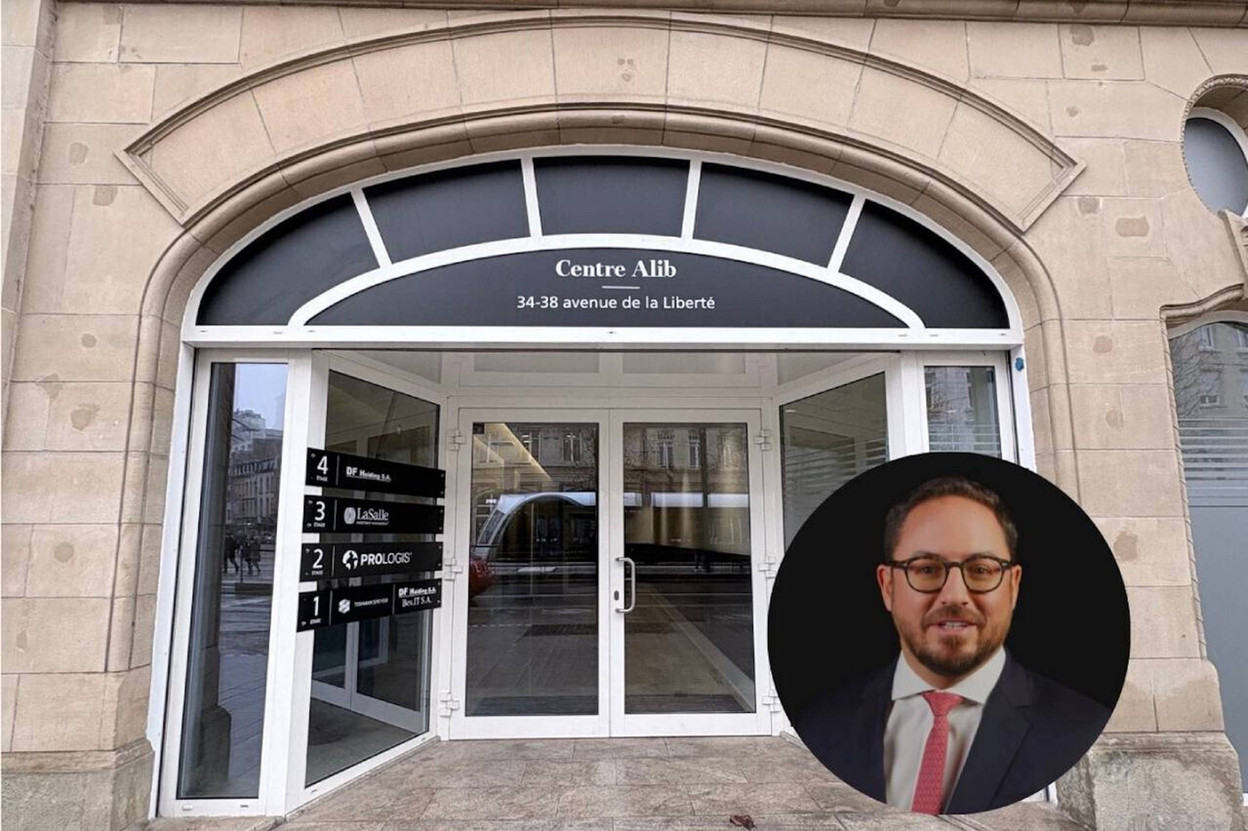
To understand what impact this revocation might have in Luxembourg, it is necessary to distinguish between the roles of the various companies. IBBM is the manager of the Investment Beverage Business Fund, or IBBF. This fund owns Cassiopée, the group’s parent holding company, which in turn owns the entirety of DF Holding, its operational arm. The judgement of 30 July describes this chain of control. DF Holding is based on Avenue de la Liberté in Luxembourg and is listed in the Fedil directory with Grégory Clerc as CEO.
Changing the fund manager’s board does not, therefore, in itself amount to replacing the group’s chief executive. It is precisely this distinction that Cassiopée and DF Holding rely on in their joint response of 2 October. “IBBM is not the parent company of the Castel Group,” the two boards emphasise, before reaffirming their “full and complete confidence” in Grégory Clerc.
Legal nuances
Their argument centres on the role of the trustees – the companies responsible for managing the assets on behalf of the beneficiaries. According to the board, the power to appoint Cassiopée’s directors lies with these trustees, who are required to protect the interests of all beneficiaries. “No individual – let alone a member of the founder’s family – is a shareholder in Cassiopée,” insists its director, Marc Van de Walle. He points out that the shareholder is a professional trust company which exercises the voting rights.
This separation between the family, the manager and the asset holder is also documented by the Singaporean courts. In its ruling of 30 July, the High Court stated that SG Trust (Asia), the trustee of IBBF, receives instructions from IBBM subject to a clause in the trust deed. The relationship between the two entities therefore exists, but its operation is subject to a contractual condition. This previous ruling does not allow the conclusion that any instruction from a new board should be carried out automatically.
In December 2025, SG Trust (Asia) removed Alain Castel, the founder’s nephew, from the boards of Cassiopée and DF Holding on the instructions of Clerc and Baer. It considers that the trustee must follow the instructions of the new board with the same diligence. This argument challenges the consistency of the opposing position; it does not, in itself, constitute a legal conclusion regarding the trustee’s obligations.
The replacement of IBBM is currently underway
The boards of Cassiopée and DF Holding are also preparing an alternative course of action: replacing IBBM as the fund’s manager. They state that the trustees began the search for a professional, independent and authorised manager several months ago. A candidate is said to have been selected and their appointment agreed, subject, in particular, to IBBM’s removal by the fund’s unitholders and the fulfilment of other conditions. According to their statement, Romy Castel has applied to the Singapore courts to temporarily suspend this process.
The issue therefore goes beyond the composition of the board of directors. Romy Castel’s camp is seeking to translate its victory at IBBM into influence over the group. The holding companies’ boards are arguing in favour of retaining the current operational management and have announced their intention to entrust the management of the fund to another entity. They also dispute the founder’s daughter’s claim to represent the family, asserting that she represents only one of the five beneficiary branches. They point out that part of the family had spoken out against her move on 28 August. On the other side, Romy Castel enjoys the support of Philippe Castel and Alain Castel, respectively chairman and CEO and deputy CEO of Castel-Vins.
Her statement already sets out a programme: to adapt the wine division to the decline in consumption in France, to develop agricultural activities and to resume acquisitions in Africa. She also announces her intention to finalise a tax regularisation process, strengthen compliance and establish an effective, centralised head office. These are the policy directions championed by her camp, the implementation of which will depend on the powers she is actually able to exercise over the group’s companies.
Both parties have promised employees, clients and partners that business will continue as normal. They disagree on who should determine the strategy. For DF Holding, based in Luxembourg, the key question now is whether the announced change at the Singapore-based asset manager will result in new appointments within the chain of command, or whether the replacement of IBBM will see the current management retained.