Compliance has become harder in ways that are less visible than a new rule, but often more expensive to manage. In many financial institutions, the strain now lies less in understanding regulation than in gathering the same data repeatedly, proving why advice fits a client and tracking obligations that do not line up neatly across borders.
That is opening space for firms that do not promise to replace compliance teams, but to make regulatory work more structured and easier to run. Their value lies less in legal interpretation than in the mechanics of execution.
The shift matters because it changes what institutions are buying. The need is no longer only for expertise on what a rule means, but for systems that can carry that rule through documentation, monitoring and governance without constant duplication or delay.
AML
Anti-money laundering shows that shift clearly. The problem is not usually that firms do not know what the law requires. It is that the same information must be collected, checked and refreshed across several actors, often with little coordination between them.
Maqit, a Luxembourg-based regtech and advisory firm, focuses on that operational layer. Its work centres on structuring AML and KYC workflows so documents can be reused, audited and updated across processes instead of being requested from scratch each time. That makes the firm less a rule interpreter than a process organiser.
A recurring friction point is what the firm calls ‘data provision fatigue’. The term describes a common experience in regulated transactions, where several professionals ask for the same papers under the same legal framework. What looks like caution can in fact be duplication.
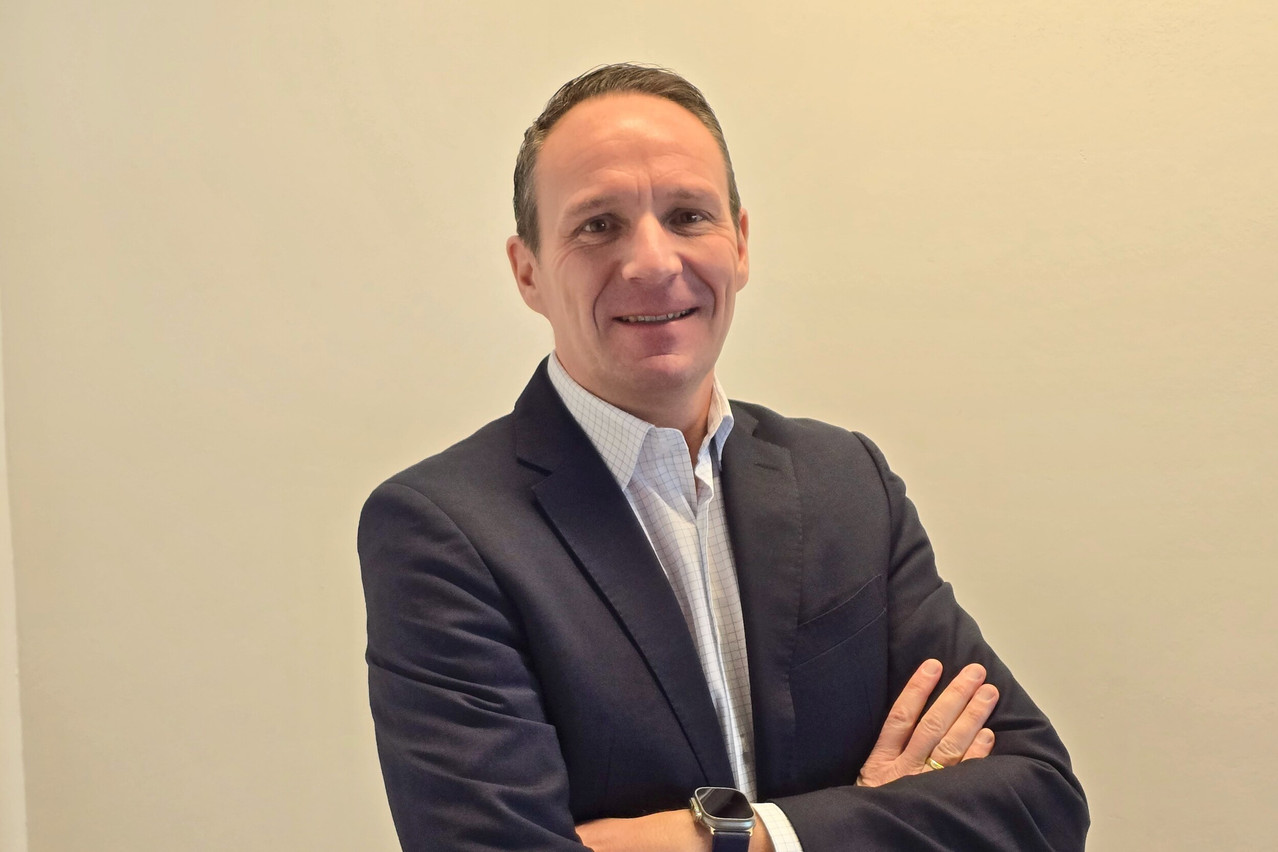
“We call this data provision fatigue, because you have to provide the same data again and again,” Thierry André, partner at Maqit, said. “Clients don’t understand why four professionals involved in the same transaction all ask for the same documents.” In a property transaction, for example, a bank, a notary and an agent may all ask for the same identity documents in parallel.
Trust in the data
The burden has grown because the authenticity question has become harder too. It is not enough to collect data. Firms also need to know whether the material they receive can be trusted.
“Nowadays, it is very easy to produce fake or forged documents,” André said. “So when you are collecting data, you not only have to analyse it, but first ask whether it is real or fake.” That pushes the bottleneck upstream.
The issue is not simply the amount of documentation. It is the quality of the data entering the system. “You can have the best risk models, you can have the best KYC tools. They don’t work if you don’t have the right data,” André said.
Maqit’s approach is to treat compliance data as something that should move across processes rather than restart whenever a new professional touches the file. Better structure reduces repeated requests and makes audit trails clearer. It also makes it easier to explain why information is needed.
Automation supports that model, but André did not present it as a substitute for judgement. “I often compare AI to junior staff,” he said. “If you want sharp results, you need to train it and explain clearly what you expect.”
That is a restrained claim, but a credible one. In AML, the gain is often not autonomous decision-making, but cleaner intake and fewer loops of avoidable repetition. The technology is there to support judgement, not remove it.
André also tied the issue to a broader local lag in technology use. “I think this is maybe a typical Luxembourgish issue,” he said. “At one moment, we forgot to use technology for collecting data, for understanding the data and analysing the data, and we are running a little behind schedule on that.”
Suitability
If AML exposes the strain created by repeated documentation, suitability rules expose a different pressure. Here, the challenge is not only to make a recommendation, but to show why it fits and how that fit holds up over time. The burden is evidentiary as much as regulatory.
Sopiad, a regtech spin-off from the FM4F research centre at HEC Liège Management School, builds tools that turn regulatory frameworks into scoring systems advisers can use to document their decisions. The aim is to make advisory reasoning visible rather than implicit.
That matters in a market where product complexity and disclosure volumes have both increased. “We acknowledge that investors, in particular those using traditional, private or retail banks, have never felt less confident about their investment decisions,” Julien Renkin, chief commercial officer at Sopiad, said. “Products are more numerous, more complex, and the amount of information provided for compliance or marketing reasons can be overwhelming.”
That overload creates pressure on both sides. Clients may feel less certain that they understand what they are being offered. Advisers, meanwhile, face a stronger need to show why a recommendation is appropriate and preferable to the alternatives.
“We document and we evidence how good the financial advice is by really using that scoring system and really demonstrating why that financial advice is better than another one or very adequate for the client,” Renkin said. The point is to make advisory reasoning visible rather than leave it implicit. That is what turns a recommendation into something a bank can show, not just assert.
Over time
The suitability question also does not end at the point of sale. “A banker’s obligation is not only to provide the best advice, but also to make sure that it remains suitable over time,” Renkin said. That makes monitoring part of the advisory process rather than a back-end compliance task.
Traditional risk-return frameworks already required review. ESG has added a newer and less settled layer of preferences and data. Sopiad’s role is to make the reasoning behind advice clear enough to survive review and revision.
Cross-border
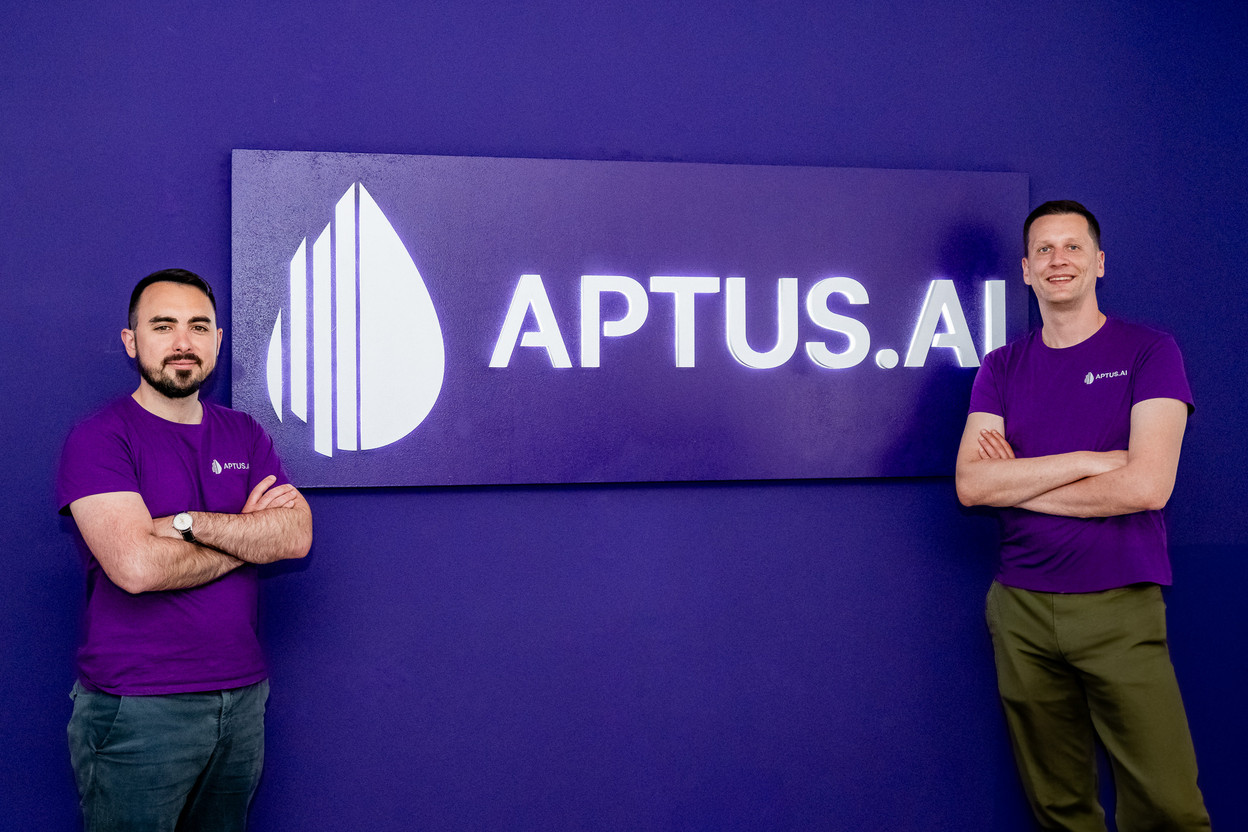
Aptus focuses on a different layer of the same problem. Its work centres on the difficulty of knowing which legal or tax obligations apply, when they apply and how they change across borders. That question becomes more urgent as business expands more easily across jurisdictions than regulation does.
Markets may be integrated enough for firms to scale. The rulebook underneath remains fragmented. That mismatch creates its own operational burden.
“The mix of more international business and more complexity makes everything quite tough to deal with,” 
It is an operating problem for firms managing obligations across several countries and business lines. Regulations, directives and national implementations do not arrive in a single coherent layer. They overlap, diverge and change on different timelines.
That makes it harder to decide what requires action and when. It also makes it harder to know which source should govern a decision. That is the operating problem Aptus is trying to solve.
“Whenever you have a very clear source of truth, AI can handle volumes of material,” Cristalli said. “But when one document says one thing and another says something else, and you do not understand the connection between the two, it is very easy for it to hallucinate.” That critique goes to the centre of the firm’s pitch.
Earlier action
Aptus addresses that by converting legal and tax texts into machine-readable obligations, with metadata on hierarchy, applicability and change over time. That allows systems to process context as well as content. The promise is not simply speed, but more control over which rule applies and when.
“Traditional compliance is reactive,” Cristalli said. “A new law comes out, you read it, understand your process and update it. AI can make it much more proactive.” The commercial promise is to move compliance earlier and make it more targeted.
Compliance is still expert work, but it is no longer only expert work. It increasingly depends on whether documents, obligations and reasoning can be structured well enough to move through an organisation without repeated breakdowns.
That is why the category is starting to look less like a niche software field and more like operational infrastructure.