Why open a gallery in Luxembourg in 2016 that is entirely dedicated to Korean art?
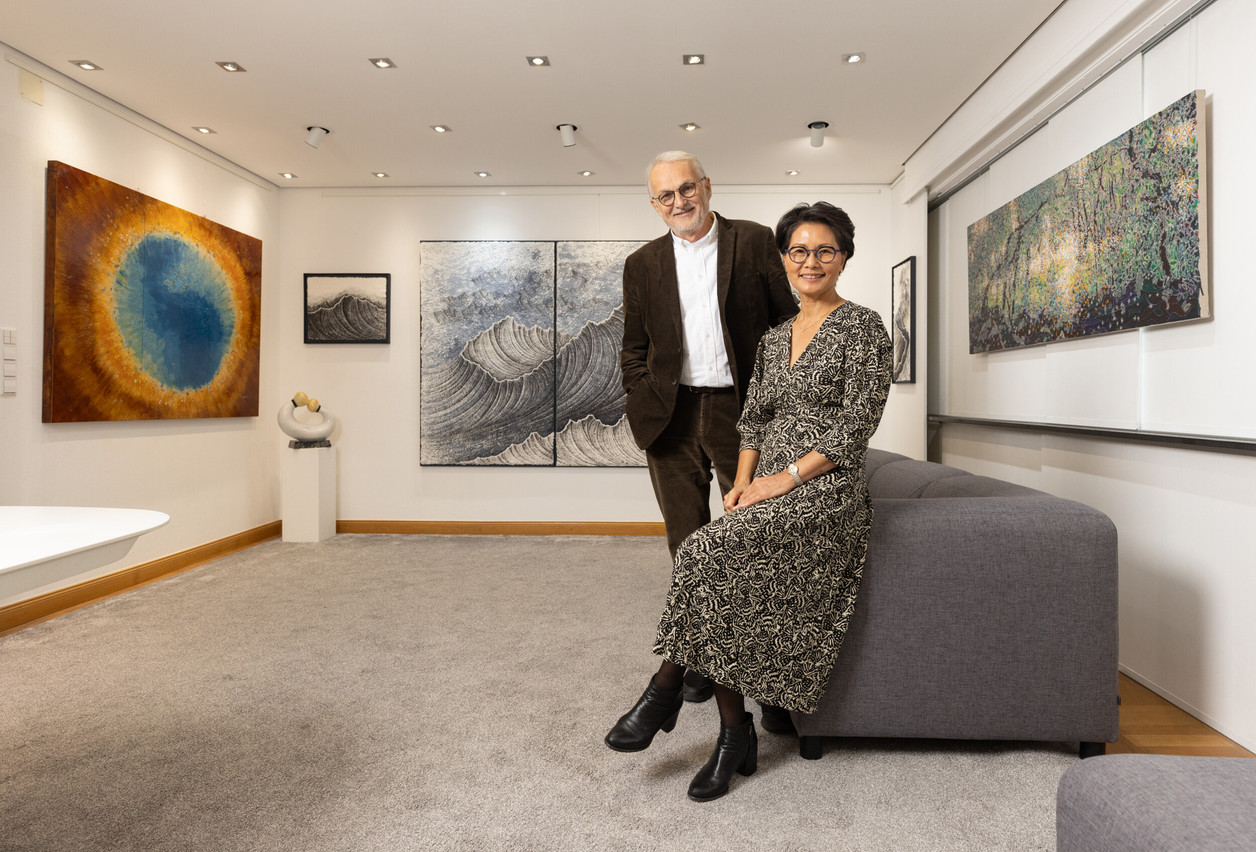
Orie Duplay. – “It was simply a passion and a desire to showcase Korean artists here. That really was my sole motivation. Through my association, Les Amis de la Corée au Luxembourg, we used to put on a big show every year, but after a while I began to miss the fine arts. I went round galleries and museums with catalogues to try and convince them to showcase Korean artists – they’re truly excellent. None of them were interested. I was feeling quite desperate, and I realised that I needed to have a space of my own so that I could invite Korean artists. Otherwise, nobody else would do it.
What exactly are you taking with you?
Christophe Duplay. - “With all the ‘critical failure factors’. No product, no customers, no shop, no brand recognition and no expertise. We threw ourselves into it, and Orie said: ‘Well, I’ve got my smile’. We started here, in what used to be our living room, which doubled as a lounge and a dining room. In September 2016, we were lucky enough to have our first stand at Art Week, which was in its second year. In November, it will be our tenth consecutive appearance, not counting 2020, when Art Week was held online.
Ten years on, what has changed?
C.D. – “Reputation. The early years – 2016, 2017 – were very modest. But we’ve been based here since late 1999, so we already knew quite a few people. That was our greatest asset. After that, we went to Korea to seek out artists. Today, half of our artists live in Europe, mainly in France, because many arrived as early as the 1950s: all you had to do was enrol at the Beaux-Arts to get a visa, the idea being to go back to England or Germany, and in the end they found they weren’t doing too badly here. There’s a large community of Korean artists in Paris. The other half always come over from Korea for the private viewings.
What is ‘Décennie’?
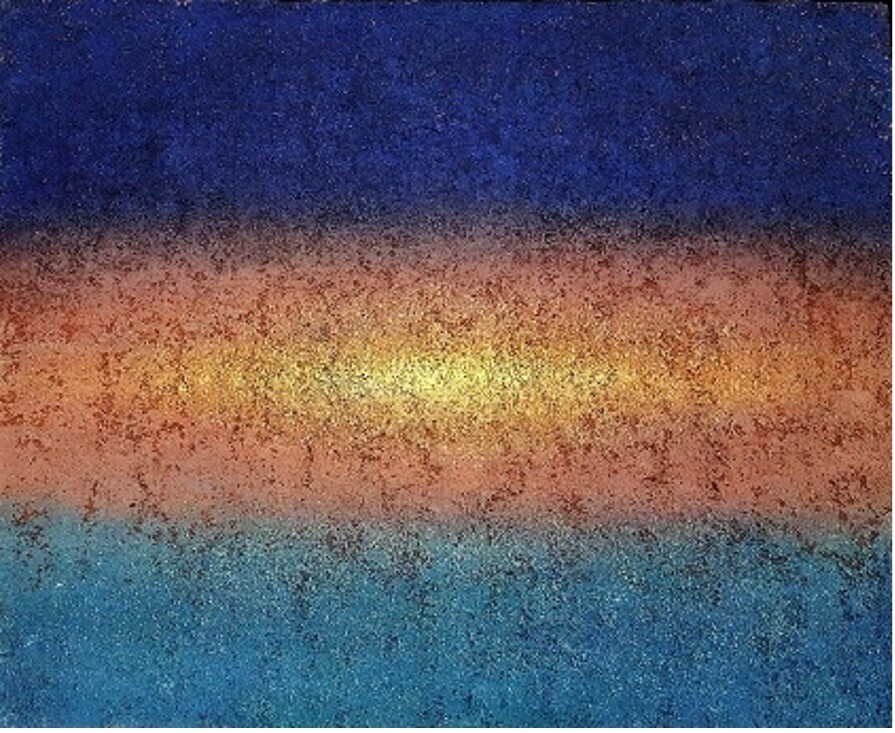
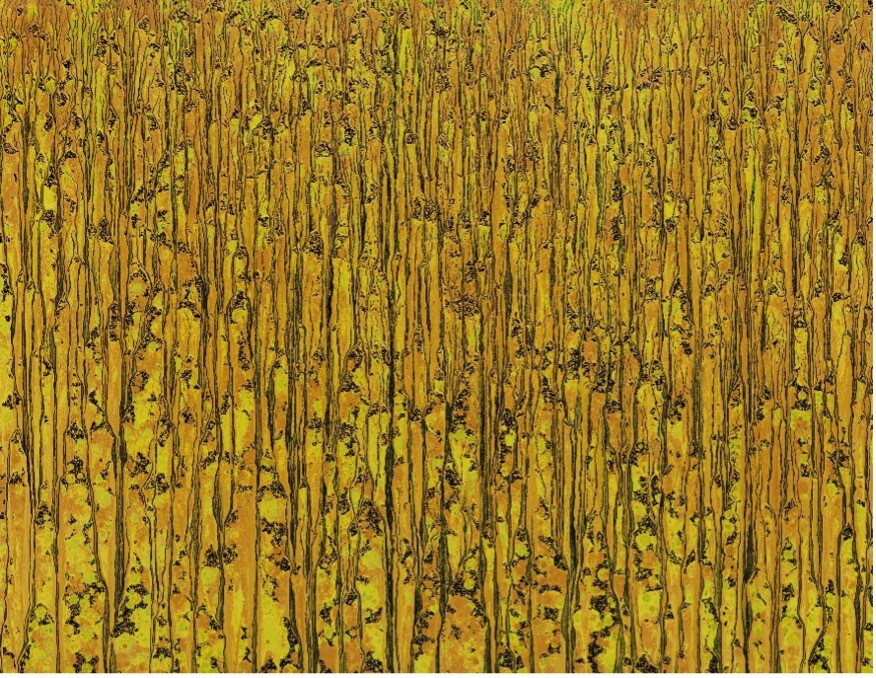
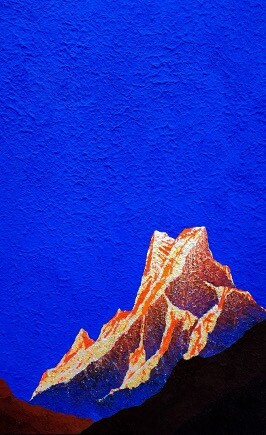
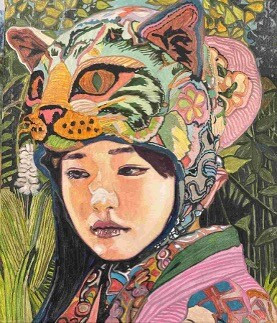
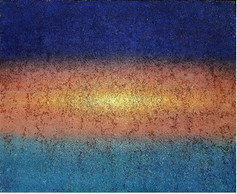
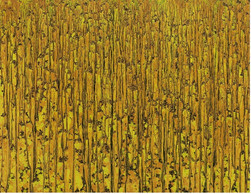
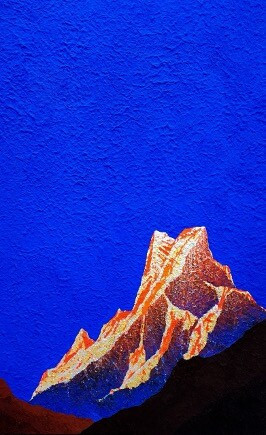
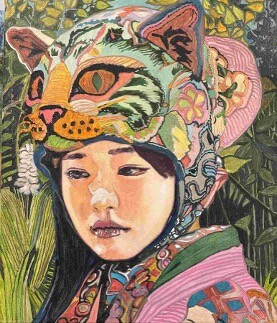
C.D. – “We’ve showcased around sixty artists since 2016. This time, we’re bringing together around twenty of them – some of the very best. It’s an opportunity for visitors to take a look back over ten years of artists and see what the best ones are doing. This is the first time we’ve put on an exhibition featuring 20 artists. Usually, we showcase two at most.
How do you choose 20 artists out of 60?
C.D. – “It’s a bit unfair. Of the 20, they aren’t the top 20; they’re the top 15 in terms of sales, plus a few others who haven’t had as much exposure and whom we’d also like to showcase. Because there’s a virtuous circle: those who are exhibited get exhibited again, so they sell more. At the start, it’s curiosity, a moment of instant attraction. We don’t all have the same tastes, so we try to reach a consensus. And then we see what works, what people like. Ultimately, it’s the public who decide. A gallery is a business, but it’s also a cultural institution. It’s both.
You talk about ‘Korean art’. Does such a thing exist?
C.D. – ‘I’m often asked what Korean art is. I reply that there is no such thing as Korean art. There are Korean artists. There have been a few schools, a few trends: in the 1970s, it was monochrome – very understated, very Zen-like, repetitive works. Today, some artists still work in monochrome using Indian ink, whilst others, on the contrary, produce very colourful works. There is no such thing as ‘French art’, nor is there such a thing as ‘German art’.
O.D. – “But Korean painting techniques are very different from Western ones. Most of our artists use traditional materials – natural pigments – which they make themselves using glue and a little water. There is no perspective as in Western works; it is always flat, but there are three different perspectives within the same painting: what one sees from above, what one sees from the front, and what one sees from below. When you look at certain works, you feel confused, because the expected perspective isn’t there. And the painting always displays infinite finesse, very soft colours and detailed lines. The amount of work involved is immense.
C.D. – “It’s a job that Westerners don’t do; it takes a very long time.
O.D. – “And we do contemporary art. So you could say it’s Korean art.
Will the artists be there?
C.D. – “No, and that’s the only regret. Our anniversary coincides with Kiaf and Frieze in Seoul, two major art fairs that take place at the same time. They’re all represented there, because Korean artists based abroad are highly regarded in Korea. They have that sort of aura of having made it elsewhere.
And after the anniversary?
C.D. – “Park Myeung-Hee has been selected for the Salon d’Automne in Paris, at the Place de la Concorde, from 28 to 31 October. It is one of the oldest art fairs in Paris, founded in 1904 by artists for artists: it is not the galleries that exhibit, but the artists themselves. She will then have a solo exhibition here in early November. And in November, at Art Week, we’ll have the largest stand we’ve ever had.”
‘Décennie’, 23–25 September, Artskoco Gallery, Luxembourg. Opening on 23 September at 6.30 pm, free admission. Closing on 21 October.