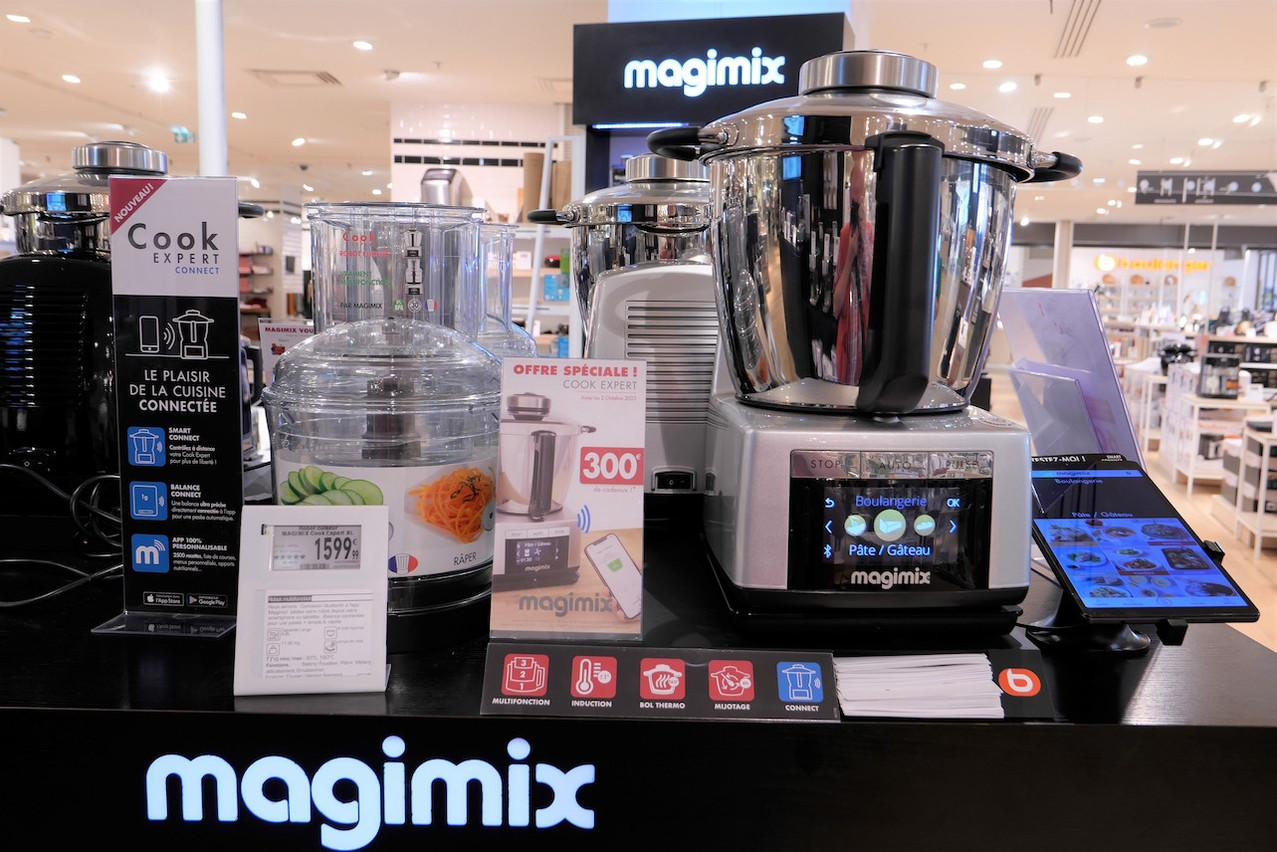
Ardian had finalised in December 2024 the acquisition of a majority stake for an unconfirmed one and a half billion in Magimix (as well as in Robot-Coupe) alongside the Hameur group, which retained around 42%. Less than a year later, the two groups confirmed that they had entered into exclusive negotiations with the Franco-Belgian Lavafields group with a view to selling the top-of-the-range household appliance brand.
This rapid resale comes as no surprise to industry observers. When Ardian took a stake, it was anticipated that the investor would focus on the professional business (Robot-Coupe) and sell Magimix in a second phase: Robot-Coupe generates most of the Hameur group’s profits (around €130m in EBIT on a valuation estimated at €1.5bn). Magimix, on the other hand, although a pioneer in food processors for the general public, faces stiff competition (particularly from Germany’s Vorwerk’s Thermomix.
The Hameur group - the holding company of the de Jenlis family - has until now been the historic shareholder in Magimix and Robot-Coupe. Based in Luxembourg, the Hameur group acquired the two brands back in 1988 and remained the owner for more than three decades. At the end of 2024, Hameur opened up its capital to Ardian, while retaining a minority stake in Magimix and Robot-Coupe. This partnership structure, housed in a Luxembourg holding entity, enabled the founding family to keep a foot in the company while accelerating its development.
With the sale of Magimix, Hameur and Ardian are now refocusing on Robot-Coupe, a company based in Montceau-les-Mines (Saône-et-Loire) and the undisputed market leader in professional culinary equipment (cutters, vegetable slicers, blenders, etc.). Robot-Coupe generates most of the group’s sales and has an international presence in over 130 countries. By spinning off Magimix, Hameur is confirming its strategy of concentrating on this professional segment, where it holds a dominant position. The de Jenlis family will therefore remain involved via Robot-Coupe, while Magimix will get a fresh start with an acquirer specialising in the consumer market.
Lavafields Group, a Franco-Belgian buyer with big ambitions
The prospective buyer, Lavafields Group, is a Franco-Belgian group specialising in household appliances, with over 50 years’ experience in the sector. Created in 2022 from the merger of Belgian company Dalcq (founded in the 1970s) and French manufacturer ARB (Astoria-Riviera & Bar), Lavafields combines industrial know-how with a vast sales network, notably in Benelux and France. The group produces and distributes its own top-of-the-range brands - such as Riviera & Bar, Frifri, Siméo and Dejelin - and is also the exclusive distributor for partner brands such as Ariete, Bissell, Nivona and Mill. Its portfolio covers a wide range of appliances, from premium cooking equipment to innovative solutions for the home, with a constant focus on quality, design and sustainability.
One of Lavafields’ flagship brands is Riviera & Bar, renowned for its appliances that combine innovation and elegance. In 2009, this brand launched the first adjustable-temperature kettle on the French market, followed two years later by the first automatic teapot - making it a pioneer and leader in these segments. The Belgian brand Frifri has been well known for its deep fryers and waffle irons for over 60 years, while Dejelin has made a name for itself with its Belgian-made steam cooker. The acquisition of Magimix represents an opportunity for Lavafields to round out its offering and strengthen its presence in the European market for small, top-of-the-range household appliances.
“Between tradition and innovation, Lavafields has established itself as a growth driver in the European market for top-of-the-range household appliances,” says the press release announcing the deal. By acquiring Magimix, the Franco-Belgian group is adding to its portfolio an iconic brand for family kitchens, created in 1971 and synonymous with top-of-the-range multifunction food processors. Lavafields will be able to capitalise on Magimix’s reputation in France and the UK, while contributing its expertise and distribution networks. For Magimix, this change of ownership marks a new stage, 50 years after its foundation, with the hope of new momentum within a specialised and ambitious group.
Prospects and challenges
The sale of Magimix to the Lavafields group illustrates a strategic trend: Investment funds such as Ardian focus on the most profitable core business (in this case the professional segment with Robot-Coupe) and entrust the consumer segments to dedicated industrial players. The operational details of this takeover remain to be seen: maintaining production sites and staff numbers, possible synergies with other Lavafields subsidiaries, or the commercial strategy that will be adopted for Magimix.
No redundancies or major changes have been mentioned at this stage, and the transaction must still receive the usual regulatory approvals. If it goes ahead, this transaction will bring Magimix into a new industrial family, while enabling Hameur to consolidate its position as world leader in the professional market. A new page is being turned for Magimix, which is leaving the Luxembourg family fold to join a Belgian-French champion of household appliances, ready to write a new chapter in its history.