“Luxembourg is a gift of iron, just as Egypt is a gift of the Nile.” This phrase by the economist Carlo Hemmer has become one of the most famous quotations in Luxembourg’s economic history. It sums up more than a century of industrialisation, from the founding of Arbed in 1911 to the emergence of ArcelorMittal as the world’s leading steel group.
When 
“I managed to track down the speech I’d given that year,” he said. “In it, I explained why the prospects for a merger between Mittal Steel and Arcelor were so compelling.”
At the time, however, nothing seemed certain. Launched in January 2006, Mittal Steel’s takeover bid sparked one of the greatest industrial battles in European history. Arcelor denounced the hostile bid, championed an alternative alliance with the Russian group Severstal, and highlighted differences in governance and corporate culture.
A stronger company in the face of more challenging times
Luxembourg itself is questioning this. The group that emerged from Arbed was then one of the country’s most powerful symbols. Its history is inextricably linked to that of the nation’s economic development. For several decades, the Grand Duchy ranked amongst the world’s leading producers of steel and iron ore. The steel industry directly employed nearly 30,000 people in the interwar period and played a major role in European integration through the European Coal and Steel Community.
In the end, the shareholders decided to back Lakshmi Mittal. On 25 June 2006, an agreement was reached. ArcelorMittal was officially established a few weeks later.
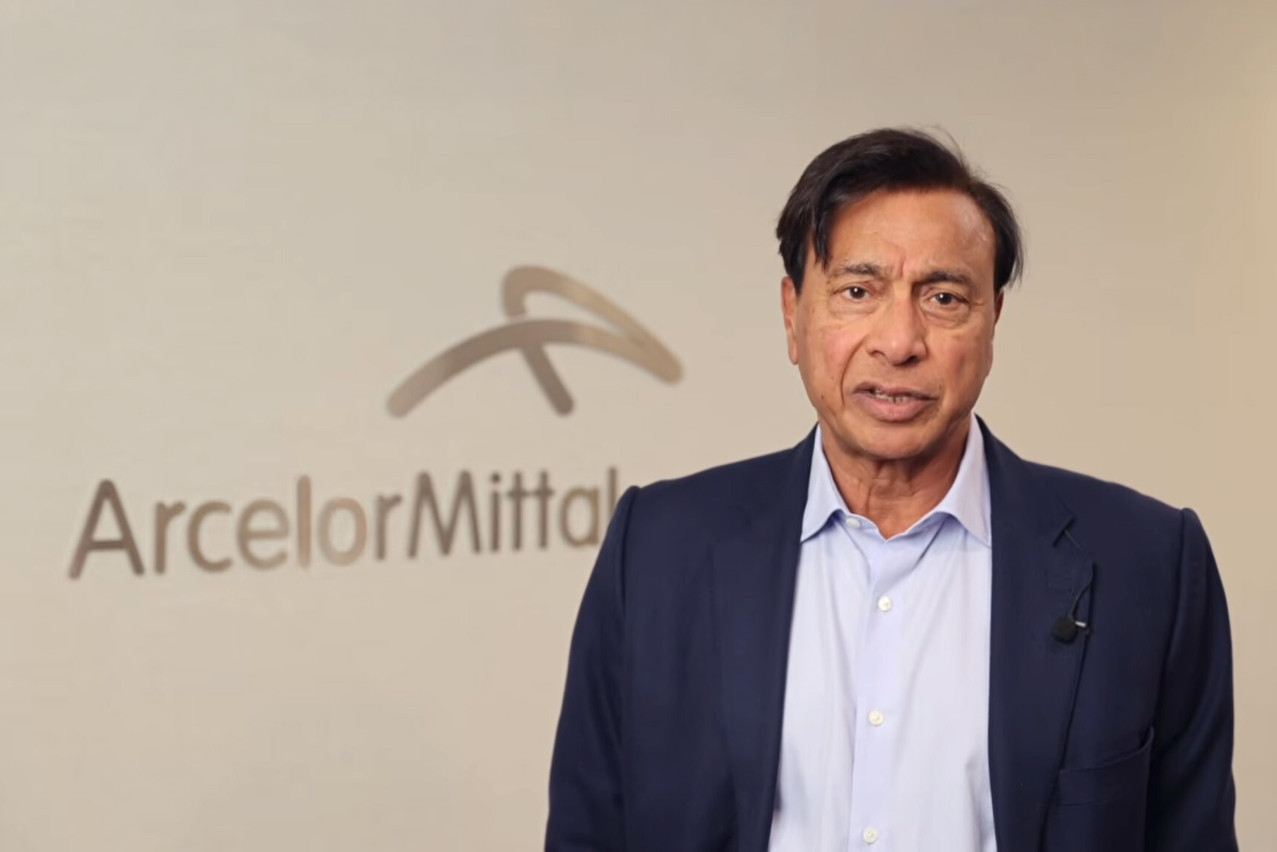
Twenty years on, the group’s founder believes that the arguments put forward at the time have been borne out by the facts. “I sincerely believe that the merger has created a stronger company, one that benefits from greater scale, better diversification, greater resilience and a broader strategic reach,” he says.
The executive acknowledges, however, that the past two decades have been marked by events that no one could have foreseen. “The aftershocks of the global financial crisis are still being felt today, and the consequences of Covid have been just as dramatic,” he explains. “I am convinced that we have weathered these shocks better together than we would have done separately.”
India: today’s China
The group is no longer the world’s leading steel producer, having been overtaken by several Chinese competitors. However, it remains one of the global leaders in the sector and retains its headquarters in Luxembourg – one of the key commitments made at the time of the merger. This Luxembourg base features prominently in the group’s communications. In 2011, to mark Arbed’s centenary, Lakshmi Mittal was already celebrating the country’s historic role in the global steel industry. “We can be particularly proud that, with this very long tradition of presence and strength in the steel industry, the world’s number one is now based in Luxembourg,” he said at the time.
Fourteen years on, the narrative has changed. In 2011, the focus was mainly on industrial history, heritage, expertise and passing on knowledge. In 2026, the key terms are artificial intelligence, decarbonisation, India, energy infrastructure and geopolitical tensions. “The first iPhone wasn’t launched until June 2007,” recalls Lakshmi Mittal. “All our communications during the merger were carried out on BlackBerrys.”
In his view, however, the most significant upheaval of the last 20 years remains China’s rise to power. “In 2006, we didn’t talk much about China. Yet the exponential growth of the Chinese steel industry and the flooding of global markets with uneconomical production have been the key industrial development of the last 20 years,” he explains.
The executive now sees India as the next driver of global growth. “The last 20 years have been marked by China’s remarkable growth. Now it is India’s turn,” he says. Urbanisation, infrastructure and the energy transition are expected to provide sustained support for demand for steel.
New challenges
Developed economies are also expected to contribute to this growth through the renewal of ageing infrastructure and investment linked to the energy transition. Electricity grids, wind turbines, electric vehicle manufacturing and nuclear power are among the most promising sectors. Lakshmi Mittal also identifies artificial intelligence as a new source of indirect demand. The data centres and computing power required for the development of AI will require more electricity, and therefore more networks and infrastructure, which in turn consume steel.
Decarbonisation is the other major transformation taking place in the sector. In 2020, ArcelorMittal committed to achieving carbon neutrality by 2050 and to reducing CO2 emissions by 30% of its European operations by 2030. In Luxembourg, several environmental investment projects have been launched in recent years, notably in Differdange.
The executive also highlights the resurgence of national industrial policies, a phenomenon he would never have imagined in 2006. Geopolitical tensions, the pandemic and concerns over supply chain security have put heavy industry back at the heart of many governments’ economic strategies. “Given the ongoing challenges relating to overcapacity, trade and differing paces of decarbonisation, ArcelorMittal supports this new direction,” he says.
After 50 years in the steel industry, Lakshmi Mittal remains resolutely optimistic. “I have no doubt that we will continue to face many challenges and unforeseen events. But honestly, there’s nowhere else I’d rather be.”
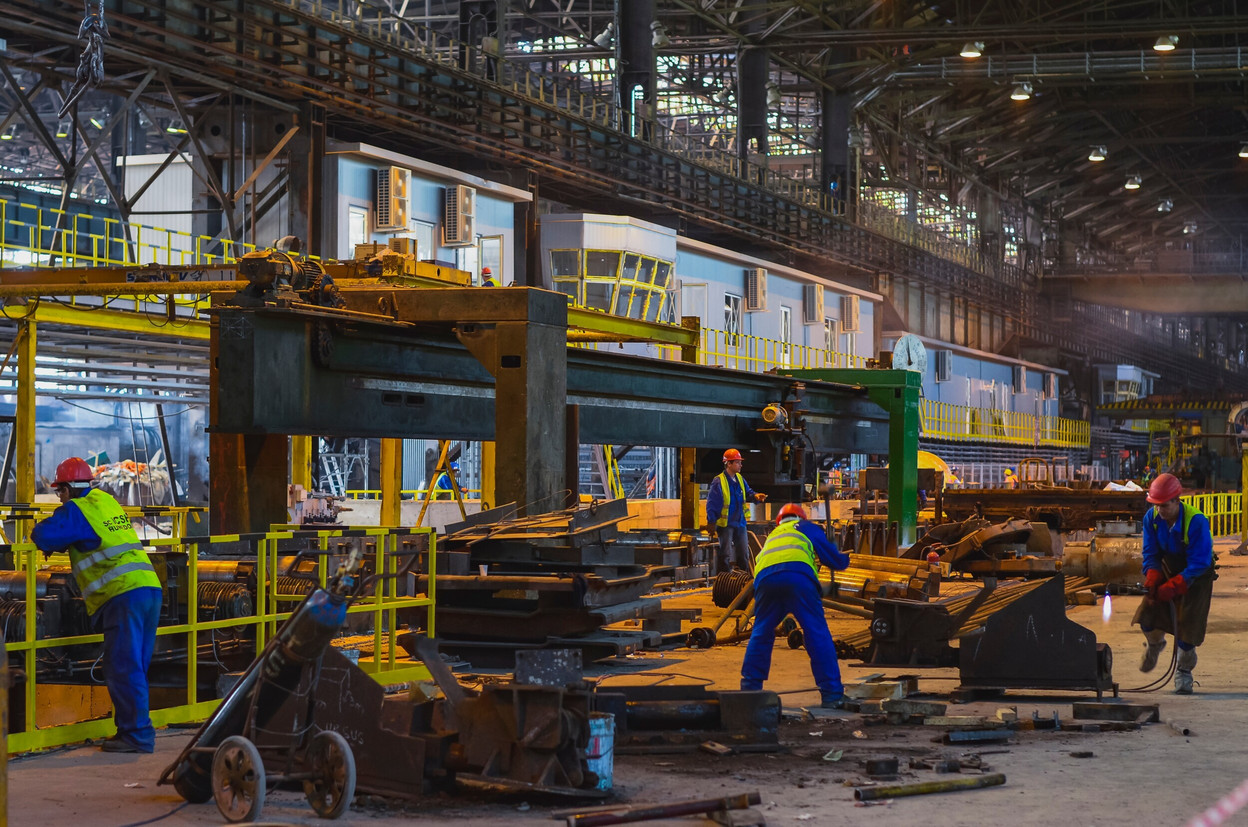
Twenty years after the merger between Arcelor and Mittal Steel, Luxembourg remains the group’s global headquarters. The country’s steel industry has weathered the oil crises, the phasing out of blast furnaces, globalisation, the financial crisis, the rise of China and the climate transition. For a country whose industrial identity was built around the Minette ore, ArcelorMittal’s anniversary serves as a reminder that steel is not merely a part of Luxembourg’s past. It continues, in new forms, to play a part in its future.