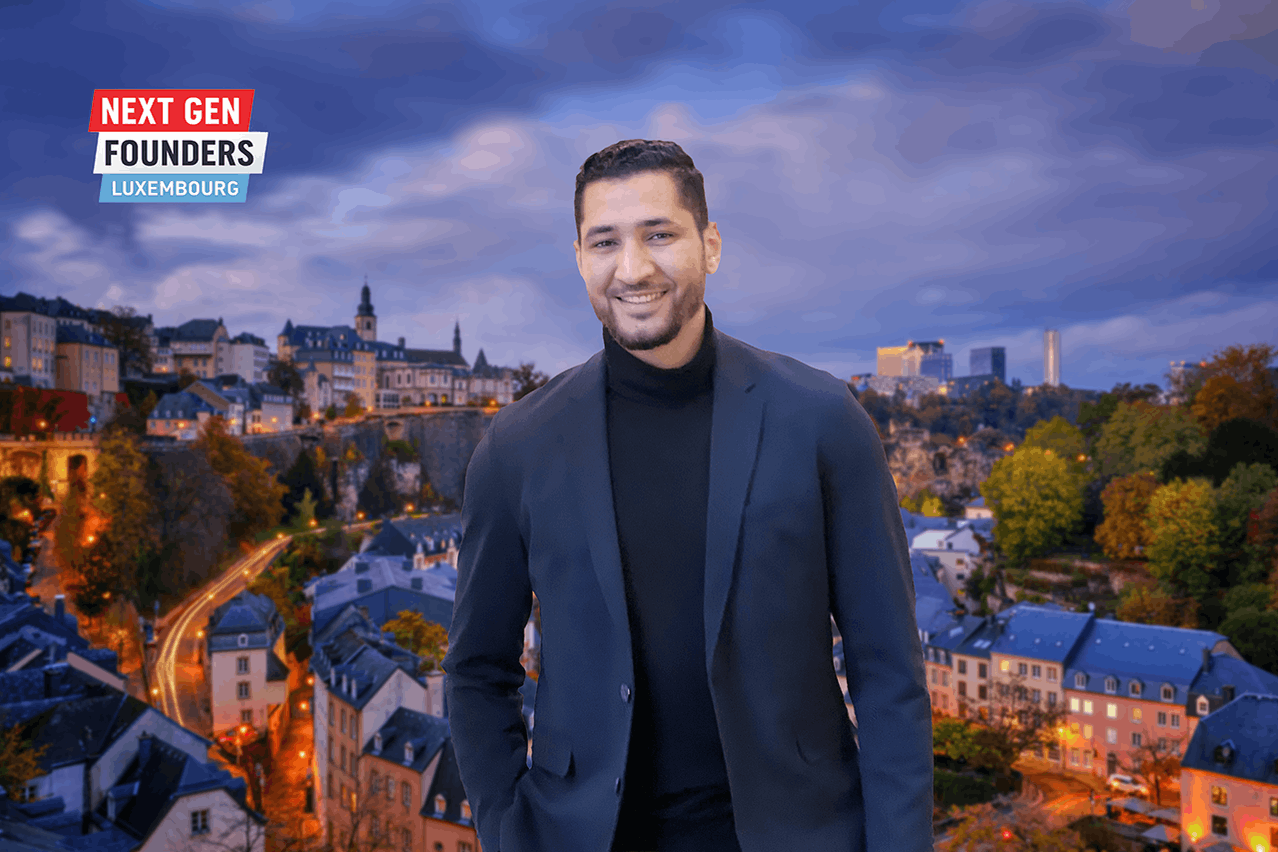
At 10 years old, Amine Khobba was already imagining himself as an entrepreneur. Growing up in Morocco in a family where running a business was part of everyday life, he expected that one day he would build his own. Years later, that ambition took shape in Luxembourg, where he tested his first startup idea, spent nearly five years in corporate finance and eventually left salaried work to build Coacheey. Now 31, he devotes almost all his professional time to the sports and wellness platform.
Entrepreneurship was familiar territory in the Khobba household. His father runs a small business in Morocco and encouraged his son to experience different kinds of work from an early age, from spending time with a tailor to selling small items himself. “I grew up in a family where no one goes to the office. Everyone kind of has their own business.”
By 10, Khobba was already mapping out his future. “At 10 years old, I made a plan. I thought: at 22, I will have my first company and then get married at 25.” More than the dates themselves, the habit of looking ahead has stayed with him. “I’m not overthinking. I’m a deep thinker,” he says.
Finding his place in Luxembourg
Khobba arrived in Luxembourg in January 2019 for a six-month Erasmus exchange during the final year of his master’s in finance. He soon found reasons to stay. Three months after arriving, he met the Grand Duke during an internship when the latter visited the company where he was working. For Khobba, the encounter illustrated the accessibility he found in Luxembourg and helped convince him that it could be the right place to eventually build a business.
He stayed and completed a second master’s degree in entrepreneurship and innovation at the University of Luxembourg. During an Ideation Camp, he helped develop Master Venues, a platform for booking meeting rooms and event spaces. The team continued working on the project after the competition, until Covid-19 brought it to an end.
From corporate life to Coacheey
After university, Khobba spent close to five years in corporate roles, starting in finance before moving into accounting and financial controlling. But creating his own company remained on his mind.
The idea for Coacheey emerged towards the end of 2021 from a personal frustration. A sports enthusiast, Khobba wanted to improve his horse riding but struggled to find lessons compatible with his schedule and transport options. He began wondering why there was no equivalent of Doctena for sports coaches.
He bought the domain but left the idea untouched for several years, continuing to renew it because he knew he wanted to return to the project. As his 30th birthday approached, he finally decided to act. “I thought, ‘okay, let’s face it. I always wanted to do it. Thirty is approaching.’ I don’t know if 30 for me was just like a deadline. Then I jumped on it.”
Are you ready to do this for free for a long time? Because when you’re building a project, you’re not gonna get money from the day after.

He was not entirely new to the startup world. While still working, Khobba spent three years volunteering with startup accelerator Founder Institute, an experience he says familiarised him with the different stages and challenges of building a company.
Khobba left his job to focus on Coacheey, while creating influencer marketing agency Leconnecto to generate income as the startup was being developed. The transition also required sacrifices: he left his apartment in Luxembourg City and moved closer to the border to reduce his expenses.
For him, pursuing a project requires more than proving that there is a market. Alongside “logical KPIs”, such as demand and willingness to pay, he considers what he calls “emotional KPIs”.
“Are you ready to do this for free for a long time? Because when you’re building a project, you’re not gonna get money from the day after.”
Building around coaches
Coacheey initially set out to connect users with coaches for activities such as tennis, fitness and yoga. But conversations with coaches expanded the concept. Khobba found they also needed tools to manage clients, bookings and invoices. The platform therefore evolved into both a marketplace and a management tool for coaches.
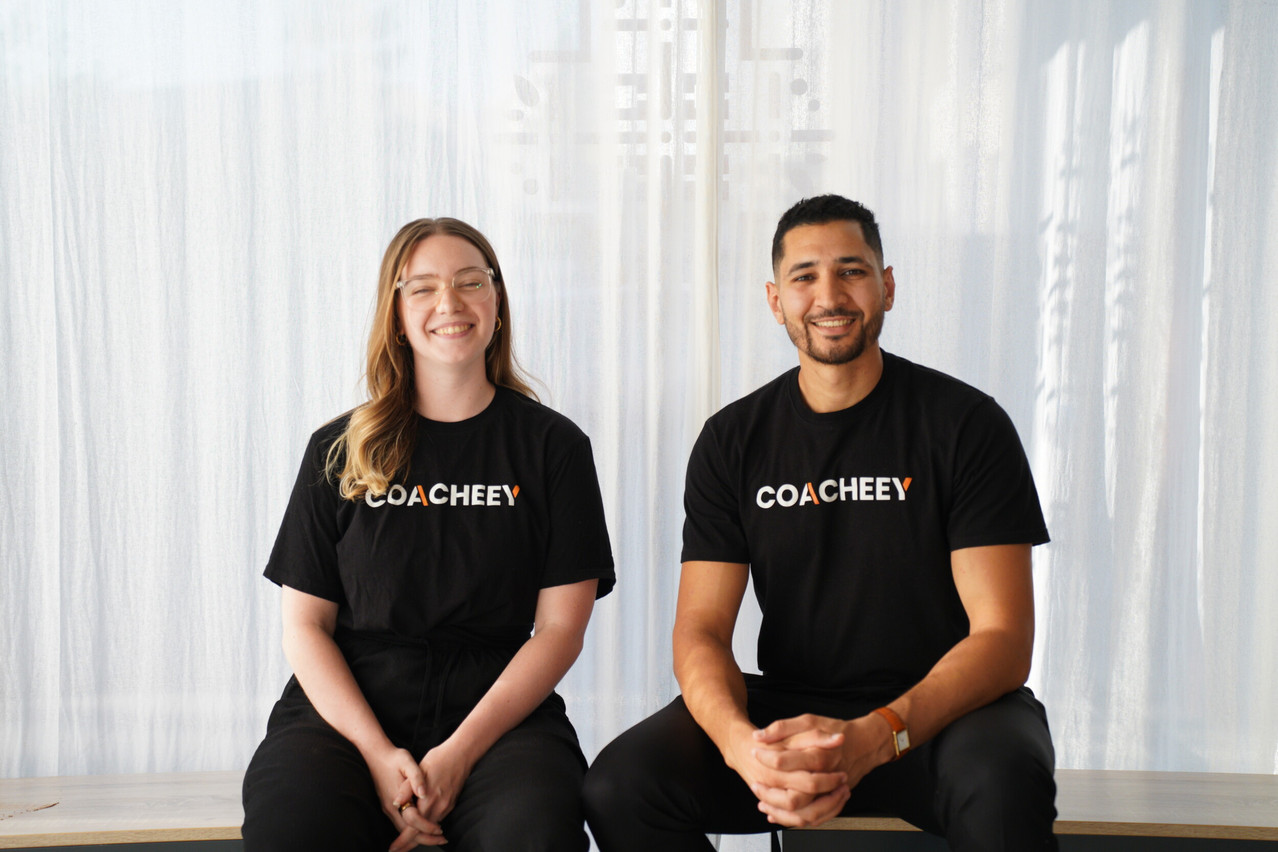
Eléna Fromet oversees marketing at Coacheey, working alongside Amine Khobba and CTO Soufiane Ounida as part of the startup’s three-person team. (Photo: Amine Khobba)
Its MVP was publicly launched on 15 April 2026. Today, Coacheey has 32 registered coaches and around 350 users. Khobba works alongside Eléna Fromet, who oversees marketing, and CTO Soufiane Ounida as part of the startup’s three-person team. He says having the right people around him has been essential when making decisions and building the platform.
Coaches pay a monthly subscription, with no commission taken on bookings. The startup has also expanded into corporate wellness, offering activities and vouchers that employees can use for sports sessions.
“I didn’t listen to the experts”
Before launching, Khobba says he repeatedly heard that the concept would not work or that the market was not ready. Rather than abandon it, he chose to prioritise feedback from coaches and potential customers.
“I kind of didn’t listen to the experts. I listened to the coaches, to the customers more, and that’s what helped me.”
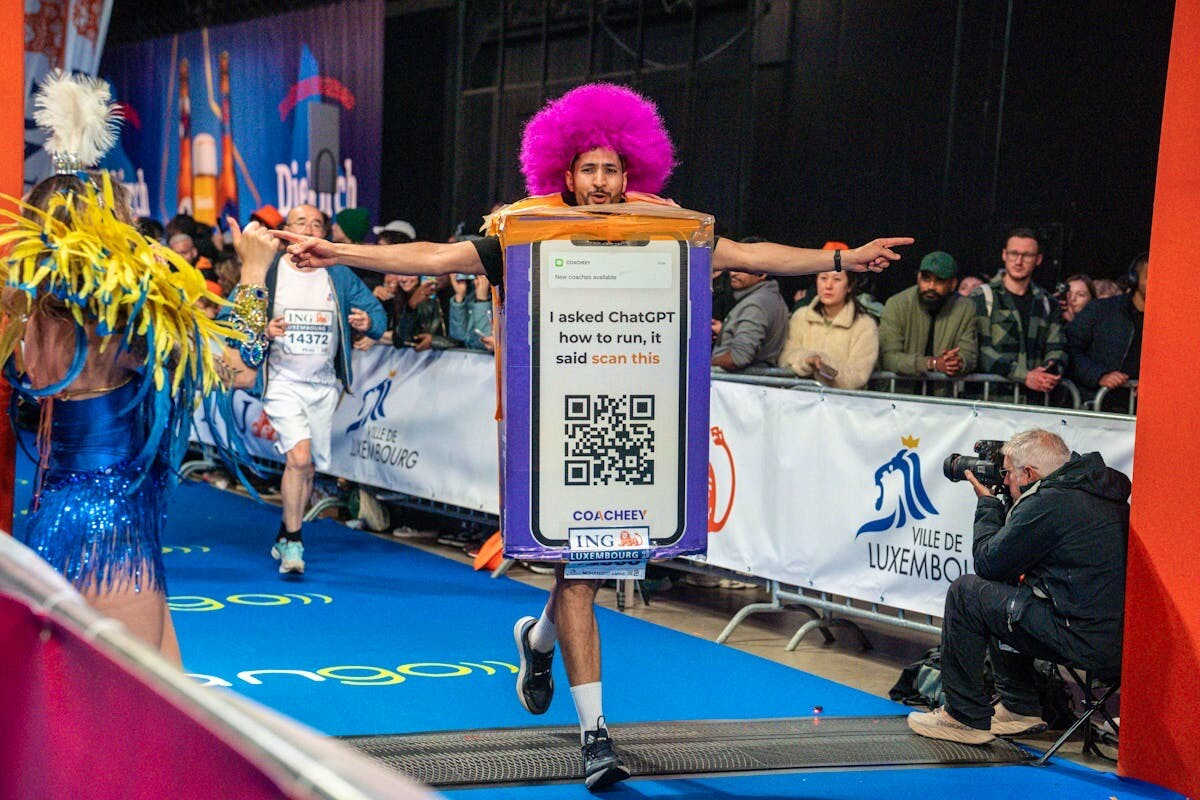
Amine Khobba ran the 21km race at Luxembourg’s ING Night Marathon carrying a cardboard structure promoting Coacheey, repairing it with tape after it was damaged by the rain along the way. (Photo: Amine Khobba)
That determination was put to the test during Luxembourg’s ING Night Marathon, when Khobba ran the 21 km half-marathon carrying a cardboard structure promoting Coacheey. When rain damaged it, he stopped, found tape, repaired it and continued to the finish line.
“For me, psychologically, finishing the 21K is kind of finishing Coacheey, and leaving the marathon with the box not fixed is kind of leaving Coacheey.”
Today, Khobba says around 95% of his professional time goes to Coacheey. Leconnecto continues on a limited basis. After years of juggling different activities, his focus is now on giving one project the room to grow. “Even though I do a lot of things, my energy needs to be focused on one thing.”