“Truly sustainable traditional coffee isn’t really possible.” For 
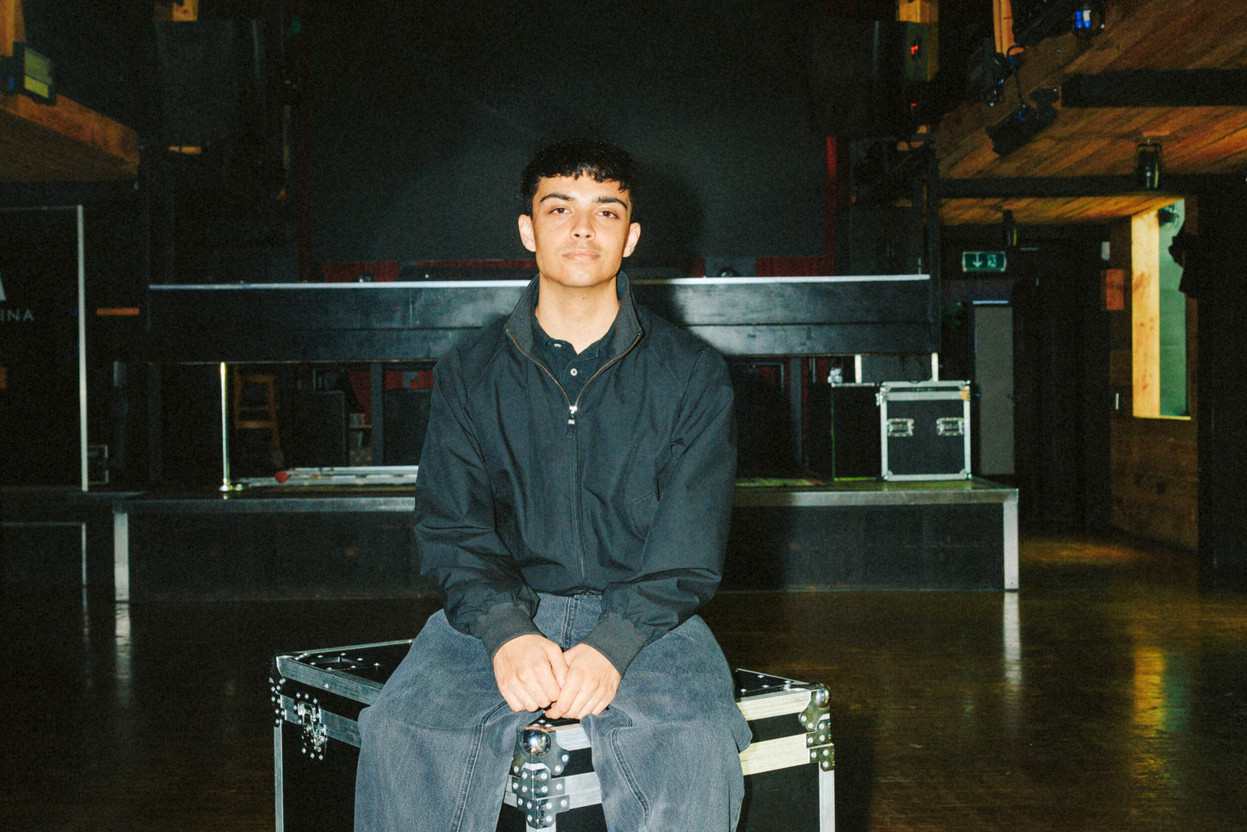
Ecoffee was launched at the end of 2023 as part of a student-run company. The project was initially a group effort. “We started with six,” he recalls. But the paths quickly diverged. “We continued as two after the school project ended, and then I carried on alone,” Alessio explains. The others went on to study abroad, making it harder to continue together. He chose to keep going. “I always wanted to become an entrepreneur.” An ambition shaped early on, notably through stories shared by his grandfather. “I was fascinated.”
“The timing works in my favor,” he says, referring to still living at home. He sees it as an opportunity. “It’s a good time to gain my first experience. Because you have to do it to learn it.”
Moving away from coffee to stay consistent
The initial idea was to create a more sustainable coffee. But research quickly led the team to rethink their approach. Rather than improving traditional coffee, Ecoffee chose to move away from it. “We also realized we needed to differentiate ourselves and be more unique,” explains the founder.
Imagine coffee from Luxembourg—it sounds a bit unusual, and it’s very innovative.

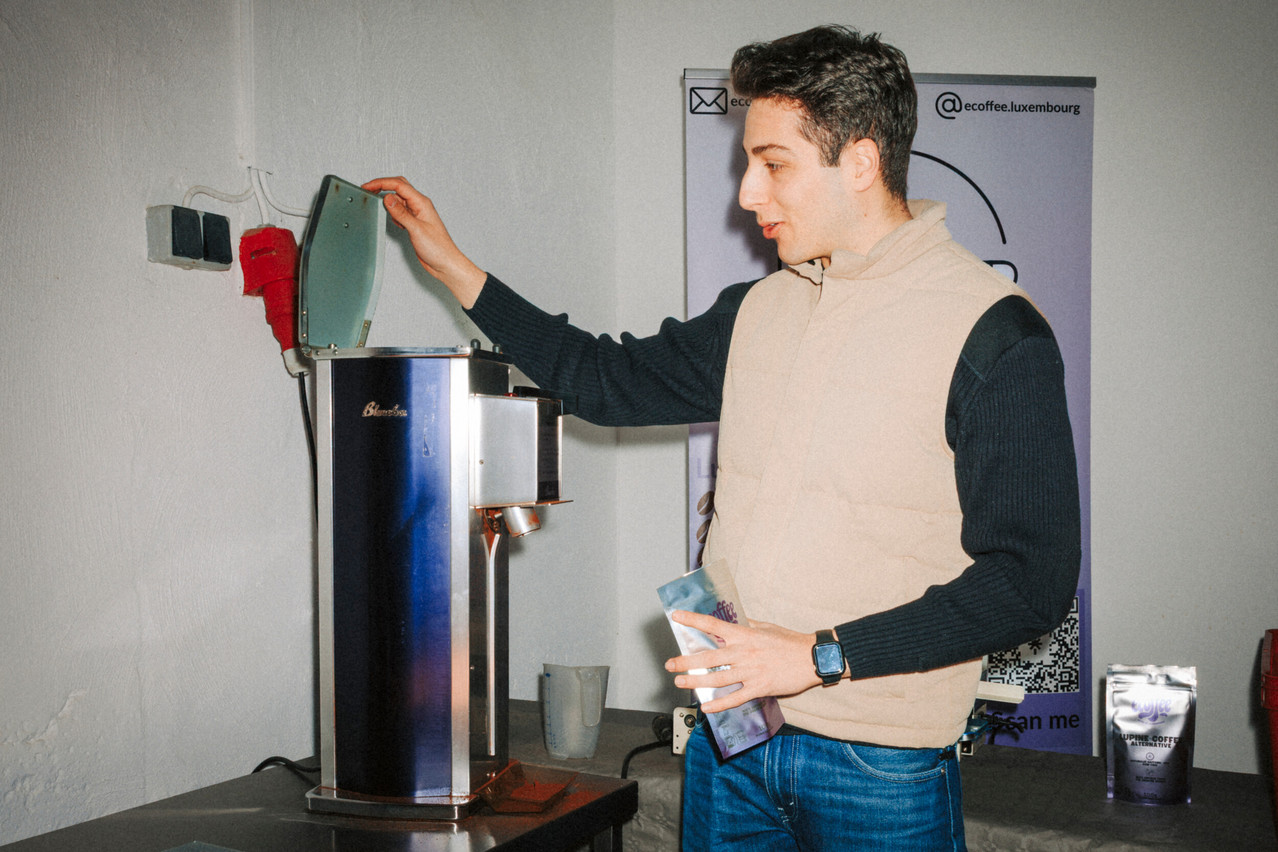
Lupin gradually emerged as the solution. “We found that this lupin flower produces beans that can be roasted,” he continues. The idea itself is not entirely new. “Germans drank it during the war,” he notes. With improvements in transportation, imported coffee from South America and Africa later took over. “Now, our goal is to reinvent it.”
In Luxembourg, Ecoffee occupies a unique position: Alessio Calisti Thill says he is the only one developing this type of alternative on the local market. The idea remains unusual. “Imagine coffee from Luxembourg—it sounds a bit funny, and it’s very innovative,” he smiles. But the challenge is also to offer a credible alternative without completely breaking away from the coffee experience. “It’s really the closest thing to the taste of coffee,” he adds.
Between sustainability and health
Environmental impact is central to the project. “Transport emissions are significantly reduced, since it can be grown in Luxembourg,” he explains. Traditional coffee, by contrast, is imported “from South America, more than 12,000km away”. He also highlights another figure: “One kilo of traditional coffee emits more than 11kg of CO₂” and requires “15,000 liters of water”, compared with “500” for lupin.
There is also an agronomic advantage. Lupin is a legume capable of fixing nitrogen from the atmosphere. “It uses it to grow on its own,” he explains. According to him, this reduces the need for synthetic inputs, particularly pesticides.
The product is also positioned around health and usage. “It’s naturally caffeine-free,” he says. The point, in his view, is not just the absence of caffeine, but the fact that no chemical decaffeination process is required. He also emphasizes the absence of acidity: “There’s zero acid in it,” while “more and more people are experiencing side effects linked to acidity in traditional coffee.”
First customers, early traction
Today, Ecoffee is already on the market. Sales are made online, with deliveries across Luxembourg and internationally, as well as through selected grocery stores. The product is also featured in local collaborations: at Glow, it is served in a traditional moka pot; at BAC bar in Pfaffenthal, it is used in a cocktail.
“We’ve sold over 1,000 packs, for sure,” he says, even if tracking remains informal. Last year, his final school exams slowed development, but the goal now is to accelerate.
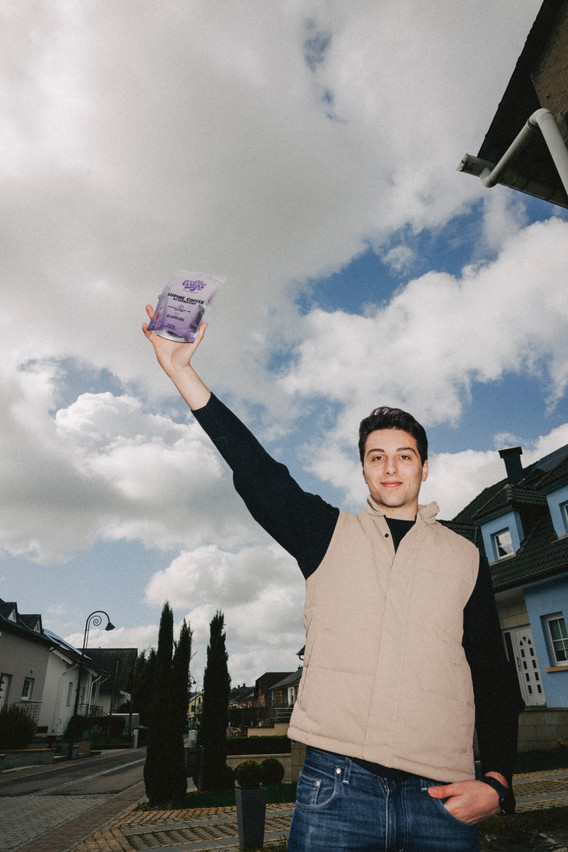
For nearly two years, Alessio Calisti Thill has been working with a local farmer based in Canach. A first cultivation is planned this year, with harvest expected in autumn. “At least five tonnes” are planned. Photo: Julian Pierrot/Paperjam
Producing in Luxembourg, step by step
So far, the beans have been sourced from Germany, from a farm specialising in lupin. But from the beginning, the goal was to grow them in Luxembourg. For nearly two years, Alessio Calisti Thill has been working with a local farmer based in Canach. A first cultivation is planned this year, with harvest expected in autumn. “At least five tonnes” are planned.
The model helps limit financial risk. “I only have to finance it when I need it,” he explains. However, moving to local production also means mastering roasting. “It’s very difficult,” he acknowledges.
A highly hands-on project
Even if he is alone in the company, Alessio Calisti Thill is not without support. He mentions Jonk Entrepreneuren Luxembourg in particular, which is supporting him in the transition from a student-run company to a start-up, but also 
He splits his time between Ecoffee and a 40% position at Jonk Entrepreneuren Luxembourg. “I handle administrative work, production, deliveries, and meetings with potential partners and investors.”
I was the only one in my class saying I wouldn’t go to university. People asked me if I was crazy.
Preparing to scale
The next step is already taking shape beyond ground coffee. A ready-to-drink iced latte, made with lupin and oat milk, is in the pipeline. “We’re going to experiment with flavours like caramel and vanilla,” he explains. The launch is planned around 2027.
Discussions are also underway to enter larger distribution channels. To accelerate, external funding will be needed. He already pitched to the Luxembourg Business Angel Network. “A week before, I lost one of my most important partners,” he recalls. “At that moment, I saw everything going dark.” In hindsight, he sees it differently: “I ended up finding better solutions.”
At 19, choosing entrepreneurship is still unusual. “I was the only one in my class saying I wouldn’t go to university,” he says. “People asked me if I was crazy.” He now sees it as a matter of resilience. “I hope I can live off it 100%.” And perhaps go further, as Alessio Calisti Thill wishes to “have multiple companies”.
This article was written for the May 2026 issue from Paperjam magazine, published on 29 April. This content has been produced exclusively for the magazine. It is published on the website to contribute to the Paperjam archive. Click on this link to subscribe to the magazine.
Is your company a member of the Paperjam Club? You can request a subscription in your name. Please let us know via club@paperjam.lu.