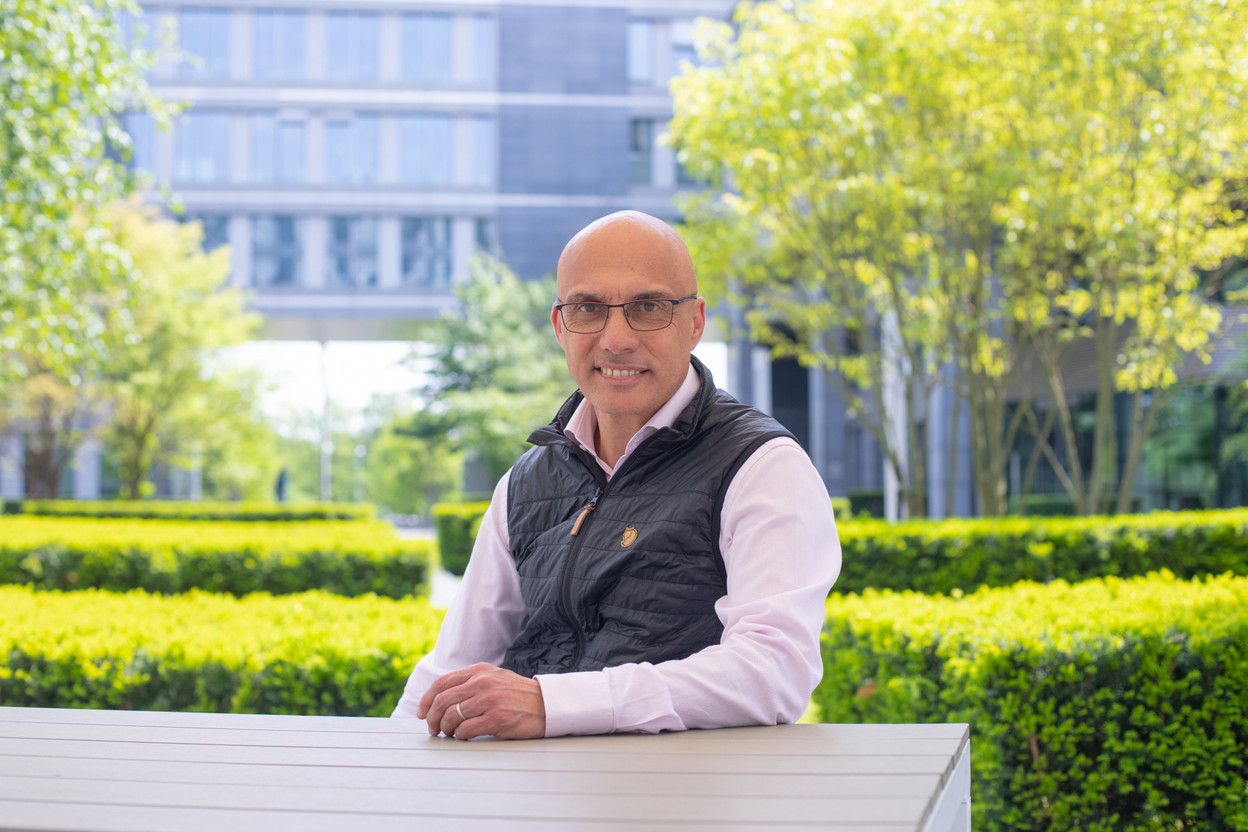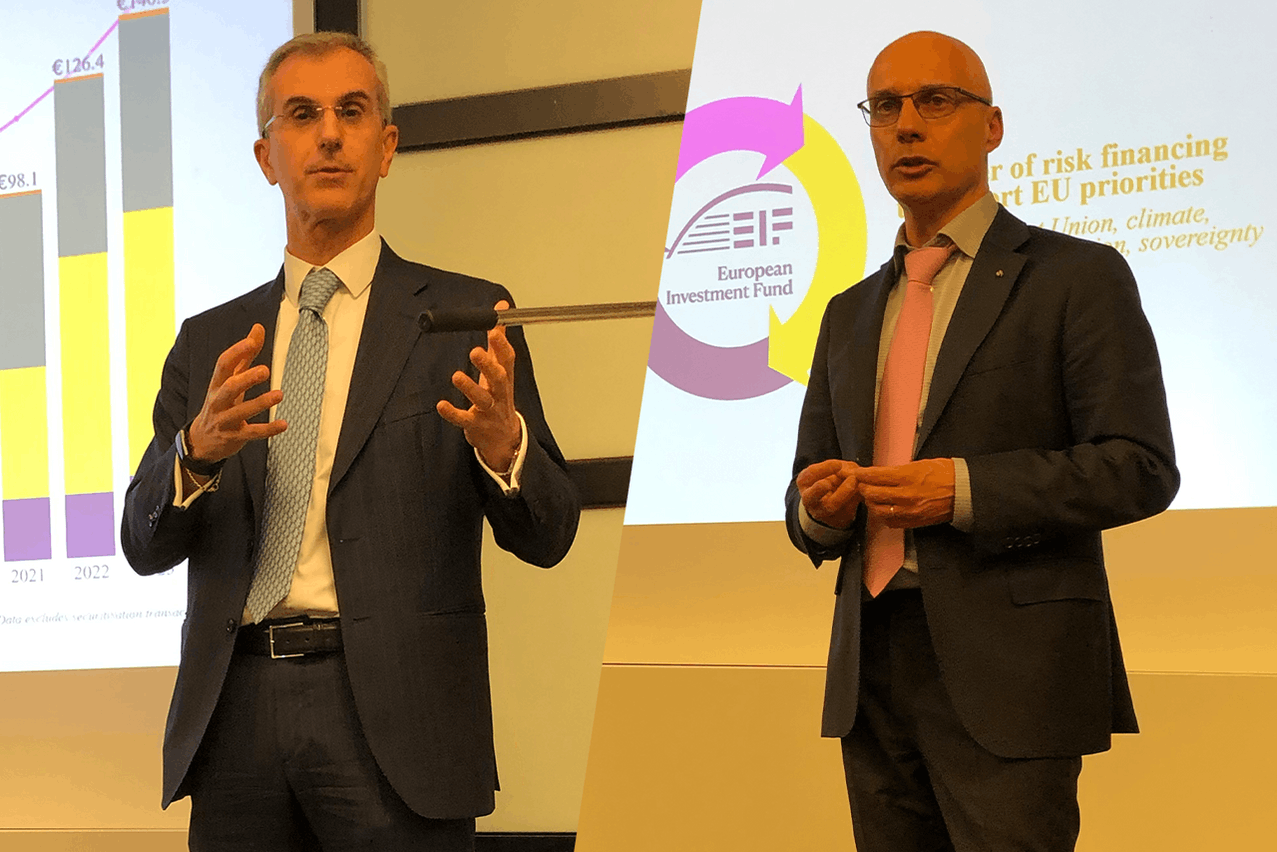
Marco Natoli, head of sustainable growth investments at the European Investment Fund, explained that the role of the group in the last 30 years has been to focus on “two main streams of activities”: 1) investing equity through intermediaries (fund managers), which in turn invest directly in companies and 2) providing guarantees and securitisation services to financial intermediaries. Through the support of the EIF, the latter “can have a higher appetite for lending to smaller companies.”
Natoli was speaking at a CFA Society Luxembourg conference late last month.
The EIF started in the 90s to support the innovation and the development of innovative businesses when there was very little public support in Europe. It started with venture capital and expanded into private equity in 2003. Now, it covers the full business spectrum from technology transfers out of universities and research centres down to facilitating access to private credit to “guarantee solutions.” Natoli thinks that when you “don’t have the full financial chain, it is very difficult to extract the outcome of the initial investments.”
Through their guarantee and securitisation businesses, the EIF does business with over “500 banks” while it works with “more than 1,500 fund managers” in the private equity business to reach their final beneficiaries (two million companies in Europe). “We do not do it directly,” said Natoli. “It’s a matter of scale.”
Yet Remi Charrier, head of institutional client relationship at EIF, noted at the same event that the amount of money that is invested in private equity and venture capital is “five times more in the US then in Europe and most of it is explained because of the lack of appetite from European institutional investors, pension funds, insurance companies, banks, asset managers and even retail investors.”
Never let a good crisis go to waste
When all doors were closed for fresh equity or credit during the global financial crisis in 2008, the EIF came up with a new fund offering “hybrid debt-credit solutions,” which, for Delano, sounded very much like preferred shares, a financial instrument that has been around for a while. Natoli defined the solution as a “de facto substitute of minority capital for growth with non-dilutive characteristics.” Interestingly, he observed that the asset class turned out to “offer the best risk adjusted returns into our portfolio.”
The sovereign crisis in 2011-2012 coincided with the introduction of new banking and insurance regulations. Natoli observed that this caused the doors to close--again--to SMEs. Positively, this was also the moment when a new regulation allowing private players to offer loans to small businesses was adopted and when the EIF started to invest in private credit funds.
The EIF invested “heavily” in private credit funds. It wanted to rebalance the equation whereby 80% of private credits in Europe were coming from the banks and move towards the US model (80% alternative lenders/20% banks).
During the covid crisis, the EIF came up with a €30bn guarantee fund in a year and a half to alleviate the impact on European businesses.
Natoli expects crises to be more frequent going forward. By having ready-to-use tools at hands, he thinks that it will make the EIF more agile and responsive to quickly reach beneficiaries during crises.
Not looking away from the current agricultural crisis
Charrier noted that the EIF is curtly setting up a €3bn loan programme backed by large European member states to support farmers through banks with reduced interest rates and without personal guarantees.
Where no one has gone before
Natoli stated that the businesses of EIF can be summarised as following: “substantially facilitating risk-taking in the market.” As such, the EIF is exploring areas which are “not that sufficiently developed across Europe.” Consequently, it means that the EIF has been a first-mover in certain market segments, which have sometimes required developing new financial solutions.
Out of around 600 opportunities per year, Natoli noted that the EIF will meet around 300 fund managers. The former will go through a “full due diligence process” with around 30% of the latter. “We end up investing in one out of seven or eight.”
We would never compromise on the economic returns just to achieve the policy objective

Natoli explained that this approach often “opened the doors to other market participants to join.” He stated that the fund’s “ultimate objective is to make the market work and attract private players.”
Natoli thinks that the participation of the EIF in the second or third generation of funds may sometimes be warranted as the intermediaries may not have a sufficient track record to easily attract private money. The ongoing participation of the EIF “facilitates the achievement of the critical mass for the product… it catalyses the closings in the fundraising for a new fund.”
A policy agenda that does not prevent appropriate investment returns
Despite having a policy agenda from the EU, he stressed that “any financial activity that we run is done with the pursuit of a proper financial and economic returns… for the risk taken… it is quite a challenging job.” The investment return goal is crucial to convince the private sector to join in. “We would never compromise on the economic returns just to achieve the policy objective.”
He added: “if a private investor would start making a link between bad performance and the EIF support, we will achieve the opposite objective.” Natoli sees two reasons for dropping a general partner: 1) not delivering on promises or 2) the GP is “sufficiently developed that they can raise up to their targets without needing public money support.” He sees no reason overstay and to crowd out private money.
Charrier claims that investments in private equity and venture capital (tech, green, life science) under their Asset Management Umbrella fund, a fund-of-funds, could generate “15% to 20% or more” and is “a safe product” as it is “diversified across several fund managers and countries.” He suggested that EIF’s funds enable institutional investors to easily diversify away for their home country. He takes pride that some investors entirely rely on the investment decision from the EIF.
Charrier noted that EIF has broadened its investor base to family offices in Europe, for instance, but also to investors in Asia and Canada. Should they want to go alone after their initial investment and invest directly in the best brands, “that would fit our mission.”
This article was published for the Delano Finance newsletter, the weekly source for financial news in Luxembourg. Subscribe using this link.