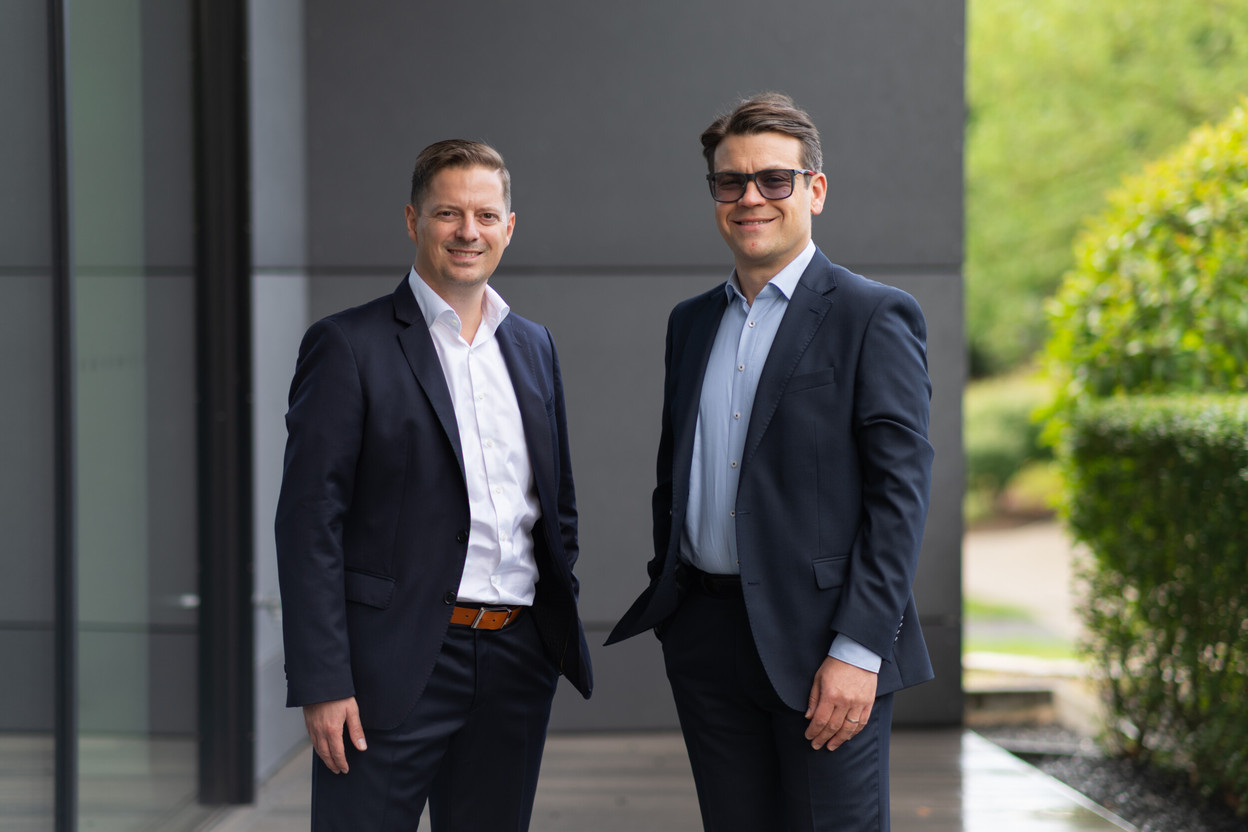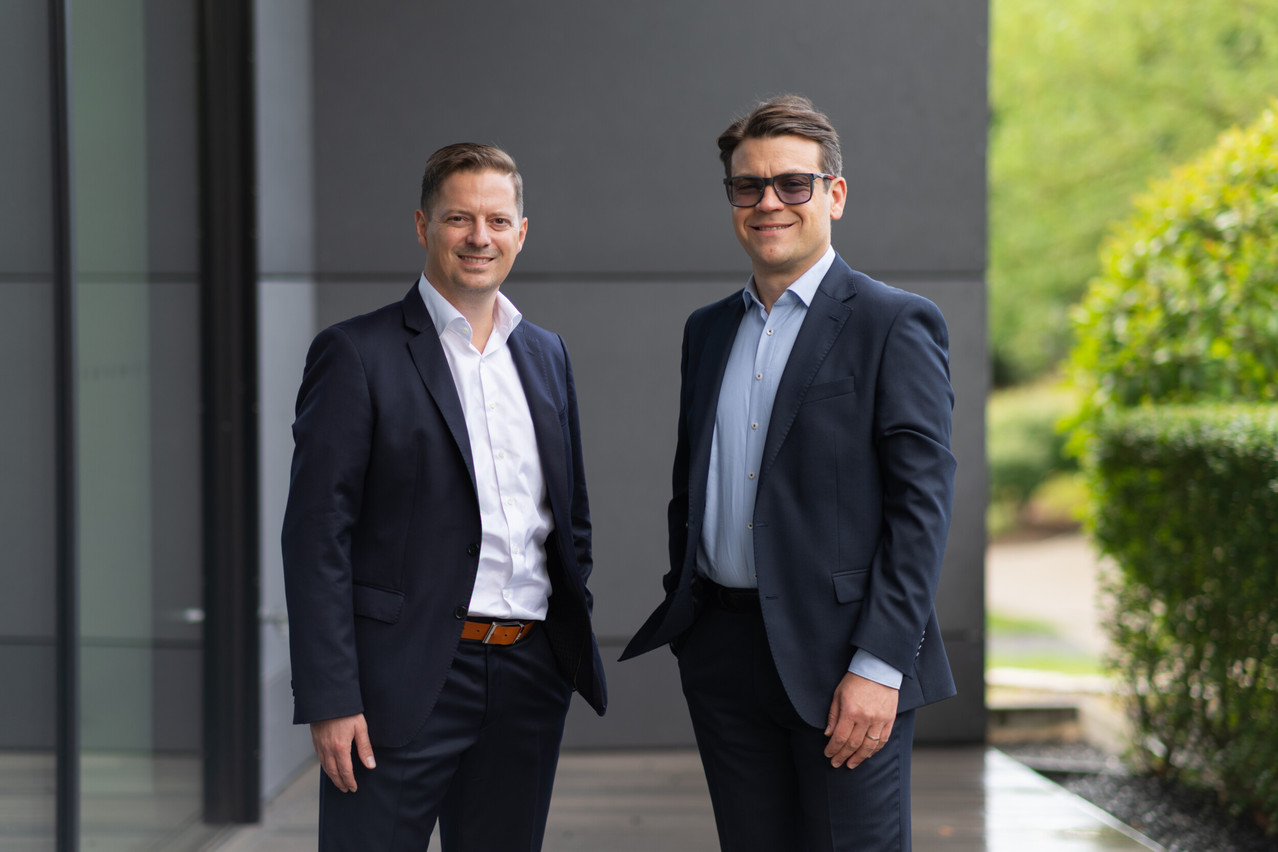
Fifteen years ago, Yannick Ravaine could never have imagined that he would one day head up Baker Tilly Luxembourg. Yet here he is, at the helm of a firm with 110 professionals, undergoing the most significant expansion in its recent history. “If I told you that 15 years ago, when I joined the firm, my dream was to become CEO of Baker Tilly, well, no, that’s definitely not true. I would never have thought of it, but opportunities meant that it did happen,” says the 43-year-old chief executive in his first interview since his appointment.
Yannick Ravaine joined Baker Tilly in 2012, following six years as an administrative and financial manager in the retail sector, and became a partner in 2023. A qualified accountant by training, he specialises in property, construction and advising private equity firms.
He is taking over from a generation that had itself risen through the ranks of the company. Jean-Claude Lucius and Jean-Philippe Mersy, who started out as juniors, are gradually handing over their responsibilities. “I would like to thank Jean-Claude and Jean-Philippe, who built the framework that has made everything we are achieving today possible,” emphasises Yannick Ravaine.
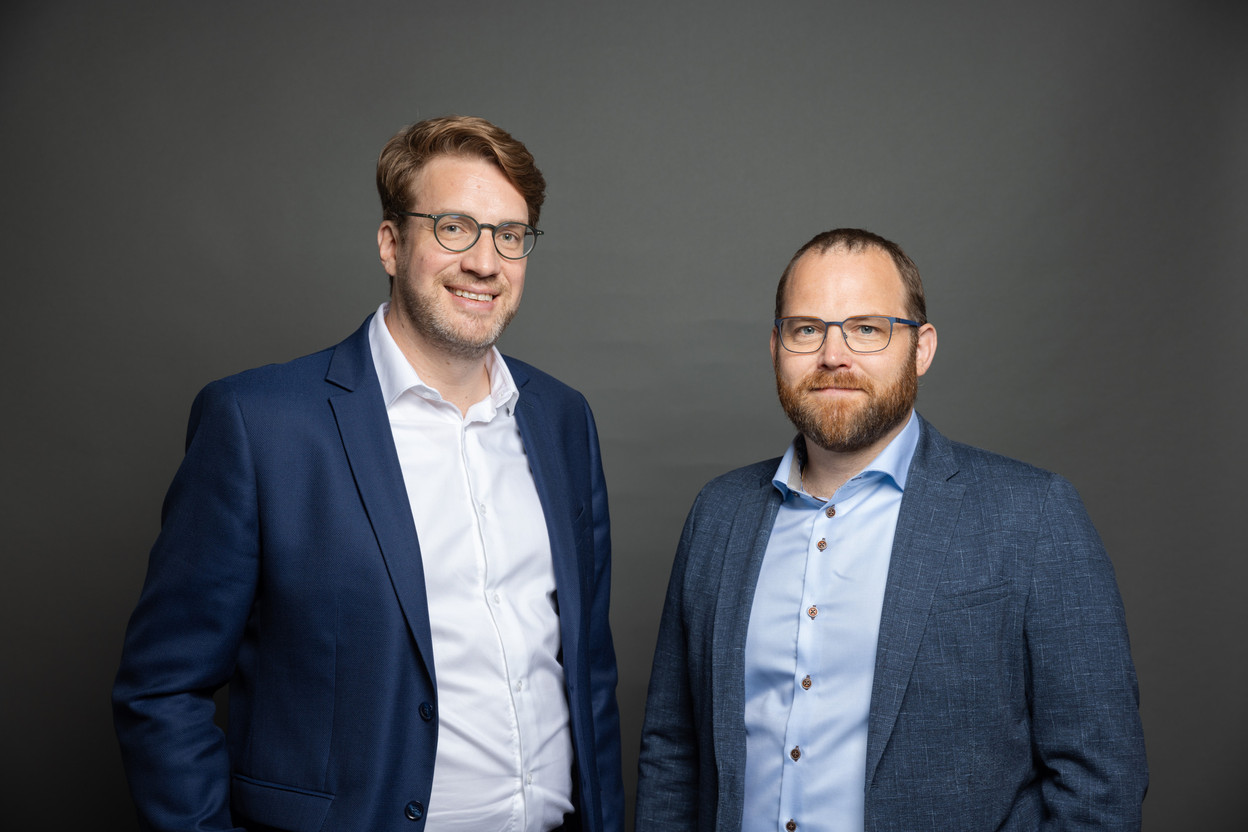
The role of managing partner is divided between two functions: Yannick Ravaine takes charge of operations as CEO, whilst Arnaud Delalle chairs the board of directors. At the same time, four directors – Michaël Duval, Loïc Heinrich, Nicolas Meyer and Julie Ratajczak – have been promoted to the rank of partner, bringing the total number of partners to nine.
A Benelux technology platform
This transition comes as Baker Tilly Luxembourg joins the newly formed platform by the Belgian and Dutch entities within the network. Subject to approval by the Netherlands Authority for Consumers and Markets, the transaction is expected to be finalised in the fourth quarter of 2026. It will bring together 25 offices and around 1,500 professionals.
Partners from the three countries will invest jointly in the platform, alongside the investment firm Inflexion, which remains a minority shareholder. The financial terms of the deal have not been disclosed.
For us, it was important […] to move beyond a network of freelancers.

For the Luxembourg-based firm, the agreement does not mean giving up its operational independence. Decisions relating to clients, business lines, pricing and teams will continue to be taken in the Grand Duchy. “What we wanted was to retain local autonomy,” insists Yannick Ravaine.
The three-way collaboration will focus primarily on technology platforms, quality standards and regional development. “For us, it was important to take this step and move beyond a network of freelancers,” explains the new CEO.
This collaboration should, first and foremost, make it possible to spread the cost of investments that are too onerous for a single organisation to bear. He acknowledges that, until now, “there wasn’t really any technological pooling” amongst the network’s members. Artificial intelligence (AI) will be one of the first joint projects, although the size of the investment budget remains confidential.
Expand the range
Yannick Ravaine promises not to replace accountants with machines. He describes AI as “a tool for improving and speeding up processes, and for automating administrative tasks that do not offer any real added value”.
One of the long-term aims is to cross-reference data from different clients in a secure environment in order to improve the consistency and reliability of the work. For the time being, he believes, the use of AI in the sector remains “still far too rudimentary”.
Professional and independent judgement must not be based solely on AI.
This use must remain subject to oversight. “Professional and independent judgement must not be based solely on [this technology],” he warns. The firm has trained its teams and put in place processes designed to document the tools used in each assignment. It must also inform its clients when AI has been used and specify to what extent.
In the accounting professions proper, automation still plays a more significant role than AI. The tools used are more tried and tested and, according to Yannick Ravaine, using them allows for greater control over how data is secured and processed.
Above all, the platform is intended to complement the range of services offered in Luxembourg. Baker Tilly will now be able to draw on the expertise of its Belgian and Dutch colleagues in the areas of mergers and acquisitions (M&A) and corporate finance, as well as for outsourced finance management and other specialist services.
“At present, when it comes to corporate finance in Luxembourg, we did not have the expertise required to support a client throughout the entire M&A process,” admits Yannick Ravaine. The new organisational structure will enable the firm to present these capabilities in a structured manner, to work with the same tools and to speed up communication with clients.
Proposals relating to technology governance and new European regulations are also under consideration. The CEO has not yet provided details of the services that might be offered in this area, but confirms that the firm is considering their implementation.
Property and private equity: the firm’s two main drivers
Baker Tilly Luxembourg, for its part, will contribute its expertise in property and private equity, two areas linked to the country’s role as a financial hub. Its client base also includes Luxembourg-based SMEs, a legacy dating back to 1970 under the successive names of Interfiduciaire and then IF Group.
The client does not need to deal with all three countries; they can have a single key contact.
For clients operating in several countries, the promise is that of a single point of contact, capable of coordinating teams in Luxembourg, Belgium and the Netherlands. “The client doesn’t have to deal with all three countries; they can have a single key contact,” explains Yannick Ravaine.
The firm had already responded to several tenders alongside its counterparts prior to the official announcement. The three entities were not yet able to present themselves as a Benelux organisation, but they were working together as members of the same network. According to the new CEO, these initial trials generated “genuine interest”.
The success of the operation will be measured by turnover, but not solely by that. Baker Tilly also wants to use the group’s new size to recruit and retain staff. Competition for talent remains fierce in Luxembourg, even for a company located right next to Howald railway station and the tram stop.
The firm operates on a less hierarchical model than that typically associated with the sector. Managers and partners are expected to maintain regular contact with clients, whilst junior staff are quickly integrated into teams and given exposure to a wider range of cases.
New recruits will also need to understand the technological challenges and maintain the necessary perspective when using the tools at their disposal. “We have generations who have studied using ChatGPT,” observes Yannick Ravaine. This development will force the firm to review its training methods, which until now have been largely based on experience and internal knowledge-sharing. The challenge will no longer be simply to learn how to produce content, but to know how to monitor what the machine produces.
“Remaining in the top 10”
The new CEO describes himself as “someone who sets high standards”. He applies these standards not only to the quality of service but also to mutual support amongst teams. He advocates a collegial management style and a culture in which internal promotions remain the priority. The four new partners have all come up through the ranks within the company.
“I want to be seen as someone who has values and stands by them in an economy that can be so challenging,” he says. Baker Tilly’s “People first” priority must, in his view, remain compatible with the automation of tasks. “Professional judgement will always be important.”
This commitment to the firm’s model does not preclude ambition. Baker Tilly Luxembourg does not seek to replicate the Big Four, whose processes Yannick Ravaine acknowledges as “highly efficient”. However, he believes that copying their structures without having the same history, size or maturity would be a mistake.
His objective can be summed up in a single sentence: “Do we want to become one of the Big Four? No. Do we want to maintain our position in terms of expertise and a coherent strategy within the network [and] remain in the top 10? Yes.”
That is the very essence of the Benelux agreement. Baker Tilly Luxembourg wants access to the capital, technology and expertise of an organisation with 1,500 staff, whilst continuing to make decisions as a Luxembourg-based firm. For Yannick Ravaine, the first challenge as a leader will be precisely to demonstrate that these two ambitions can reinforce rather than undermine one another.