It may be out of date, but it still has its card number, chip and cryptographic capabilities. As long as it remains intact, an old bank card can retain more value than one might think. Three researchers from the University of Massachusetts Amherst have just demonstrated this. Raja Hasnain Anwar, Gerard DeCunha and Muhammad Taqi Raza have succeeded in ‘reviving’ cards, including expired Visa cards, so that they can be used to make new contactless payments. They have named their attack ‘Zombie Card’.
The scam does not involve breaking the card’s encryption. Instead, it exploits poor coordination between the various parties involved in a payment transaction: the card, the retailer’s terminal, the retailer’s bank, the payment network and the customer’s bank.
In the Visa Kernel 3 configuration under investigation, the expiry date checked by the terminal was not protected in the same way as other security information. The researchers placed a relay between the old card and the terminal, then replaced the expired date with a date in the future. The card continued to provide authentic cryptographic responses, whilst the terminal recognised it as an apparently valid card.
The experiment requires access to the expired card. In their controlled setup, the researchers used two Android phones equipped with NFC technology: one communicated with the card, the other with the payment terminal. This is therefore not an attack that allows any cardholder to be targeted remotely.
Small transactions to confirm an intuition
The results are nonetheless tangible. The team carried out transactions of $1, $100 and $500 on retail terminals. They also made two purchases of $2.79 and $3.19 from retailers who had been informed of the experiment. All expenses were paid for by the researchers.
The study focuses on cards issued by five major US banks, the names of which have been withheld. Their responses varied. Some refused the payment or requested that a replacement card be used. Others accepted the transaction because the account linked to the old card remained active.
The discovery does not apply indiscriminately to all card networks. The Visa configuration tested was successfully exploited. The Mastercard, American Express and Discover configurations assessed by the researchers rejected the altered date. However, these tests do not allow us to conclude that all Visa cards are vulnerable, nor to generalise the results to all banks and terminals.
Nor have the researchers established that the exploit works when a card is inserted into the terminal. Their study focuses on contactless payments, which follow a different technical process. Nor is the label ‘debit’ or ‘credit’ sufficient to determine whether a card is affected: the outcome depends on the payment app, the terminal, the network and the checks carried out by the bank.
The authors notified Visa and the banks concerned in May 2025, and then provided them with further evidence in December: a step-by-step guide, transaction logs and a video demonstration. At the time the study was published, Visa had launched an internal investigation, but no corrective measures had been confirmed by the network or the banks that had been notified.
Visa and Mastercard are investing billions
When asked by Paperjam about the scope of the vulnerability, the cards potentially affected in Europe and Luxembourg, and the measures taken since it was reported, Visa declined to answer our questions.
In its public statements, the group says it employs multiple layers of security and real-time monitoring to detect suspicious transactions. Visa claims to have invested more than $13bn in its technology and infrastructure over the last five years, particularly in security and fraud prevention.
The network also reports that it has taken down more than 25,000 merchants linked to over a billion dollars’ worth of attempted fraud through Visa Scam Disruption, its programme designed to identify scams and liaise with banks and law enforcement agencies. These figures, published by the company, relate to its overall fight against fraud. They do not specify whether Visa has addressed the vulnerability uncovered by the researchers, nor whether cards issued in Europe might be affected.
Mastercard is also stepping up its checks, focusing in particular on fake merchants and shops used to trap consumers. Its Merchant Trust Services programme combines information from payments, business identification data and external indicators to establish a merchant’s risk profile.
Since July 2026, Mastercard has required merchants’ banks and payment facilitators to launch an investigation within 72 hours when a transaction exceeds a certain risk threshold. If fraud is confirmed, the merchant must be barred from accepting Mastercard payments. This measure is not a response to the ‘expired cards’ vulnerability, which the Mastercard configurations tested have blocked. It illustrates how the two major networks are attempting to intervene before the consumer loses their money.
In its public information, Visa points out that its cardholders are covered by its ‘Zero Liability’ policy in the event of unauthorised transactions. This protection does not exempt customers from monitoring their transactions and promptly reporting any suspicious payments to their bank.
Wallets, which are less exposed
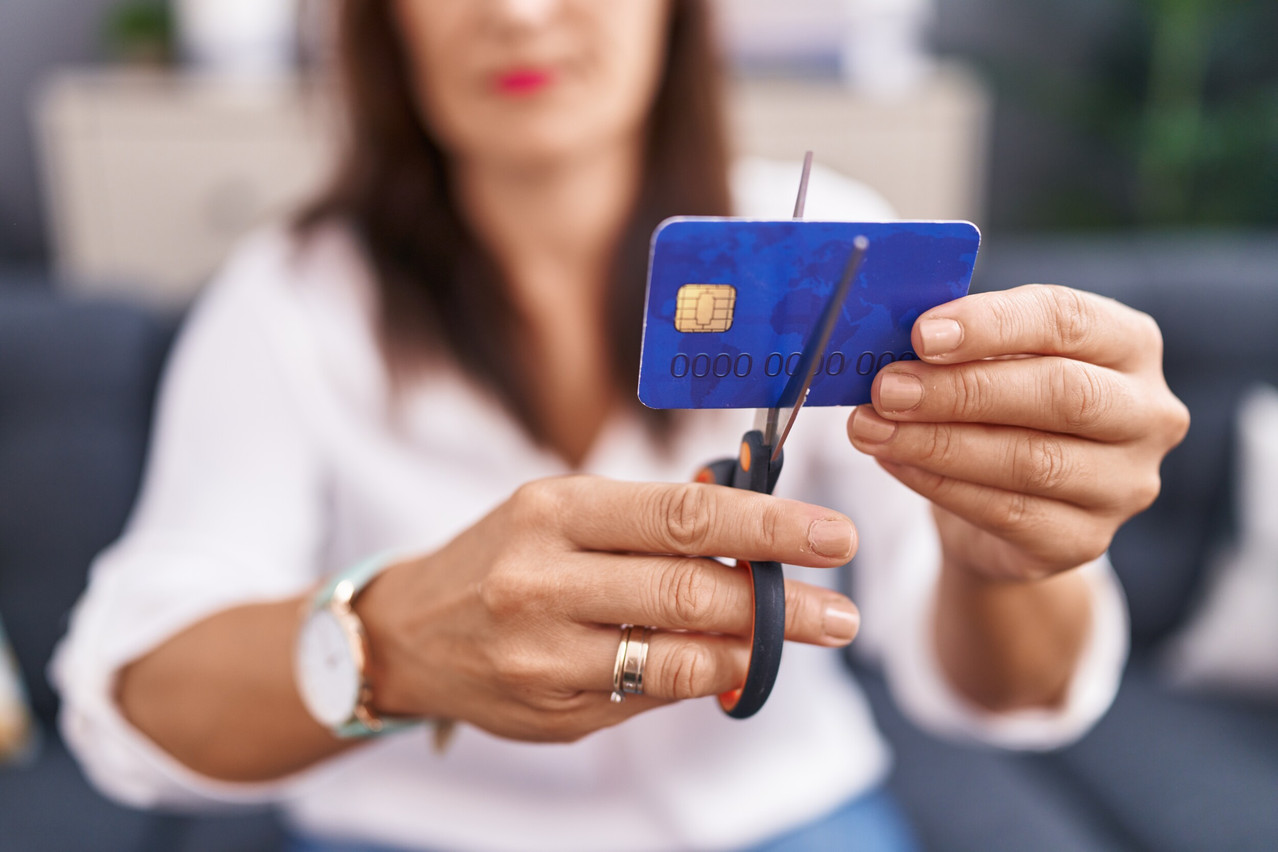
Researchers do not recommend giving up contactless payment. They offer a much more basic piece of advice: when a card expires or is replaced, you should follow your bank’s instructions, return it to the bank if this option is available, or physically cut out the chip and the magnetic strip. A destroyed card can no longer be used as a starting point for their attack.
According to their tests, payment services such as Apple Pay and Google Pay are better at managing the replacement of physical cards, as their payment tokens can be modified or deactivated remotely. The researchers do not claim that these services are invulnerable, but this centralised management reduces the likelihood that an old identifier will continue to work.
The action required of the consumer therefore remains simple. A new card in one’s wallet does not guarantee that the old one has lost all its payment functionality. Its expiry must be implemented across the entire technical chain. Until such coordination is guaranteed, a pair of scissors remains the last line of defence.