Europe wants its own Visa, and Visa has taken full note! Whilst Europeans are beginning to put their sovereign payment project into action with the digital euro and Wero, Visa appears unfazed. For Florence Mélique, senior vice-president of the group and managing director for the FBL Europe region, these initiatives do not pose a threat to the American group.
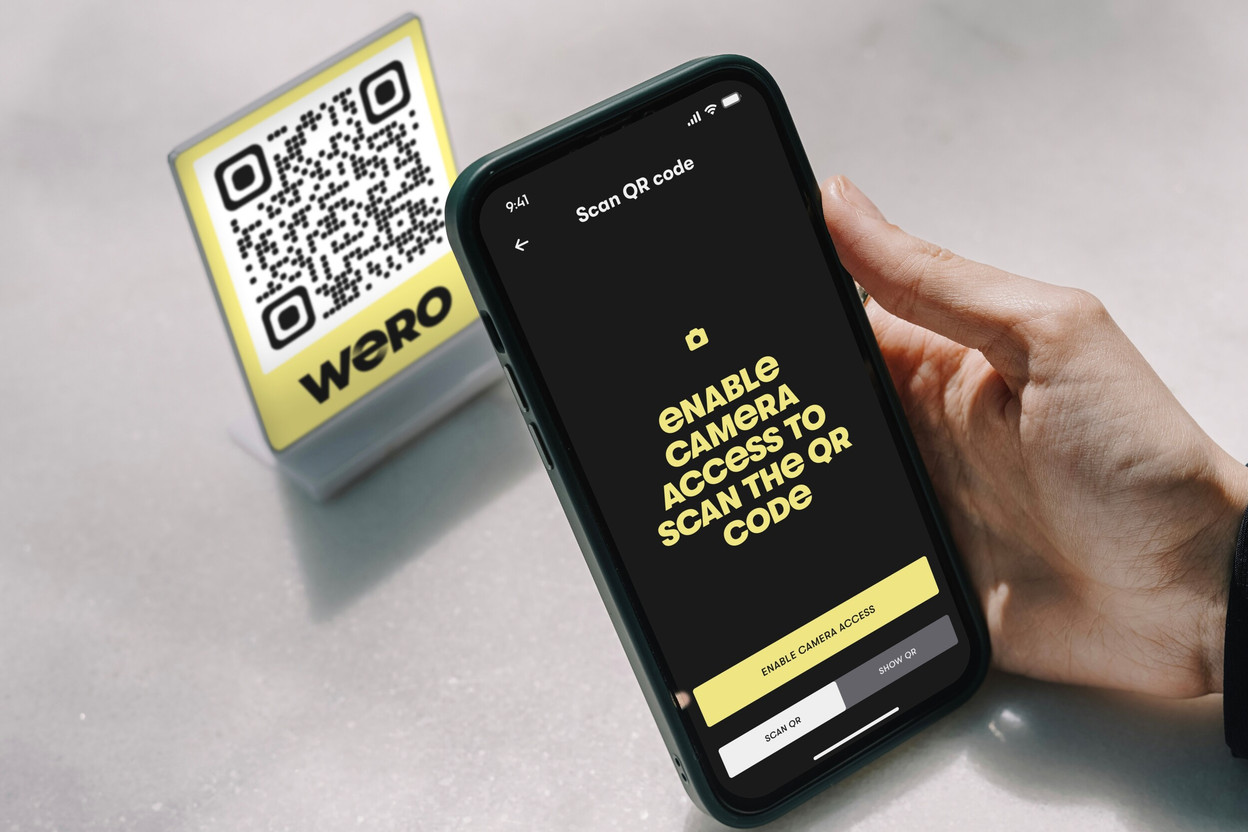
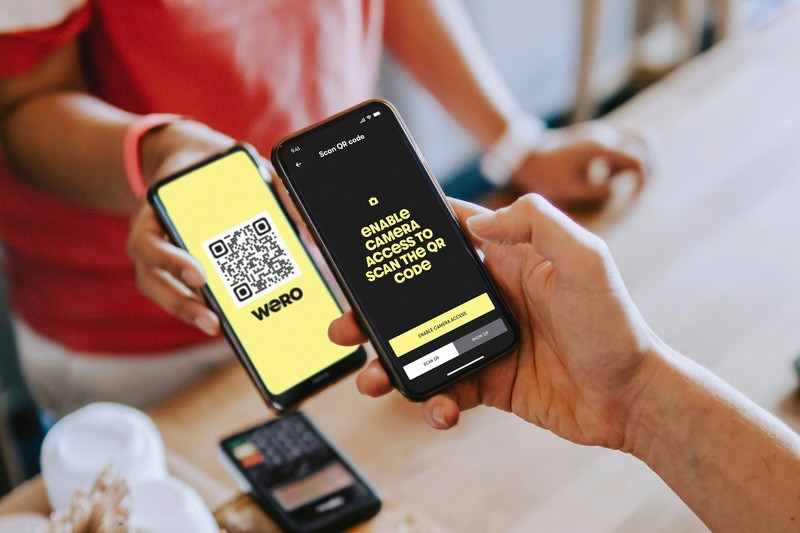
“Wero is owned by our major clients. We see it first and foremost as a partner to whom we offer the opportunity to scale up rapidly thanks to our infrastructure and technology,” she said in an interview with Paperjam. These remarks may come as a surprise, given that the aim of Wero – launched by the European Payments Initiative (EPI), a consortium of major European banks – is precisely to reduce Europe’s dependence on international payment networks and, ultimately, to offer an alternative to the interchange fees paid to Visa and Mastercard.
Wero, the digital euro: Europe strikes back
Rolled out gradually across several European countries, Wero already enables users to send and receive money via instant transfers, with the ultimate aim of making Wero an everyday payment method suitable for all purposes, usable throughout Europe. In this sector, Brazil offers a telling precedent: launched in 2020 by the central bank, Pix has established itself within a few years as the country’s leading payment method. If Wero manages to achieve a comparable critical mass, the European payments market could be profoundly transformed.
Nevertheless, the Californian giant refuses to see red and believes that “sovereignty should not be based on isolation, but on the ability to rely on an open and interoperable environment”, emphasises Florence Mélique. In a sector where instant payments, digital wallets and new infrastructure are proliferating, the American behemoth believes that innovation depends above all on the ability of different players to work together within an ecosystem.
But Visa has no intention of sitting idly by. The Californian giant has just announced a €500m investment in Europe, seeking to bolster its capabilities in artificial intelligence, cybersecurity and payment infrastructure. Among the projects announced are the creation of a new data centre located in the eurozone, designed to process Visa transactions across Europe; the opening of a new headquarters in Frankfurt to house the Central European teams; and the creation of a European Innovation Centre as part of a major investment in Germany. “Europe is a strategic market for Visa,” emphasises Florence Mélique.
In Warsaw, a Technology & Solutions Centre will open its doors in March 2027 to develop the next generation of payment solutions using artificial intelligence and data analytics, alongside a European Centre to strengthen cooperation with European partners and local authorities on cybersecurity. The aim is to improve the detection of and response to cyber threats in an environment where digital risks are on the rise. The group already operates a dozen data centres, supplemented by several cloud deployments across Europe. Visa is also playing the European card by seeking Systemically Important Payment System (SIPS) status, under the supervision of the European Central Bank (ECB), with settlement in euros via T2.
Behind these investments, the group is primarily seeking to establish itself in a market that is evolving at breakneck speed. “We’ve seen more changes in payments over the last five years than in the previous 50 years!” exclaims Florence Mélique. “The challenge for Visa is innovation: to continue offering users experiences that are ever more personalised and seamless, whilst ensuring a very high level of security,” she continues.
AI is set to change the way we pay – it’s a revolution that’s already underway!

If there is one topic that is currently the focus of everyone’s attention, it is artificial intelligence, which appears to be the main driving force behind this transformation. “AI is going to change the way we pay; it’s a revolution that’s already underway!” she enthuses.
The US giant is focusing in particular on ‘agent-based commerce’, in other words, the ability of artificial intelligence to make purchases on behalf of consumers. Whilst the promise is appealing, Florence Mélique points out that “consumers see AI as a support tool, without necessarily wanting to delegate the final decision on payment to it”.
The figures cited by the executive highlight the scale of the phenomenon: 38% of Europeans already use artificial intelligence when making purchasing decisions. In Luxembourg, the adoption rate is said to be as high as 70% among 16- to 24-year-olds.
“Luxembourg is a key innovation hub. It is a market with a high level of digital maturity and particularly sophisticated players, such as Amazon and PayPal,” emphasises the group’s vice-president. “Our aim is to make Luxembourg a showcase for global finance and to strengthen our collaboration with local players.”
“We want our clients to be able to benefit from stablecoins and tokenised currency. The idea is not to replace the existing system, but to complement it, particularly for cross-border transactions, by enabling enhanced settlement and liquidity,” explains Florence Mélique.
Security, fraud and sovereignty: the sector’s new challenges
In this ever-evolving landscape, trust is key. “Consumers want to retain control over the final payment decision” – and that is precisely where Visa intends to play a role.
This transformation cannot be envisaged without considering the issue of security. Last year, Visa claimed to have prevented €40 billion worth of fraud using AI. This is a significant step forward, yet it raises questions within the banking sector, where the use of AI is becoming increasingly common and can sometimes be perceived as a risk in terms of control and transparency. Pedro Machado, a member of the Supervisory Board representing the ECB, has warned industry players. AI is now considered a “fundamental risk”. He is calling on institutions to make it a priority in terms of oversight.
The best payment is the one you don’t even notice!

With the arrival of new players, one might naturally expect prices to fall, but for Florence Mélique, that is not the main issue. The group’s share of the market is considered ‘negligible’. “The issue for the consumer isn’t that; it’s about fraud and security,” says the director. “Our priority is to protect our customers.”
This finding is partly corroborated by the Paysafe “Inside the Wallet” study published in 2024, which surveyed 14,500 consumers. According to the study, security is indeed the primary criterion when choosing a payment method for 54% of respondents, but price is not absent from the equation: 32% of consumers cite fees as an important factor in their decision, a sign that, against a backdrop of pressure on purchasing power, the cost of payment services remains a very real concern.
And when asked about her vision for the next ten years, Florence Mélique is categorical: “The ultimate payment is the one you no longer notice! It will be invisible within the user experience—invisible because it is instant, and invisible because it is completely secure.”
Europe is making its move with Wero and, in the future, perhaps with the digital euro. Visa, for its part, is strengthening its position and focusing on artificial intelligence. The battle will therefore be fought as much over sovereignty as over trust. And, in this arena, will this strategy be enough to preserve the position of the major international networks at a time when Europe is specifically seeking to develop its own payment infrastructures?