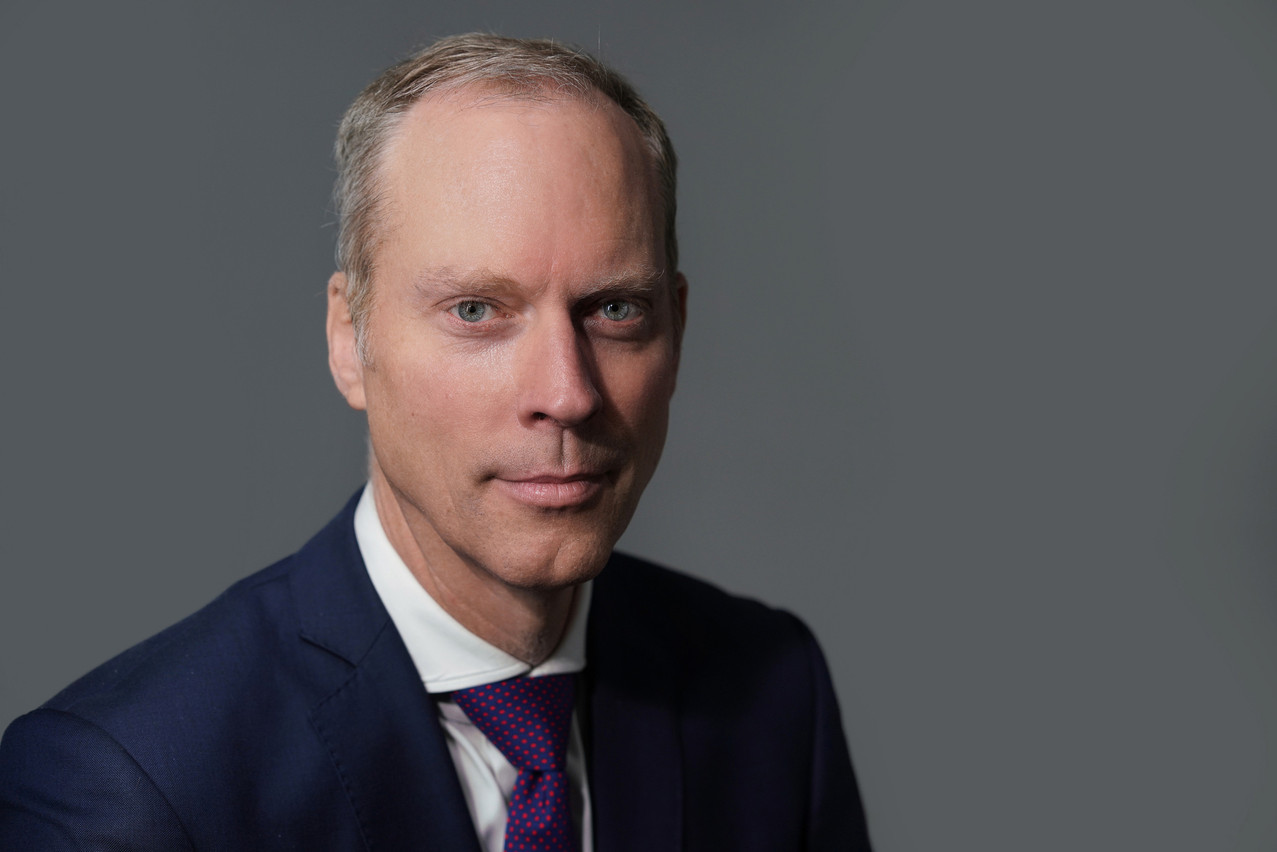
“I've seen a few deaths of ESG. It is not the first one,” said Matt Christensen, global head of sustainable and impact Investing at Allianz Global Investors (AGI), in an interview on 3 October 2024. He recalled the death of ESG after the dot com crash and the “GFC/subprime” crisis, whereas he thinks that we are currently experiencing another form of death of ESG.
Christensen observed that the ESG topic tends do well in growth markets and “it has some correlations to areas like pharma and tech,… something that has not changed in the last 20 years.” On the other hand, he suggested that it is more challenging for ESG to outperform when “it’s all about defensive stocks in an inflationary environment.”
He thinks that the ESG hype attracted “too many people… to the party… that thought it was probably a free ride.” The current cycle is about investors such as AGI having convictions whereas the “tourists have gone home.”
Growth in ESG subsets
“The trend towards sustainable investing or impact investing… is still a growth area along with transition,” stated Christensen. He still sees interest from clients but perceives frustration on regulation. “It very difficult to describe to clients… what is sustainability in a very clear, simple manner, as opposed to deep dives into taxonomy, article 8, article 9 and net zero.” He thinks that “over time,” the proliferation of different ways to look at it “will start to work itself out.”
For risk-on ESG funds that are coming out of the chaotic 2022-2024 where performance was hit, Christensen thinks that asset managers must explain how a fund will weather the storm and explain the meaning of impact, which could be different for private and public markets.
Impact of the SFDR regulation
“That is a major change in my 20 years in this field that we did not have prior,” commented Christensen. He said that the regulation was cumbersome, but it brought everyone to the table in an asset management company helping all to become more familiar with its challenges.
I would say that at the firm-wide level, we have not made changes to our exclusion policy of controversial weapons… that includes cluster munitions

Despite the ESG death discussion, he noted that the younger generation “still really want to talk about this topic.” It is still unclear how the regulation will evolve, but he thinks that there is “an overall demand or sustainability in some shape or form,” and for financial markets to assess companies under a risk-return-impact equation.
Do investors, in general, care about ESG?
Christensen acknowledged that very few retail investors--“always going to be a minority”--will sacrifice their financial performance out of a conviction on ESG. He believes that performance and risk will always be important and reporting will have to improve, as well as communicating the number and the target of engagements with companies and the “measuring [of] carbon going into a decarbonisation world.”
Article 9 funds: on the brake pedal
“We don’t have many article 9 funds in public markets…. Because the goal posts were evolving… at [the financial regulators] AMF in France and at Bafin in Germany.” AGI has decided to observe how the market will “settle down about the expectations of regulators beyond EU but at the nation state level.” Christensen may be convinced about the rigorous approach of AGI that looks at actual activities within the companies and its audit trail, yet he is not sure whether many retail investors really care when asset managers investigate that level of details.
Ukraine: How has the view of AGI evolved about investing in defence industries?
“I would say that at the firm-wide level, we have not made changes to our exclusion policy of controversial weapons… that includes cluster munitions,” affirmed Christensen. Despite the evolutive public opinion on the appropriateness of investing in the defence industry on the back of Russia’s war in Ukraine, Christensen stated that AGI has not experienced pressure from investors to change its internal rules.
On nuclear, a highly sensitive topic in Germany, he explained, in a convoluted fashion, that they are reviewing whether it makes sense to invest in less controversial parts of that sector. That may indeed open the door to probably the least controversial subsector in AGI’s exclusion list.
After this article was originally published, an AGI representative stated the following in a communication with Paperjam:
Controversial Weapons : Allianz Global Investors understands that the defense sector plays an important role in providing the means for peacekeeping and that weapons can be of use for ensuring national and regional security. However, we are of the view that there are certain categories of weapons – so-called controversial weapons – which must not be supported by any means as they have been deemed unacceptable or even illegal under certain regulations based on their humanitarian impact. For this reason, Allianz Global Investors refrains from investing in companies that are involved in the controversial weapons stated in this Policy. Relevant international conventions or local regulations include the Ottawa Treaty, the Convention on Cluster Munitions, the Chemical Weapons Convention, the Treaty on the Non-Proliferation of Nuclear Weapons.
Allianz Global Investors will not invest in companies developing, producing, using, maintaining, offering for sale, distributing, storing, or transporting of controversial weapons:
- Anti-personnel mines,
- Cluster munitions,
- Biological weapons,
- Chemical weapons,
- Nuclear weapons outside of NPT (non-proliferation treaty)