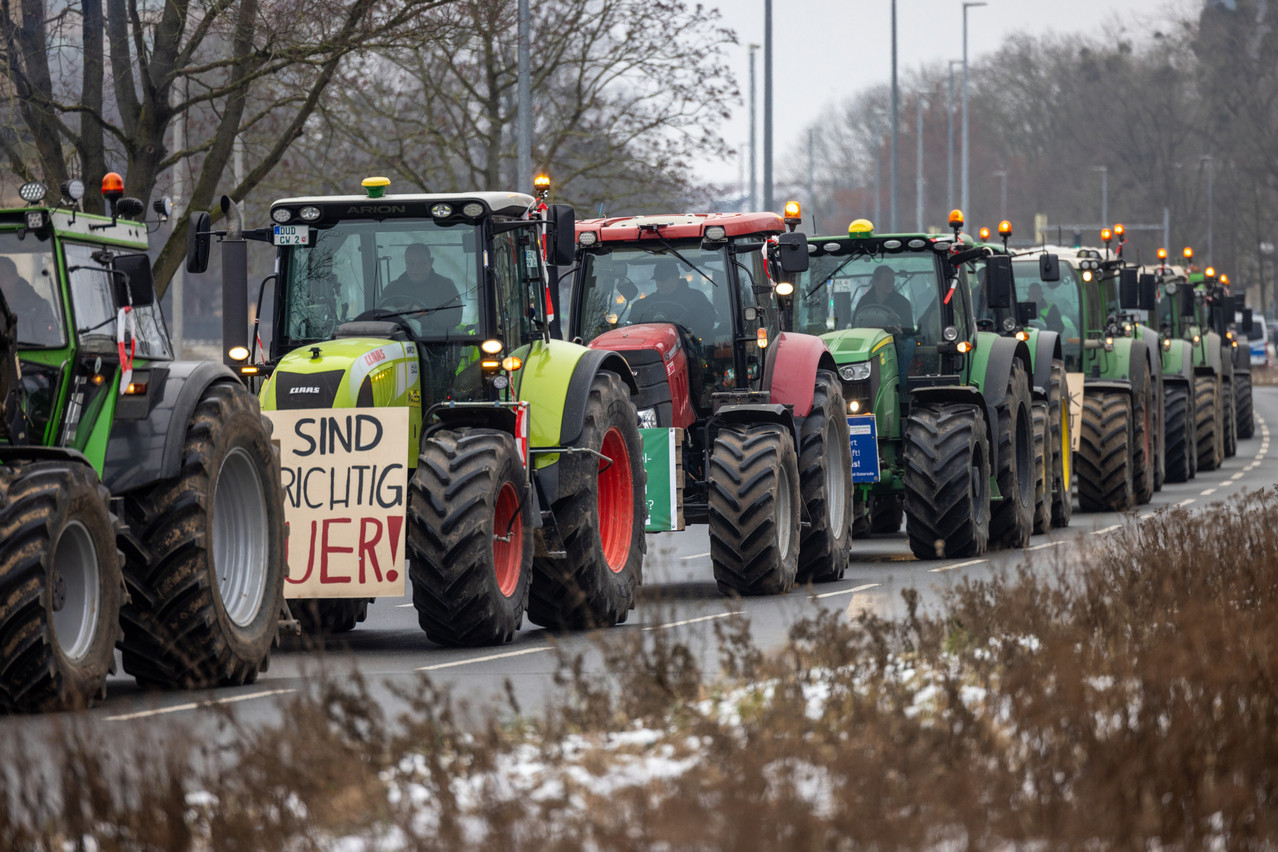
Farmers in Germany, France and Belgium are angry. Their counterparts in Luxembourg--a country with some 1,500 farms--are not, at least outwardly. Still, the protests across the border are perceptible here: commuters from France were particularly affected by the blockade on the A31 motorway on 25-26 January.
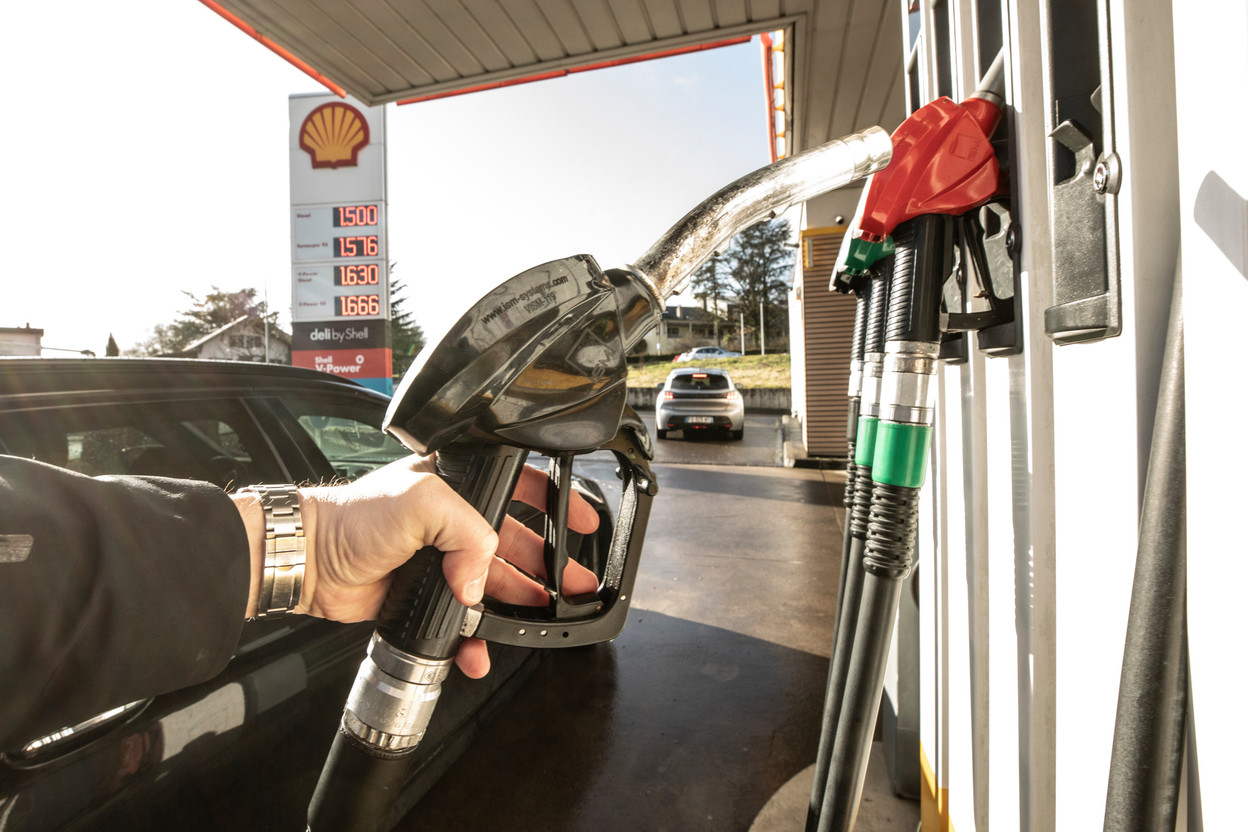
In Germany, it is the gradual end of a tax advantage on agricultural diesel that is crystallising passions, while in France people are more offended by the overly restrictive regulations and unfair competition from foreign farmers who export their products to the EU without the same constraints as those imposed on European farmers. In Belgium--and the Netherlands, for that matter--farmers are angry about regulations on nitrogen emissions and forced buyouts. In other countries too--Spain, Romania, Poland--the revolt is growing. Generally speaking, farmers are crying out for recognition and are campaigning to revise the regulations that are weighing on their productivity. In the words of Christiane Lambert, president of the Committee of Professional Agricultural Organisations in the EU, the political climate is one of “shared exasperation.”
These winds of protest blowing across Europe don’t seem, for now, to be affecting Luxembourg, where farmers are observing the situation with a certain distance. “Farmers show solidarity with their colleagues in neighbouring countries,” says Charel Ferring, chair of the nonprofit Landjugend a Jongbaueren (”rural youth and young farmers”). “We understand their situation and their anger. Protests are justified. What is debatable is the form of the demonstration, as the population is being heavily penalised in many places. To be successful, we need the support of consumers.”
We see demonstrations as the last option for making our voice heard.

Although the EU’s Common Agricultural Policy applies to all member states, its implementation can vary from one country to another, particularly when it comes to agri-environmental measures and support for extensive forms of agriculture. “In principle, farmers’ problems are the same throughout the EU,” Ferring explains. “The development of farms is limited by high constraints and high interest rates. Added to this is a lack of prospects. But in Luxembourg, the dialogue is much closer, which gives Luxembourg agriculture more hope. But we need to find solutions quickly if we are to prevent the discontent in the farming sector from exploding. We see demonstrations as the last option for making our voice heard.”
The green deal
While young farmers in Luxembourg do not seem to be worried about the green deal for the time being, caution is still the order of the day. “The pandemic and the war in Ukraine have shown that the national food supply is very fragile,” says Ferring. “So that’s where we need to take action first. The objectives of the European green deal are risky in the long term, but in the short term we need to ensure that food prices remain affordable for consumers. And only economically sound companies can achieve these objectives.”
Farmers in Luxembourg point out that the raw materials necessary for their activity are costly, and not necessarily covered by sales revenue. As a result, their incomes are often low and unstable--showing, says Ferring, why those that act economically and sustainably are best placed for longevity.
We have better support than they do neighbouring countries.

The situation isn’t enough to trigger organised action in Luxembourg just yet. This is also confirmed by the Centrale paysanne (the professional organisation of farmers in Luxembourg), which stands in solidarity with other European farmers. “It’s understandable that they’re not happy, and it’s true that environmental restrictions are increasingly difficult to bear. The difference with us is that, even though we are also affected by these restrictions, we have better support than they do neighbouring countries,” says Christian Wester, president of the Centrale paysanne.
By support, the farmer means above all political support: “The new government has clearly shown its willingness to open dialogue with our sector, and we sense a greater willingness than with the previous government. In 2022, we didn’t feel supported, which is why we demonstrated, in front of the chamber, against the agrarian law. So we want to give them this opportunity. They have promised not to cut subsidies for farmers.” An agricultural round table will bring together the agriculture and environment ministers and representatives of the farming sector on 4 March 2024.
Politicians taking note

A succession of related visits and meetings are, and have been, underway. On 27 January, Hansen took part in the World Agriculture and Food Forum in Berlin, an opportunity to exchange views with her Saarland counterpart, Petra Berg, and to call on her peers to “work quickly and together to promote sustainable agriculture and robust supply chains.”
Earlier this week, Hansen travelled to Brussels. “We need to regain the confidence of farmers and bring policy and political decisions closer to those working on the ground,” she said, addressing the EU Agriculture and Fisheries Council. “Our farmers need a stable, predictable, simplified and bureaucratic regulatory framework. Brussels’s objectives must also be realistic, coherent and balanced between our agricultural, commercial and environmental ambitions. If we want agriculture to remain an attractive activity, it must be viable and provide a decent income. To achieve this, the CAP budget must be commensurate with the services we demand of our farmers.”
Finally, back in Luxembourg, Hansen met with local farmers. “The doors of my ministry are always open. This dialogue is important, and these meetings were arranged long before the protest pickets in neighbouring countries. So it’s not a question of ‘clearing’ the ground, but of working hand in hand,” she explains to Paperjam, Delano’s sister publication.
Following a meeting with representatives of Baueren-Allianz, the minister confirmed that “all aid to farmers will be maintained.” A provisional timetable for the payment of these subsidies, as well as new agri-environmental premiums, will soon be unveiled.
This article was originally published in Paperjam. It has been translated and edited for Delano.