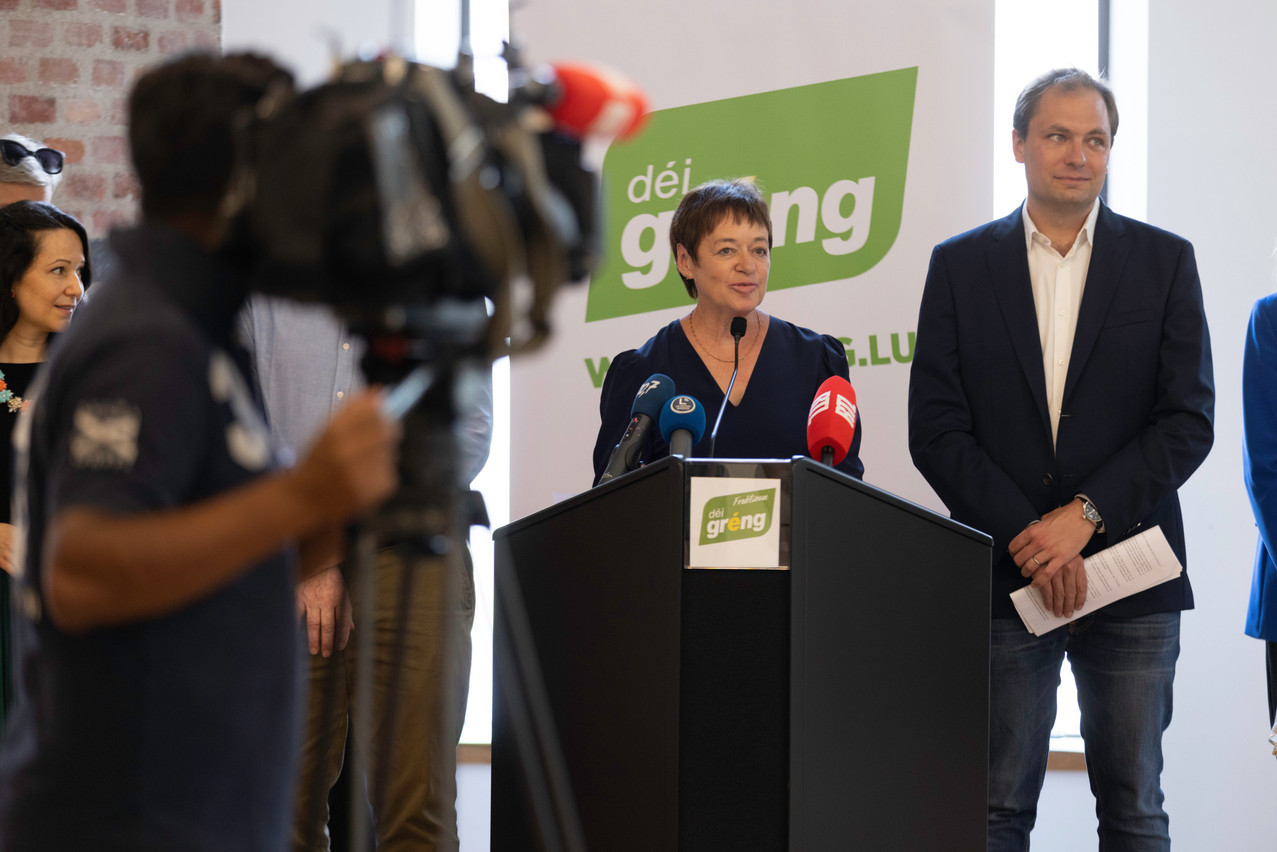
The Déi Gréng faction reiterated some of its priorities in the Chamber of Deputies at its official opening ceremony on Monday morning. At the top of its list is the implementation of the tripartite agreement signed at the end of September. This includes the capping of energy prices, which is necessary to curb inflation. But the leader of the group, 
In any case, there is no question of the budget being marked by any kind of "austerity.” "We want an active investment policy, especially in the areas of sustainable mobility, affordable housing and public transport," said Lorsché. This is a way of showing its difference with its liberal coalition partner, the DP, which advocates budgetary rigour and strict compliance with the 30% limit on public debt in relation to GDP.
The parliamentary group then focused on three points. Although the national carbon footprint was in line with standards in 2021, MP 
Poverty and housing

The issue of housing was also mentioned by MP 
"Many projects" for health
But these different focuses of the day do not deal exhaustively with the priority issues of Déi Gréng, according to Lorsché. Health policy will be on the agenda in November at a press conference of the party’s parliamentary group. The health service has been marked by the resignation of six cardiologists, the temporary closure of a maternity hospital, a shortage of doctors at the Rehazenter and the Kannerklinik, and the question of reimbursement of costs related to psychotherapy.
Urgent problems are, moreover, only "the tip of the iceberg,” according to Lorsché. "These are signs of a structural problem. The health system is not developed enough to meet the current challenges. We need to analyse the problem as a whole and adapt it to today's world," she adds. The Gesondheetsdësch, the health round table led by health minister 
This story was first published in French on Paperjam. It has been translated and edited for Delano.

