1- Save time
E-commerce:
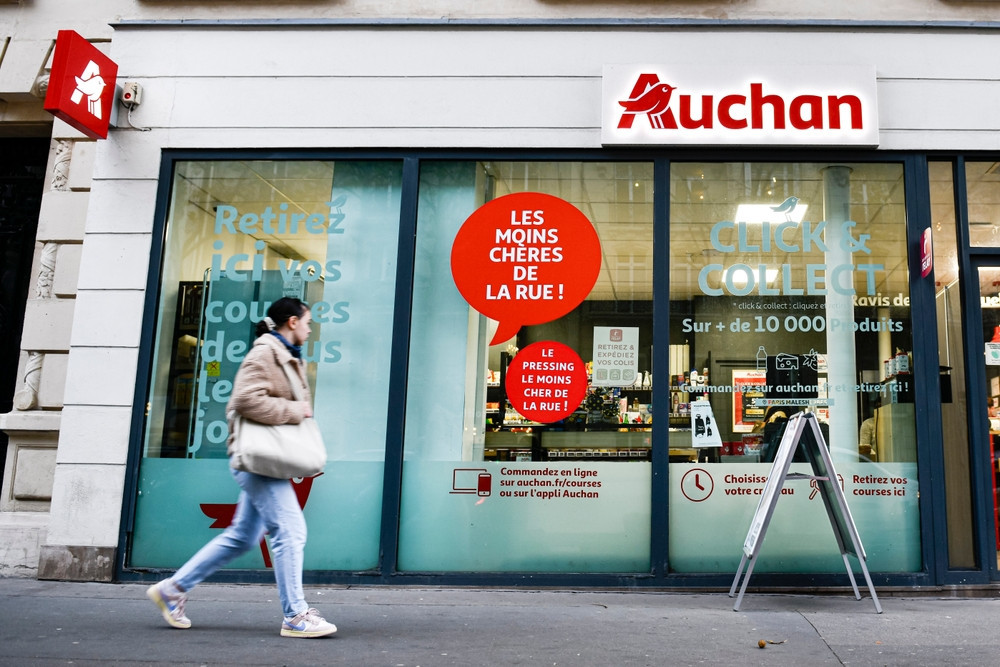
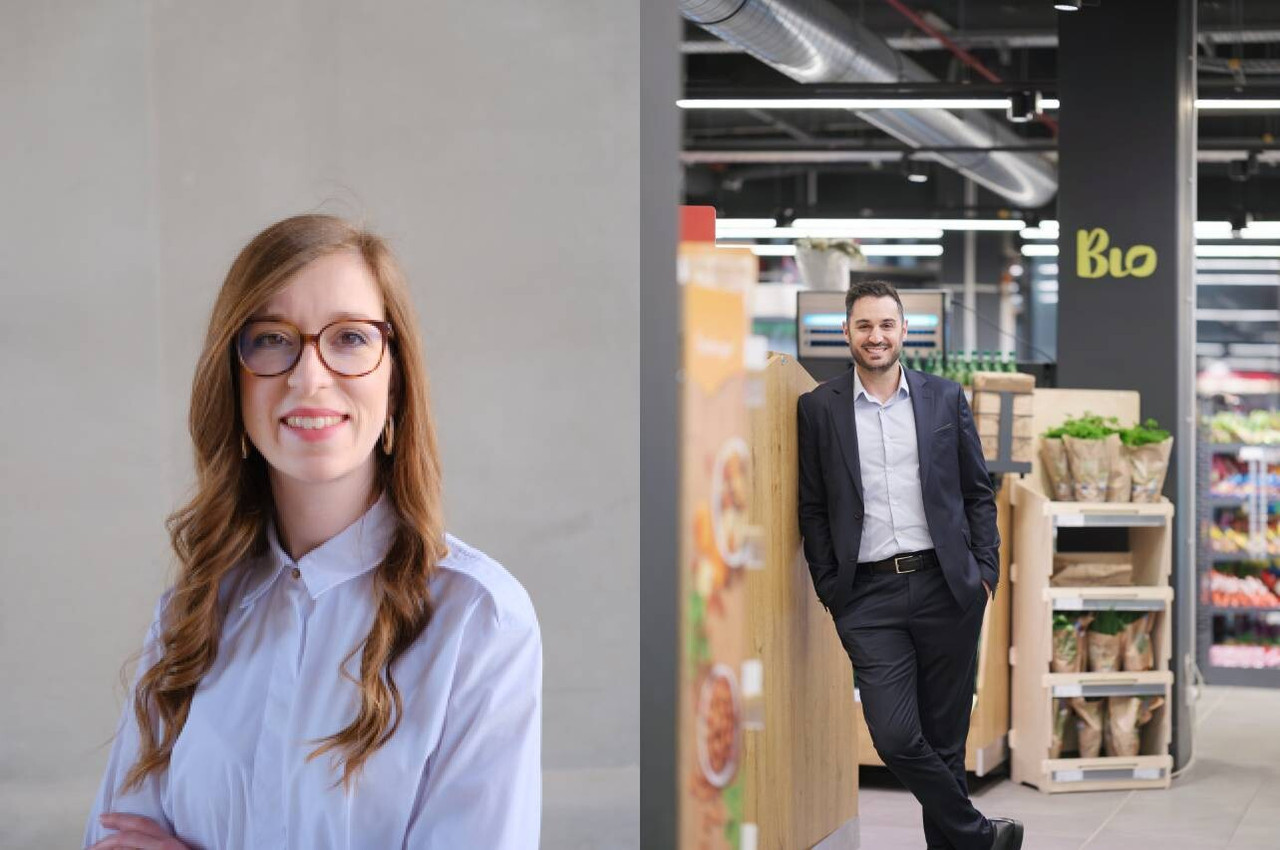
Online grocery shopping follows a simple equation: the less time you have, the more valuable a pick-up service becomes. In Luxembourg – a densely populated country plagued by traffic jams, where families juggle packed schedules – the profile of the pick-up service customer emerges naturally. “The service saves time and reduces mental load: you can do your shopping in the evening, whilst travelling, whenever you like,” explains Emilie Serafin, Head of Marketing & E-commerce at Auchan Retail Luxembourg.
High street shop:
At Delhaize, the solution to time constraints is down to the shop layout. Each store opens onto an immediate shopping area designed for customers who have just ten minutes. This carefully planned flow of movement, thought out in advance, means customers don’t have to walk across 2,000m² just to buy three items. “There are two shopping moments,” explains the country director of Delhaize Luxembourg, 
2- Keeping your budget under control
E-commerce:
Online, you don’t have to hunt for special offers – they’re all in one place. Sorting by price takes just two clicks, and comparing two products in the same category takes only a second. This level of price transparency is something that a high-street shop simply cannot match. The drive-through service does, of course, involve an additional cost, but Auchan fully accepts this. “It’s a choice, just like going to a local shop, which will always be more expensive than a hypermarket,” points out Emilie Serafin.
High street shop:
In-store, there are no service charges: the price on the shelf is the price you pay at the till. When it comes to comparing two products, digital naturally has the edge, but the shop floor is striving to catch up. Visible price gradients, brand displays organised by category. “We’re working on clarity by making prices easier to read,” says Nicolas Gueuzurian. And the traditional advantage of e-commerce (seeing your basket total update in real time) has been eroded since handheld scanners have become widespread in shops.
3- Trust in freshness
E-commerce:
Freshness remains the main concern for consumers when they order their groceries online. It is also one of Auchan’s main challenges. Fruit and vegetables are delivered twice a day, stored at the correct temperatures and checked upon each delivery. “We have to be even more selective when choosing products than we would be if we were doing our own shopping. Take a pepper you pick off the shelf – how many hands have touched it before you?”, asks Emilie Serafin.
High street shop:
When it comes to fresh produce, the shop remains unbeatable. Whether it’s the colour of the meat, the firmness of the melon or the use-by date, the consumer has all the information right in front of them and can choose the best-looking item – the one that matches exactly what they’re looking for. “Consumer trust isn’t so easily won when buying strawberries that you can’t see,” points out Nicolas Gueuzurian.
4- Made to measure
E-commerce:
E-commerce doesn’t just sell; it learns. Saved shopping baskets, one-click additions to the basket, suggestions based on purchase history: the experience is personalised with every order. “These are small features that make navigating our site easier,” notes Emilie Serafin. It’s a level of personalisation that a physical shop, by definition, cannot match.
High street shop:
Brick-and-mortar shops are not bound to treat all their customers in the same way. At Delhaize, the app and the loyalty scheme already allow for a high degree of personalisation. “We’re able to go a long way in terms of behavioural analysis,” emphasises Nicolas Gueuzurian. But the shop retains an advantage that digital channels struggle to replicate: that spontaneous attraction to a seasonal product, the new item you hadn’t come looking for but end up putting in your basket anyway.
5- The human factor
E-commerce:
Does the drive-through service make shopping less personal? Not necessarily. The delivery driver who hands over the order and checks that everything is in order often provides more interaction than a self-scan journey through a hypermarket where you don’t come across a single person. And for people with reduced mobility, older people and families without a car, home delivery isn’t a convenience – it’s a necessity.
High street shop:
The shop remains the only place where advice is personalised, immediate and free of charge. The butcher who tailors his cuts, the fishmonger who offers guidance based on the planned menu. “If you don’t have the expertise, you don’t make the right choices,” sums up Nicolas Gueuzurian. These spontaneous interactions turn a simple shopping trip into a learning experience.
Do we really need to pit them against each other?
In Luxembourg, where a supermarket is rarely more than ten minutes’ walk from home, physical shops still have strong advantages. Whilst digital retail is growing, it has not yet revolutionised the sector: according to the Retail Report 2025, only 16% of food retailers have their own online shop. For retailers, the challenge is not to determine which channel will prevail, but to offer the most appropriate solution for each situation. “We need to stop pitting e-commerce against physical shops. The key is knowing what the customer is looking for at the very moment they’re looking for it,” concludes Nicolas Gueuzurian.
This article was written for the Customer Experience supplement of Paperjam magazine’s June 2026 issue, published on 17 June. The content is produced exclusively for the magazine. It is published on the website to contribute to Paperjam’s comprehensive archive.
Click on this link to subscribe to the magazine.
Is your company a member of Club Paperjam? You can apply for a subscription in your name. Please let us know via club@paperjam.lu.