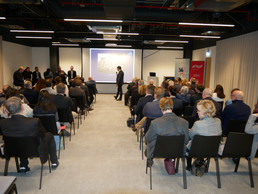
Luxembourg needs thousands of small flats for its young workers. Employers are building just a few dozen, whilst failing to make use of substantial public funding. This paradox was the central theme of the conference, organised on Wednesday 25 November by the property committee of the American Chamber of Commerce in Luxembourg (AmCham) at Gridx. The event, in partnership with the Paperjam Club, focused on affordable housing for young professionals, particularly those recruited from abroad.
The figures presented by Julien Licheron, a researcher at the Luxembourg Institute of Socio-Economic Research (Liser) and the Observatoire de l’habitat, highlight the country’s dependence on this workforce. Of those who entered the Luxembourg labour market between 2021 and 2024, nearly 80% were aged between 20 and 39. Around 72% were single. A previous Liser study had found that, in 2021, 90% of university graduates employed in the finance sector were born abroad. Some 80% of the population studied lived in Luxembourg City or its surrounding area.
But attracting these workers is not enough to keep them there. According to data presented by Julien Licheron, around 28% of foreign-born new arrivals leave the country within their first year. The cost of living and the difficulty in finding suitable accommodation are among the reasons cited. More broadly, the Luxtalent study by Liser shows that half of new workers leave the country within five years.
70 flats and a long waiting list
A number of employers and trade organisations have begun to come up with their own solutions.
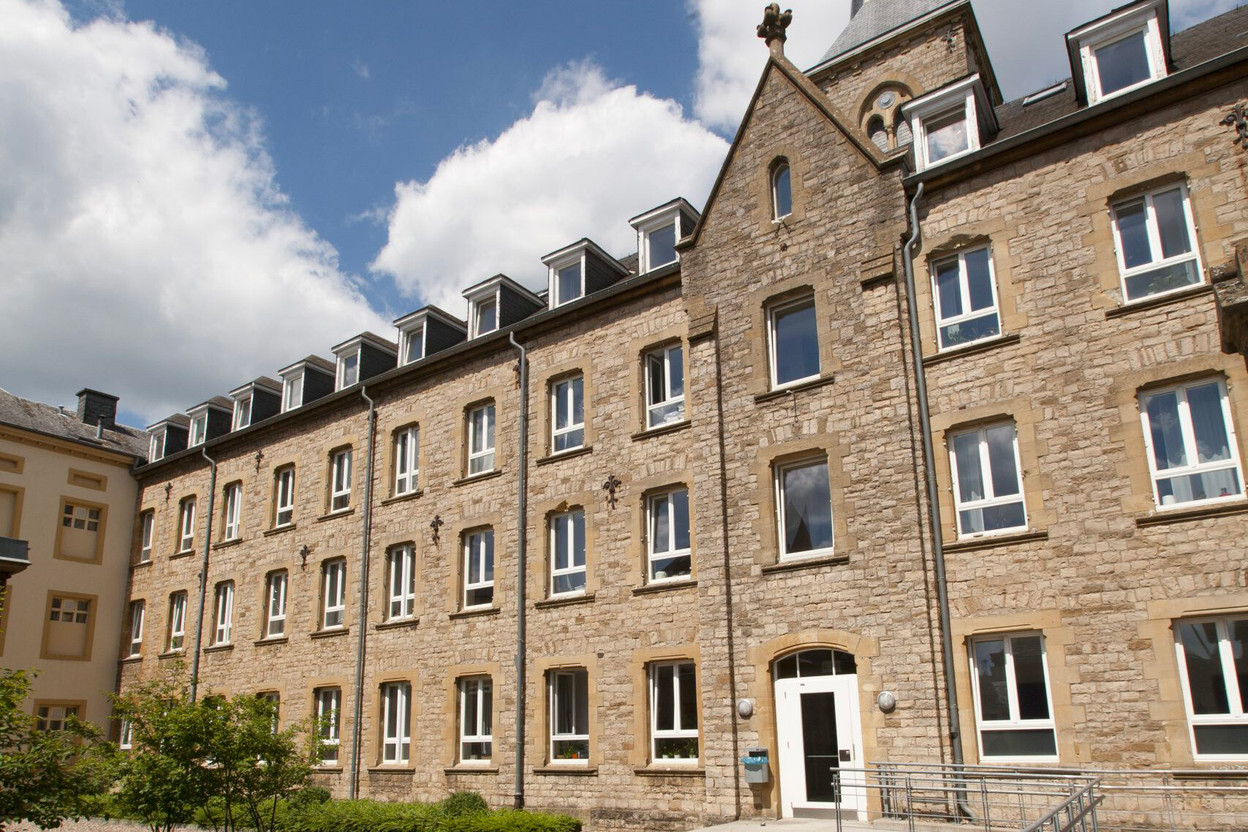
Luxmill, an organisation affiliated to the LCGB, operates 70 furnished flats in Belval, mainly intended for single people. Its CEO, Christine Conter, said that all the flats were occupied and that a long waiting list had built up. A new project is under consideration.
Arendt & Medernach has developed a more modest solution in Kirchberg to provide temporary accommodation for its new recruits and interns arriving from abroad. The scheme accommodated 27 people in 2026, explained 











The banking sector is preparing a larger-scale operation. 
The City of Luxembourg is also adapting its provision to reflect demographic changes. Urban Heaven, a co-living project aimed at young professionals in Gasperich, is due to be completed in 2028.
These initiatives show that employers are prepared to invest in providing accommodation for the talent they need. However, they are still a long way from the scale required. The conclusion reached at the conference was clear: the country is not short of a few hundred units, but of thousands of studio flats and small flats.
Grants covering up to 75% of the costs
The sharpest criticism has been directed at the Affordable Housing Act of 7 August 2023. This Act enables eligible social housing developers to receive public funding covering up to 75% of the eligible costs of affordable rental housing.
The framework explicitly provides for the possibility of reserving housing for the employees of an employer or a group of employers. Tenants must, however, meet the eligibility criteria for affordable housing. Management must be entrusted to a social housing provider, and properties built by a non-profit developer receiving financial assistance must retain this designation for 40 years.
According to the information presented during the conference, the schemes put forward by Luxmill, the ABBL, Arendt & Medernach and the City of Luxembourg could have been eligible for this funding. However, none of the four organisations submitted an application. The constraints imposed and the cumbersome nature of the scheme were deemed incompatible with their projects. This finding does not, therefore, mean that the state refuses to fund affordable housing. Rather, it shows that the conditions attached to this funding do not correspond to the models that employers are actually developing.
In his closing remarks, the President of AmCham, 
A fund of €400m a year
Michel-Edouard Ruben proposed an alternative approach. Speaking as an economist in a personal capacity, and not on behalf of the Idea Foundation, he suggested setting up a housing fund financed by the social partners. Employers and employees would contribute equally to it. This mechanism would make it possible to raise €400m a year to build social housing for young workers.
The proposal sparked a lively debate in the room. Several participants saw it as effectively creating a new tax. They felt that the main obstacle lay not in a lack of funds, but in administrative procedures and local planning regulations.
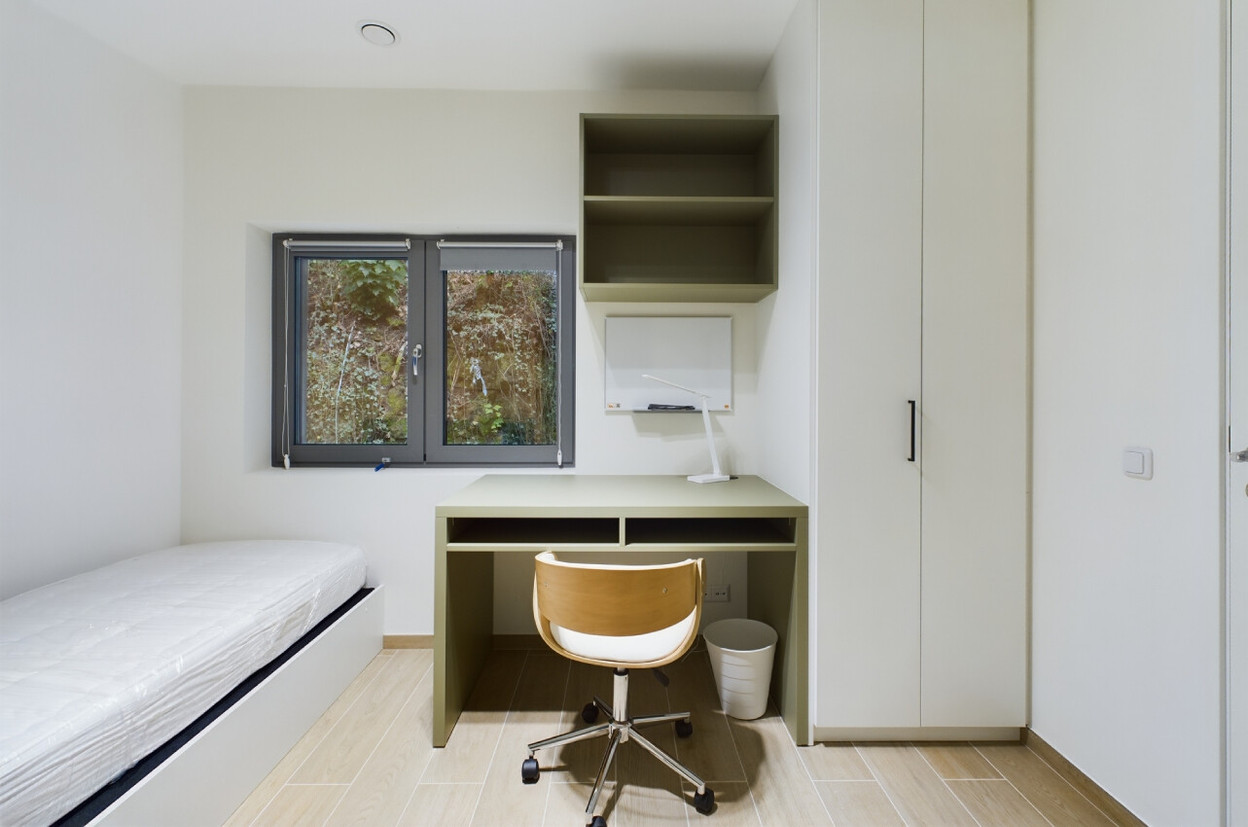
The minimum floor areas required for housing were a particular focus. In Luxembourg City, the average minimum floor area is reportedly 52 square metres, according to figures presented during the conference. Participants called for more studio flats of around 30 square metres to be permitted, as these are better suited to a growing population of young professionals living alone.
Two opposing views have thus emerged. The first calls for a new collective mechanism to finance construction. The second takes the view that the money already exists, but that public funding, procedures and local regulations are preventing the construction of the small homes that the Luxembourg economy needs.