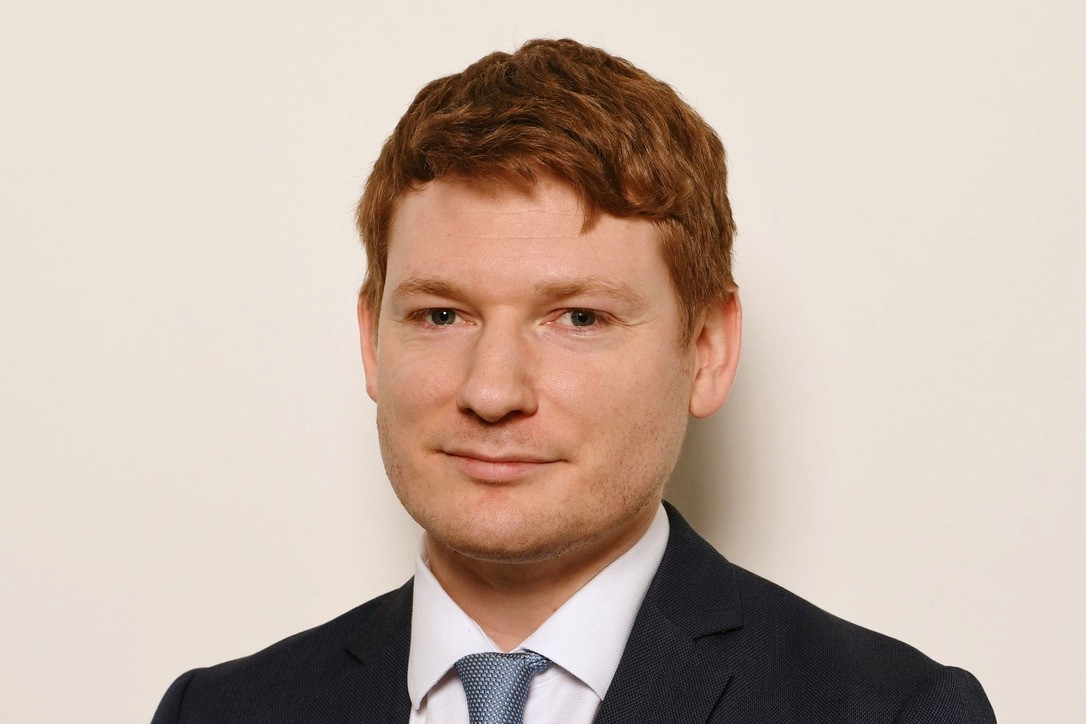
A pillar of the Luxembourg financial centre, the field of alternative investment funds (AIFs) remains largely unknown outside professional circles. A recently published educational book* aims to raise awareness of these investments, which bring together various non-traditional strategies and assets (such as real estate and private equity). Its author, Charles-Alexandre Houillon, fund administrator in Luxembourg at Zedra, gives his vision of the development of AIFs. The views expressed here are those of the author.
Why did you decide to publish this practical guide for the general public?
Charles-Alexandre Houillon: When I started out in this business, I wanted to gain a better understanding of how a fund works. So I wrote the book that I would have liked to read to understand how funds work in general and AIFs in particular. There’s a lot of information out there about the different players but, to date, no one has put it all together to make it understandable.
Running a fund means having a 360° view of operations, because as a manager and director, you need to know everything that’s going on in the fund. Finally, there is no book (in French or English) that deals with this subject. There is plenty of literature on risk and investment management functions, but nothing on the overall operation of a fund.
What are the main challenges investors face in understanding these AIFs, which are often perceived as complex vehicles?
There are still many misconceptions and erroneous beliefs about AIFs. In my book, I have listed eight misconceptions on the subject, ranging from investors’ exposure to excessive risk, to the complexity of these assets or their opacity. These misconceptions need to be corrected through a better understanding of fund activity.
Alternative investment funds are often associated with higher risks than traditional products. In terms of the risk/return ratio, does the investor benefit?
Because of their often unconventional nature, AIFs can actually offer higher returns than traditional investments. I’m thinking, for example, of venture capital funds, which invest in innovative startups and can therefore generate substantial profits if the company succeeds. In the case of infrastructure funds, the aim is to generate stable income over the long term.
We must not lose sight of the fact that AIFs are not suitable for all investors because of their low liquidity, and that the risk/return ratio, the cursed ratio of finance, also applies to this type of investment.
The Luxembourg framework gives investors confidence.

How do you interpret the rise of alternative funds in Luxembourg?
The AIFM Directive has enabled this market and this type of fund to flourish, generating a new dynamic with unlisted assets on the institutional side and new demand from individual investors. The Luxembourg framework gives investors confidence. Although there has been a slowdown in the creation of new AIFs this year, the momentum remains very strong. In this respect, the status of European long-term investment funds (Eltif), aimed at retail investors, seems to be very popular.
A number of market participants are warning about Eltifs, pointing to the length of time investments are locked in and the resulting lack of liquidity. Is this vehicle really appropriate for retail investors?
The trend towards retail investors accessing AIFs via Eltifs is indeed strong. Several funds of this type have recently been created for private/retail investors. It is not uncommon to read that there is now talk of the ‘democratisation of non-listed investment.’
The legal framework allowing retail investors to invest in AIFs is therefore becoming more flexible, although there is still room for improvement. Liquidity is one of the issues to be resolved: the investment period is often long--at least five years, sometimes much longer--and often incompatible with the liquidity requirements of private investors.
Does increased concentration on the European market represent a risk for Luxembourg funds?
The Luxembourg toolbox has unique characteristics in Europe and enables a very high standard to be maintained for funds in general and AIFs in particular. The Luxembourg market’s expertise is unique and, although competition from other European countries is strong, the experience acquired over the years is a major advantage.
I also note that developments in the legal framework in certain neighbouring countries are aimed more at satisfying domestic demand. In this context, the position of Luxembourg, which is internationally oriented, seems to me to be preserved--at least for the time being.
Competition for AIFs will come more from Germany and France.

The Luxembourg financial centre is seeing increasing competition from Ireland in the funds sector. How will this competition develop?
I see it mainly with exchange-traded funds (ETFs). Less so with AIFs, because fund promoters in Ireland have to contend with the small number of service providers. In my opinion, competition for AIFs will come more from Germany and France. France has recently amended its legislation to promote this type of fund in France. The financial centre must be able to take these threats into account and assess them in order to gain in flexibility and speed.
With the emergence of new financial products, notably ETFs and green bonds, how can alternative funds adapt to the new demand for diversification and sustainability?
As far as diversification is concerned, some AIFs are constructed in the form of ‘funds of funds’ and can therefore enable an investor to achieve immediate diversification by investing in this type of fund, in which various asset classes can be combined. In terms of sustainability, AIFs can be ‘article 8’ or ‘article 9’ funds under the European regulation on the publication of sustainability information in the financial services sector (SFDR) and thus meet this demand.
What are the main trends facing the Luxembourg financial centre in the AIF sector over the next few years?
First of all, I note that the Luxembourg financial centre, having consolidated its position as the first domicile for AIFs, remains essential: when we talk about AIFs, Luxembourg is mentioned nine times out of ten. I would stress the human factor, which is essential in our industry, where attracting and retaining talent is a decisive factor. I am also seeing strong downward pressure on fee levels, which seems to me to be incompatible with the regulatory pressure that implies ever-increasing compliance costs.
Otherwise, I am of course thinking of the democratisation of private funds. From a technological point of view, tokenisation will facilitate the democratisation of investment in AIFs, but also the link with institutional investors and greater transparency. I also note the use of artificial intelligence, which should make it possible to eliminate a number of redundant or non-value-added tasks.
How, in practical terms, can tokenisation take hold? Do we have the necessary infrastructure and resources?
An article on this subject, published a few months ago on this site, discussed the challenge of tokenising the capital markets. In this regard, I understand that a major US asset management firm recently launched the first tokenised fund in Luxembourg. This first step shows that tokenisation is gradually taking hold and that the Luxembourg financial centre does indeed have the necessary infrastructure and resources to support such projects.
I think this initial experience is very promising, and I’m very curious to see how alternative investment players will take inspiration from this model. Only time will tell!
*Charles-Alexandre Houillon, “Les fonds d'investissement alternatifs. Guide pratique,” published by Arnaud Franel.
This article was originally published in French.