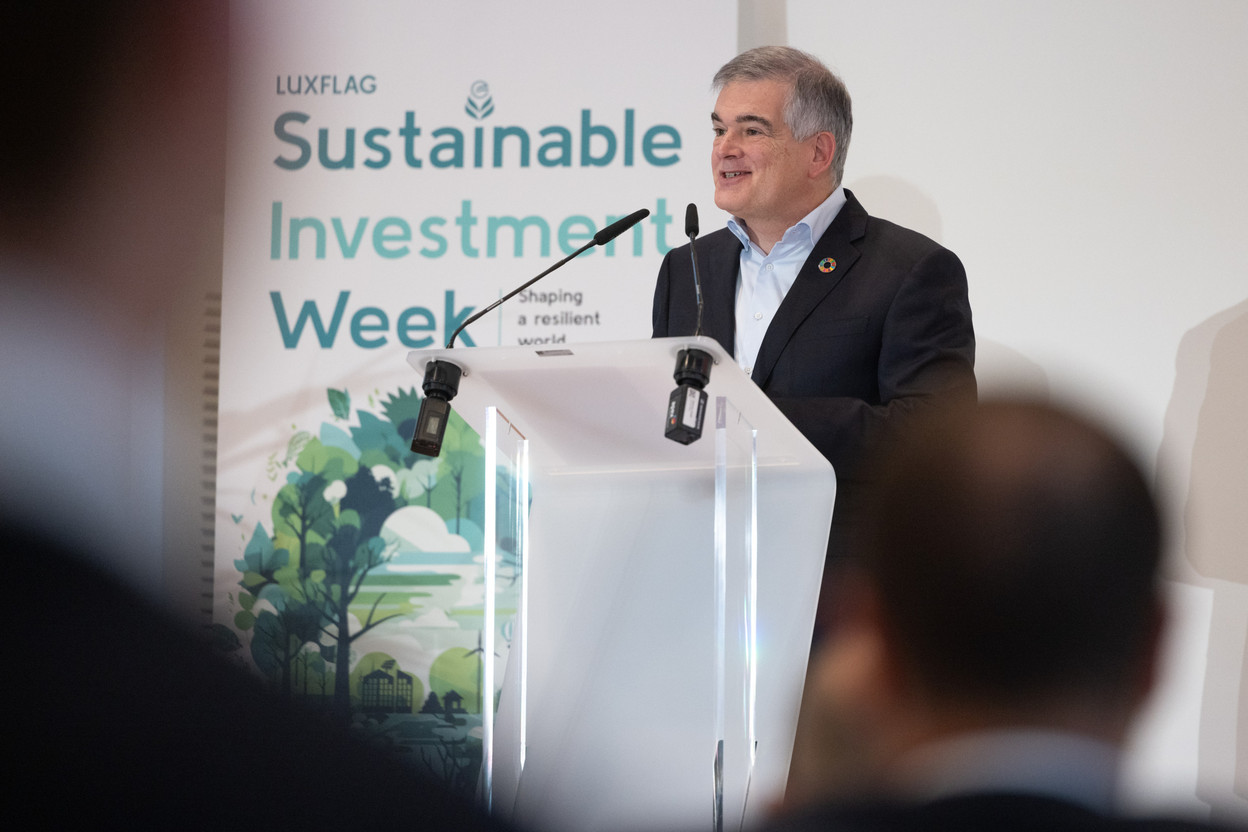
According to Constance Boublil-Groh, senior economist at Société Générale, hydrological and meteorological disasters are already impacting the economy through four main channels: labour productivity, value chains, capital stock deterioration and investments.
She commented, during a conference organised by Luxflag on 22 October 2024, that heat waves, for instance, are slowing down productivity but also disrupting transportation of goods on the Panama Canal, for instance. According to the Woodwell Climate Research Center, the drought that started in early 2023 has reduced the water level of the Gatún Lake, which is the reservoir supplying the canal. It has resulted in smaller cargo capacities for transiting ships and much fewer vessel passages (-30%).
On capital stock deterioration, Boublil-Groh affirmed that natural disasters are not only responsible for the destruction of agricultural crops, but also assets on literally in all economic sectors: manufacturing, construction and real estate. Besides, damage to agriculture is associated with high food inflation, with the emerging market overly penalised given the high share of their household budgets dedicated to food.
Finally, Boublil-Groh noted that economists believe that pre-emptive investments, also called “adaptation investments”, or reconstruction investments post natural disasters are “not very productive” as these financial resources should have been redirected, in the first place, into research and development, innovation and education.
Interestingly, she reported that a study published in September by the European Central Bank showed that the direct physical risks for the EU are “quite low” compared to Asia. Yet the overall potential impact can be considered “quite large” when accounting for their high integration in the global value chain.
Managing transition risk
Boublil-Groh noted that more than 100 countries, accounting for more than 80% of world greenhouse gas emissions, are committed by law or through political pledges to net-zero.
She commented that various tools are employed to ensure the implementation of net-zero pledges. Standards on regulations, for example, emission standards for cars are one of them. She also noted a growing number of carbon pricing schemes (carbon tax or carbon market), a phenomenon that started in 2004 with the Nordic countries which is now spreading around the world with few relevant non-participants such as the US, Russia, the Middle East and most of Africa.
Banks charging higher cost to bystanders
Boublil-Groh reported that academic studies are showing that the corporate and the sovereign bond market are pricing climate risk. Moreover, the ECB noted that euro area banks are charging higher interest rates to firms with high carbon emissions but also on companies’ emission reduction targets.
Financial market contributions the transition will rise
Boublil-Groh noted that according to International Renewable Energy Agency calculations, carbon neutrality may be achieved by 2050 should it receive investments of nearly $5trn per year contributed by the private and public sectors. Given her concerns about inflation on high expected demand on raw materials--such as nickel, copper, cobalt, aluminium to build electricity grids, EV chargers, electrification, battery storage facilities, carbon capture and storage facilities--the amount required may well be revised higher.
Keeping a lead in green patents is hard
The EU may overall dramatically lag the US and China in the overall number of registered patents, and China has also recently passed the EU in terms of registered green patents. Consequently, she thinks that more investment in green patents will be required to reach the EU’s net-zero ambitions.