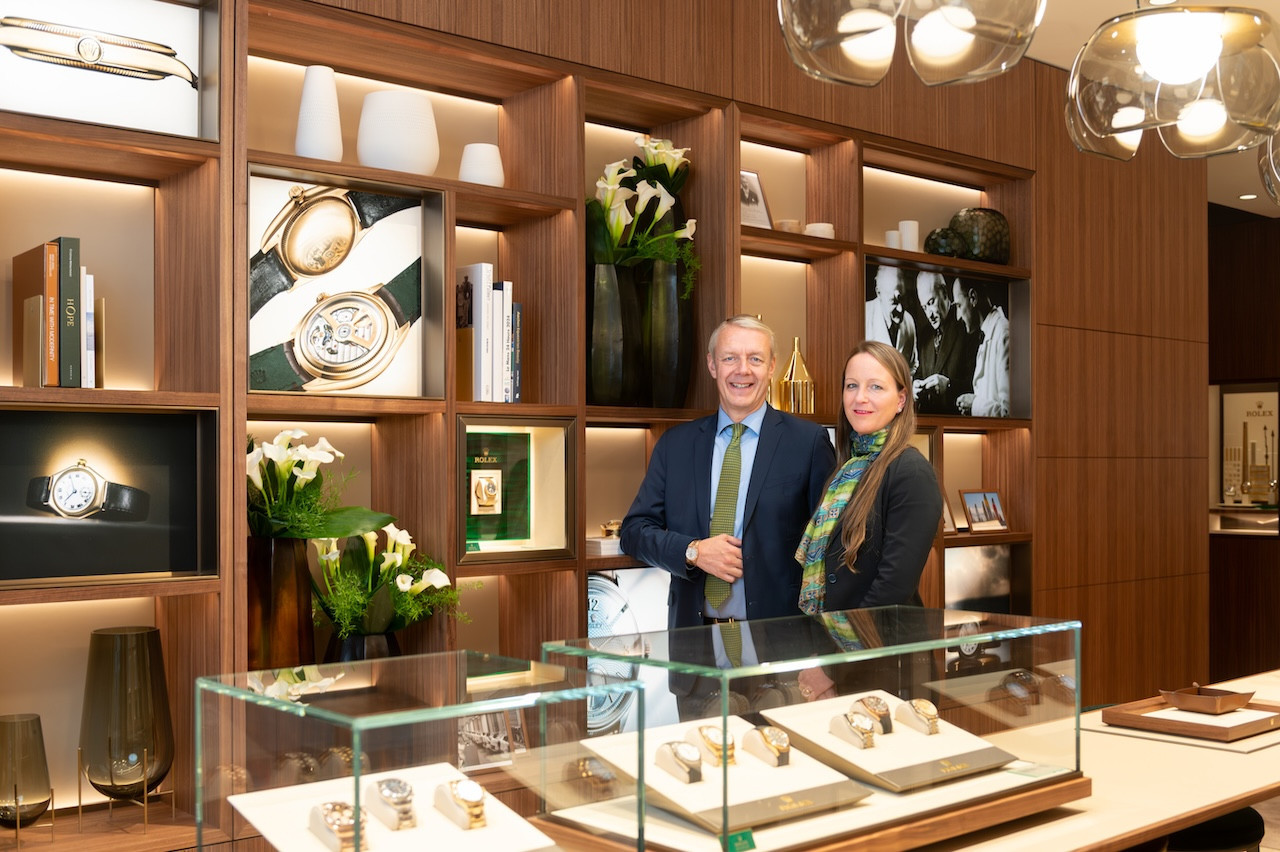
Beginning in early summer, renovation work on the Rolex boutique - 220 square metres on two floors at 1, avenue de la Porte-Neuve—will have lasted four months. Four months of intensive work, the fruit of a rethink that began in 2019. Four months is a short time. Very short: the project required meticulous coordination, and despite the scale of the task, the worksite was only half a day late over the four months. A feat that delights 
The work was coordinated with precision and a quest for perfection typical of the world of sport and luxury craftsmanship. “Each trade had specific times when they could be involved, and everyone played along,” explains the interested party, who boasts a certain amount of experience, having already carried out seven similar projects during his career.
Similar, but different…
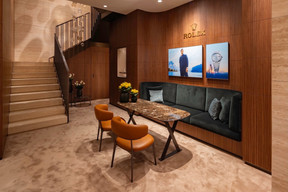
The result: the shop’s interior space has been completely redesigned to offer a privileged customer experience. Despite the far-reaching aesthetic changes, the aim remains to preserve familiar customer landmarks while modernising the welcome. An application of the “maya” (most advanced yet acceptable) principle, i.e. “offering the highest degree of innovation while remaining in a familiar universe”.
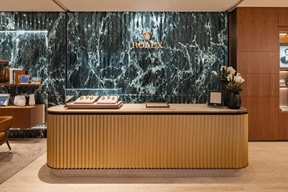
The shop has been designed to offer a fluid service, avoiding queues outside by multiplying advice areas of varying shapes and heights, making the exchange more human and closer. There are seven of them, all furnished differently, although the furniture remains inspired by a common theme. Here, the table will be high, there low, rounded or with protruding angles.
Free access workshop
The attention to detail goes beyond meticulous: the laying of the stones—travertine, a natural and porous sedimentary limestone used in construction since antiquity—was checked by Rolex’s architects to ensure perfect continuity of the rock’s natural veins. The lighting, meanwhile, is dynamic, adjusting its intensity and warmth (bluer in the morning, warmer in the evening) to follow the natural rhythm of the day and the city.
The customer reception areas offer privacy thanks to glass walls “sandwiched” with a thin fabric, allowing customers to see without being totally exposed. The decorative elements are a subtle reminder of the brand’s aesthetic codes and values. A case in point? The curved shape characteristic of the Cyclops magnifying glass appears in the form of lamps developed and designed by Rolex, suspended above the sales counter on the ground floor, as well as above the bar on the first floor.
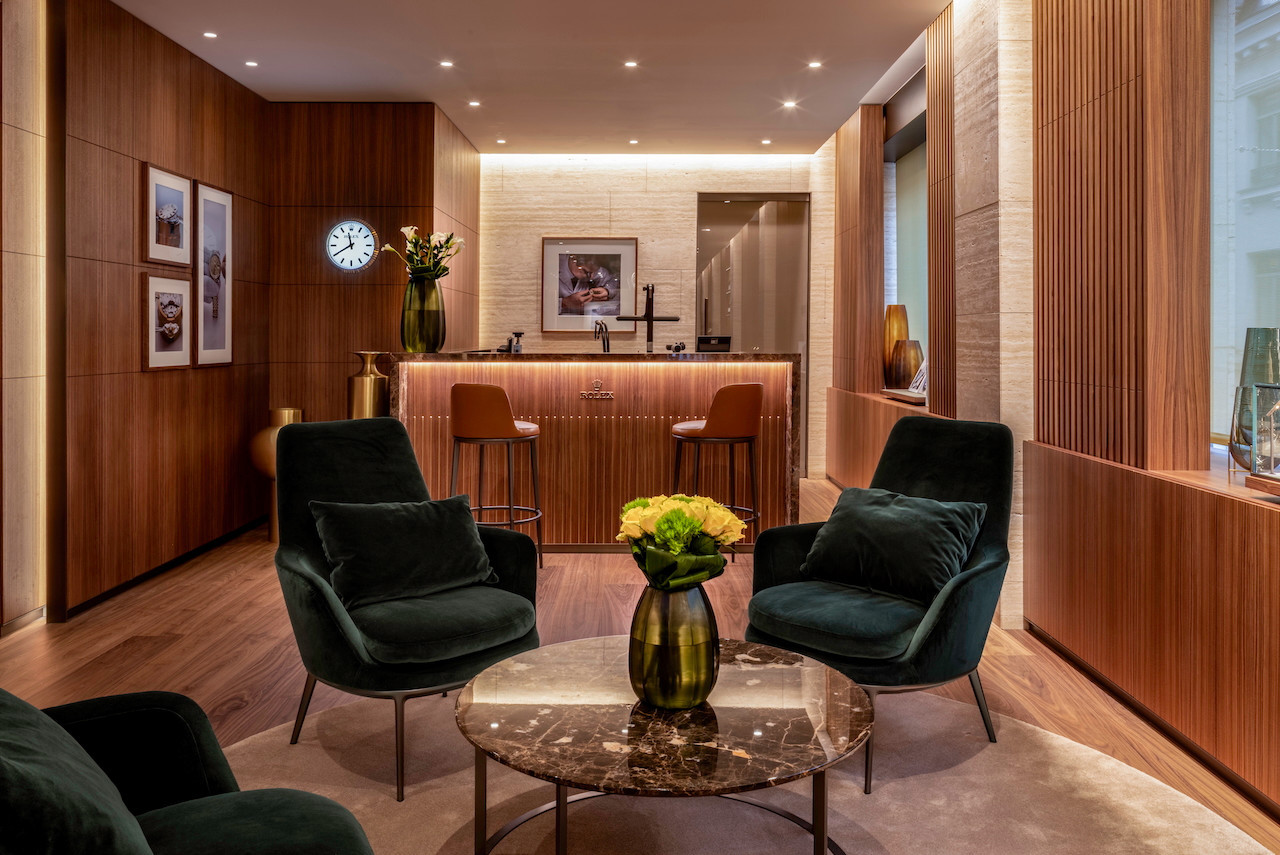
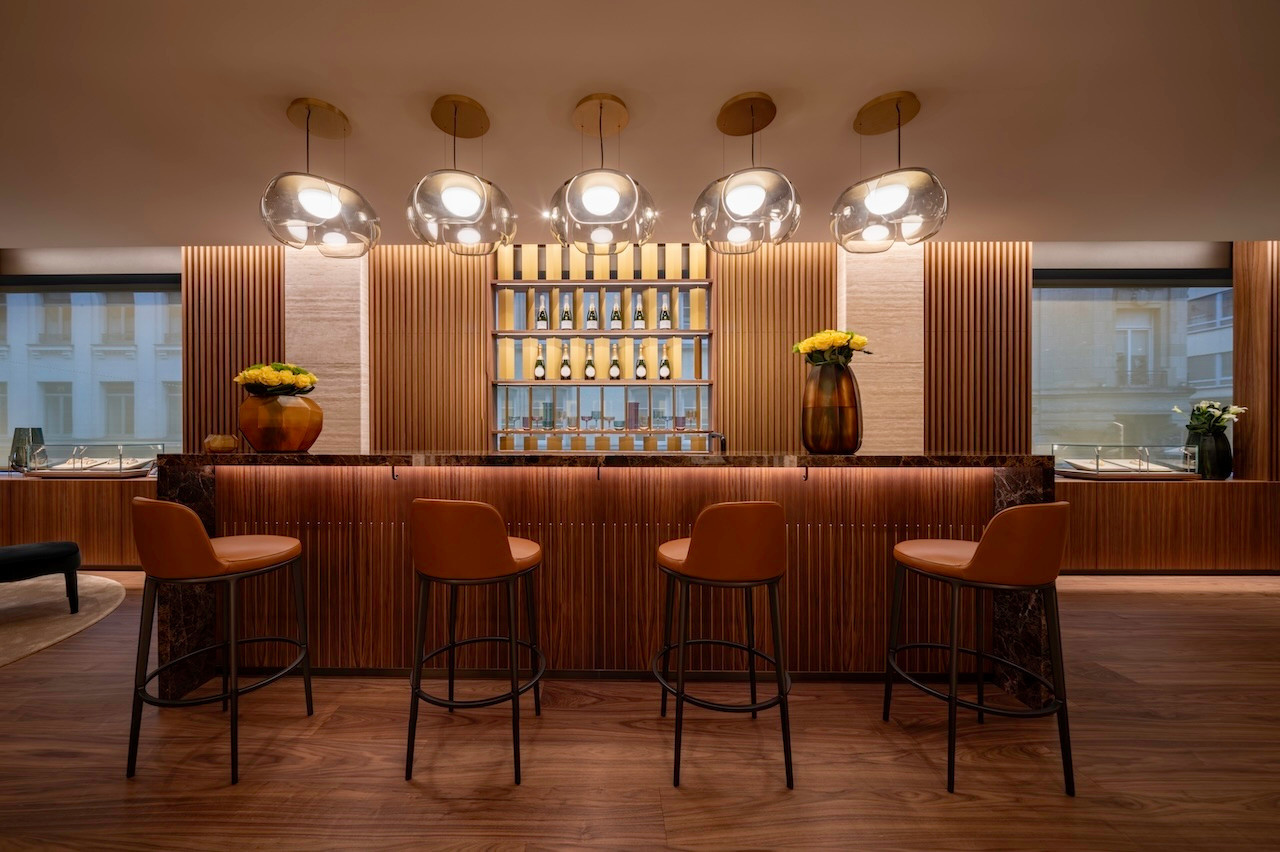
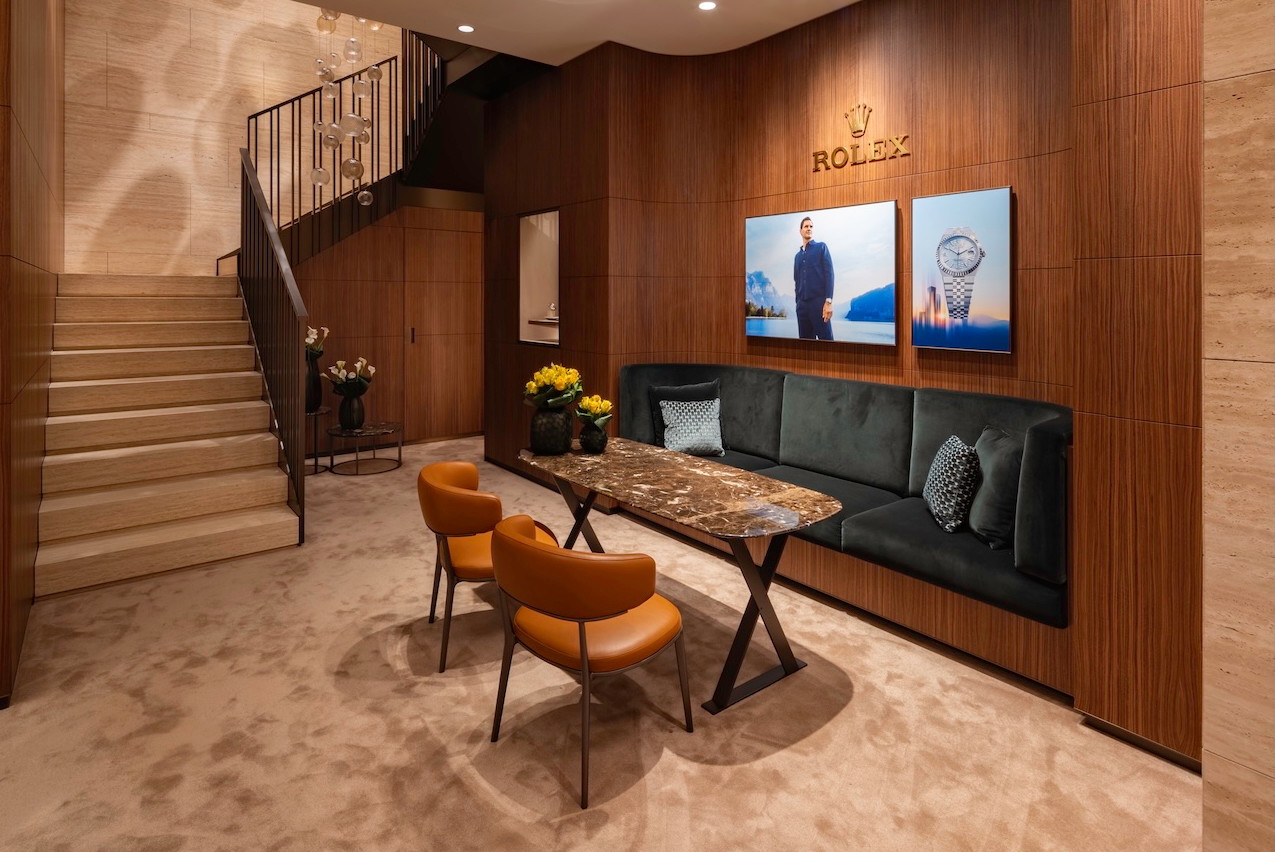
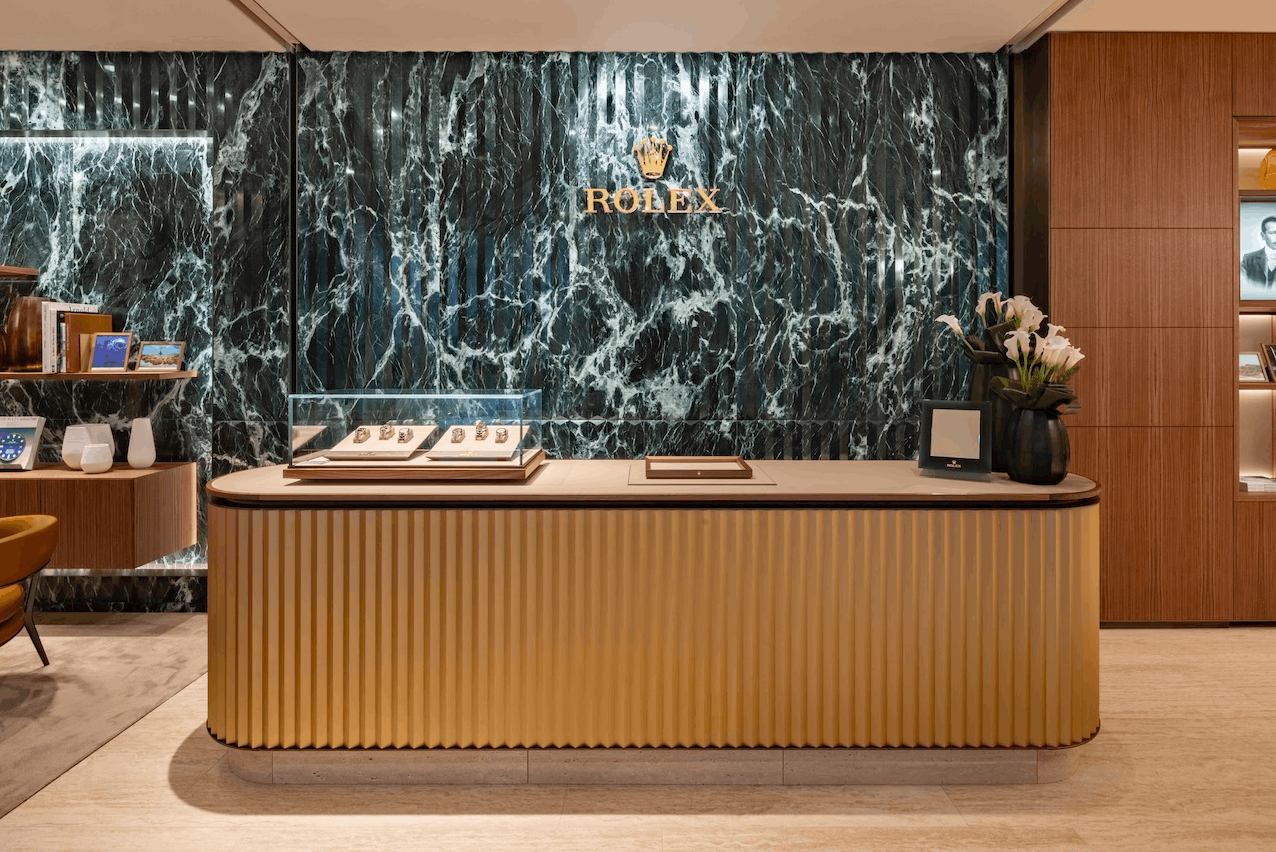
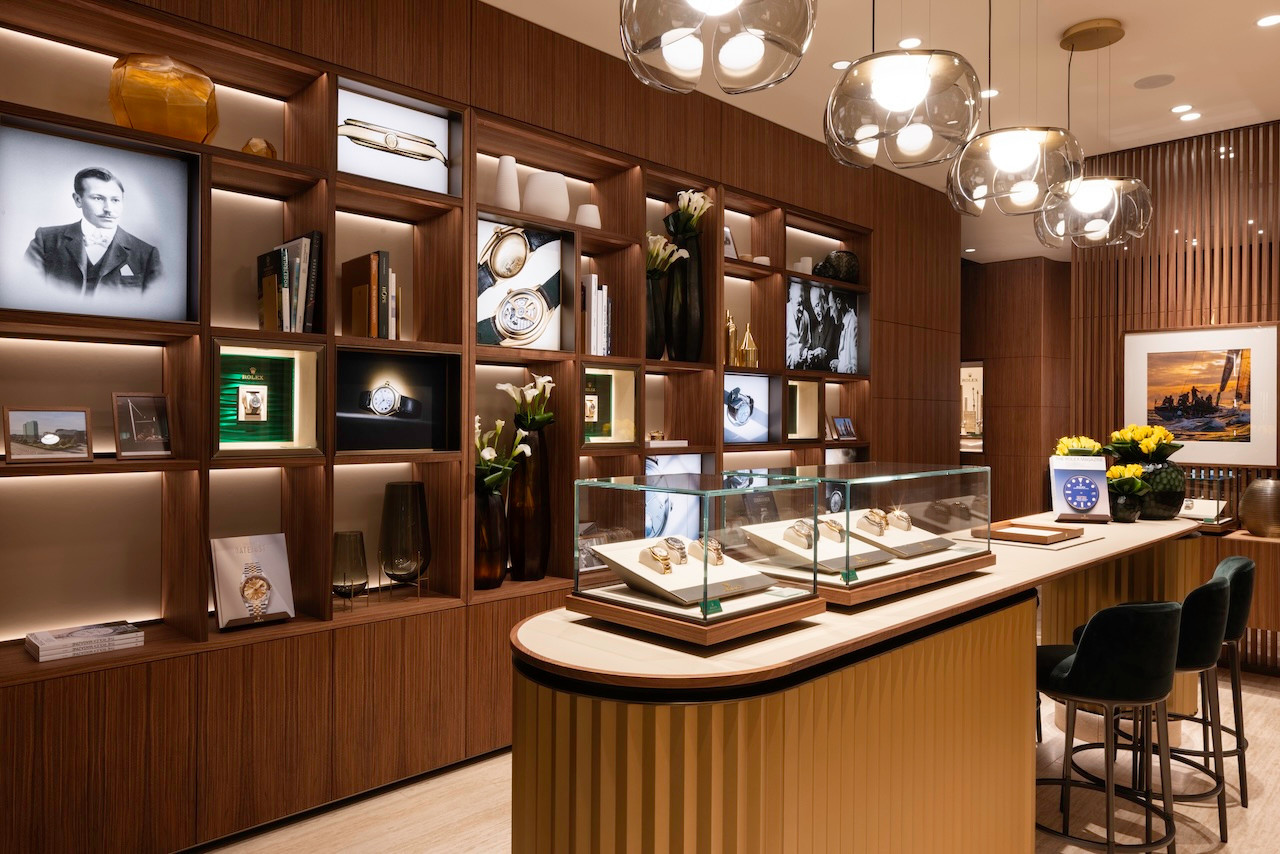
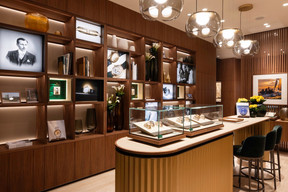
A bar? It will welcome customers on the first floor. On the first floor, there is a workshop that offers certain “simple” services, such as putting your timepiece on your wrist.
“One of the major changes in the shop’s renovation is the place given to after-sales service. The workshop, which used to be hidden away or separated by a single window, is now more open and integrated into the customer experience,” explain Robert Goeres and Catherine Glod. “Customers can now deal directly with an experienced watchmaker for adjustments or technical advice. A watchmaker trained in customer relations just like all the advisors in the shop.”
A partnership based on balance
This renovation is the fruit of close collaboration between Goeres Horlogerie and the Geneva brand, “Both are family-run businesses. “Our relationship is like that of an old couple. No one imposes their will on the other. Everyone suggests things, everyone has ideas, and together we evolve. It’s an ongoing process.”
The customer experience is at the heart of the concept. “Since the Covid crisis, customers have become accustomed to obtaining information from all available sources, particularly the internet. Gone are the days when they would go into a shop to try a product, buy it and leave with it. Today, salespeople no longer have a monopoly on knowledge and advice; the customer is also an expert. There’s a new balance to be struck. Here, in a familiar and coherent environment, customers receive the advice of an expert capable of answering all their questions. And the in-store experience remains essential, because, before you buy a watch, you have to touch it and wear it. It’s also a question of feeling,” concludes Robert Goeres.