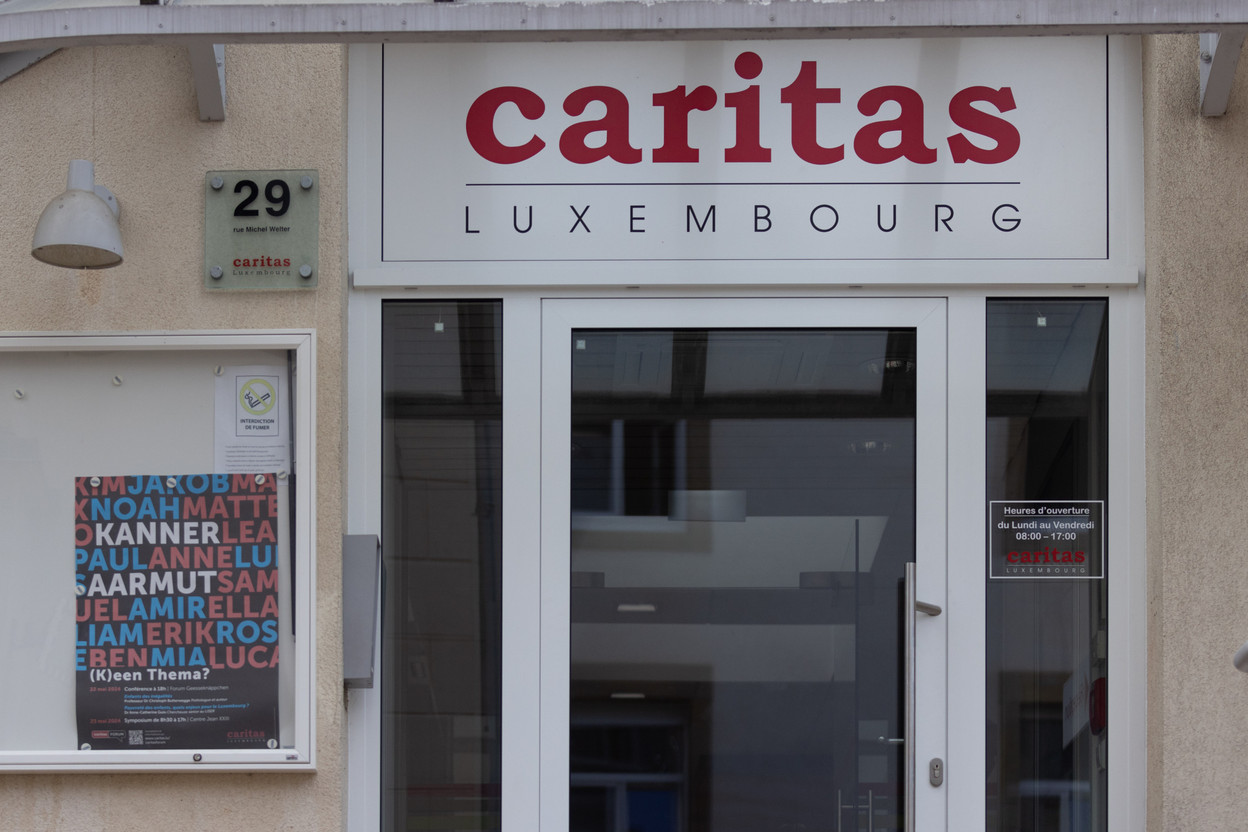
“We are in an era where financial fraud is omnipresent and increasingly creative,” stressed Spuerkeess CEO 
Thierry Labro: I had the impression, listening to the interview on 100,7 Wednesday morning and then receiving the press release you published, that Spuerkeess has entered a new phase.
Françoise Thoma: Yes. So, first of all, throughout the CSSF’s investigation phase, we chose not to comment, partly because we didn’t really have the right to do so. There’s the confidentiality of customer relations, the confidentiality of certain investigations... So it wasn’t the time to speak out. Today, we believe it’s the right time.
Do you feel that people have less trust in your bank because of this affair?
No, that’s not our impression. What’s important to us is to help customers understand what might have happened, and above all to strengthen internal control systems to prevent risks. Unfortunately, we have to face the facts: we have entered an era where financial fraud is omnipresent, increasingly creative and inventive. And it’s not just the Caritas case that demonstrates this: there have been other cases recently.
This is a subject that--as a financial institution--we must address seriously, including by raising awareness among our customers. And since this affair, as deplorable as it is, does not call into question the financial soundness of Spuerkeess or the quality of our services, we have not observed any loss of confidence, even if we understand some of the negative reactions we are receiving.
In the CSSF press release, we understand that part of your supervisory system at the time was not configured to closely monitor what was happening in NGOs or charities. Is this correct? Have you changed this? Are all customers now treated the same way when it comes to transaction monitoring?
The CSSF’s audit focused on a specific part of the transaction monitoring system. Indeed, the settings chosen did not detect the Caritas fraud. The CSSF also states: it is impossible to assert the fraud could have been avoided without this gap. This is unprovable.
That said, our internal controls and the procedures in place were indeed respected by our employees. As we have seen, this was not enough. That is a fact.
Since then, we have launched a programme to address these gaps and strengthen the risk culture among our employees. We were already in a dynamic of continuous improvement, regardless of this case. Regulations are constantly evolving, and so are criminals. We must therefore constantly adapt our systems.
How will your transformation plan be organised? Does this change your technology investments? Does this have a direct impact on your choices?
There are several areas. As you say, there are investments in technological tools, which indeed represent the most expensive item. But there are also less costly measures that can be implemented, such as training or the creation of additional scenarios for detecting irregularities in transactions. This also involves configuring existing tools. And, very importantly, there is training in a generalised risk culture for all employees, particularly those in contact with customers or responsible for validating transactions.
We’ve seen questions circulating, particularly on social media, about possible personal liability. Did this matter have individual consequences for anyone in the chain of command? Will it?
As soon as the fraud was discovered, we launched an internal investigation to verify whether the colleagues in charge of the case, on the ground, had followed procedures. It turned out that this was indeed the case. That said, these procedures did not detect the pattern in place. Hence the misunderstanding, sometimes relayed: that we were supposed to say that no one committed any wrongdoing. This is not the message we want to convey. What we are saying is that the employees followed the procedures in force, and as such, they are not at fault. However, since then, we have been working to improve these procedures.
You said you have initiated discussions, still informal, with the Fondation Caritas. What might an acceptable compromise mean for you?
We are the leading bank for the nonprofit sector, and these clients are important to us, given our social and societal role. We deeply deplore this fraud, which affected a foundation so important to the country’s social life. We are therefore ready, to the extent possible, to find a compromise acceptable to all parties.
What exactly would that entail?
That is precisely the purpose of the discussions, which have been ongoing for several months. If an agreement were reached, it would be made public.
Could this involve compensation? Indemnity? Is the bank insured for this type of risk?
The issue of insurance is not the most important thing here. What matters to us is trying to limit the damage suffered by Caritas, even if it is not our fault. There have been lines of credit, transactions... There are several levers we are exploring to ease the burden the foundation may have to bear. Discussions are still ongoing.
From a personal perspective, how did you learn about this affair? And how did you experience it?
I learned about it the very day it broke, and I was deeply shocked. At that time, we hadn’t yet fully grasped the extent of the fraud or the mechanisms used. It was very difficult news that hit us hard. We then had to understand all aspects of the fraud. I felt great compassion for the real victims: the beneficiaries, of course, the donors, the people who lost their jobs... And also for our employees, especially those in direct contact with clients. They were devastated to see that such a thing could happen when all the procedures had been followed. We were faced with a completely new type of fraud, which we still have to understand from all angles. The fraudsters aren’t in the banks, perhaps not even in Luxembourg. But it’s not our job to investigate that.
Did the criticisms of certain MPs or political leaders hurt you?
Absolutely. That was neither our intention nor what we intended to convey in our statements. It is very important for us to emphasise that in all our actions, we acted with objectivity and sincerity. We said nothing false or erroneous. If any of our statements may have given rise to misunderstandings, we regret it. But our message has always been honest, sincere and complete, within the limits of what we were able to say.
With this fraud, the cyberattack against Post and fake websites, do you think a more systemic response is needed at the financial centre or state level? Are you in favour of pooling or stronger coordination?
This is an issue that concerns the entire financial centre. It is useful for each institution to reflect internally, but a concerted approach is also needed. Pooling the fight against these risks would be desirable.
Can we do this through legislation, and therefore involve the state?
That’s one avenue. But in my opinion, it’s above all a collective approach that needs to be developed. And also, crucially, financial education and training for clients. They need to be better equipped to deal with these new risks.
This article was originally published in French.