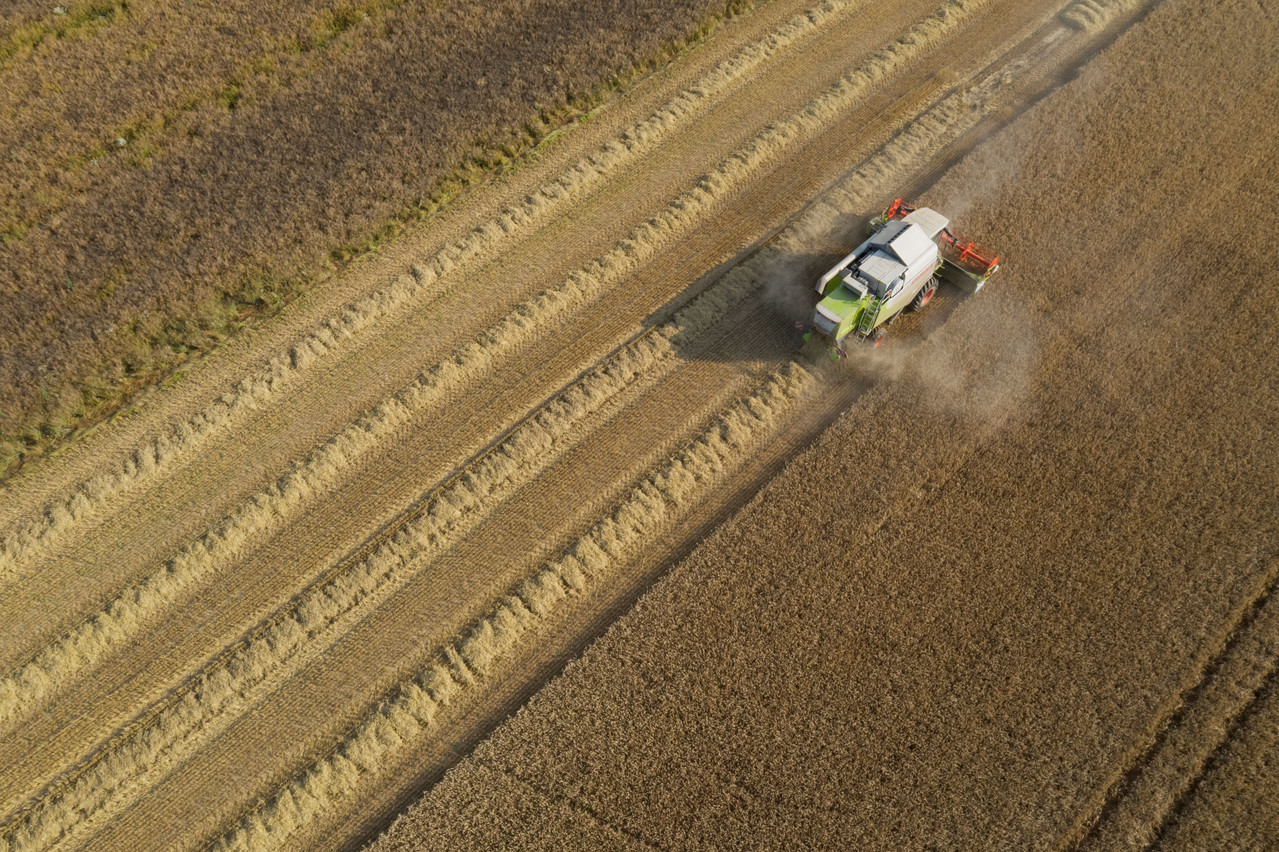
Farmers in the grand duchy last month warned of difficult weather conditions and the government’s agricultural weather service in a spring report confirmed that the season was too dry, with temperatures either too high or too low.
It didn’t rain enough in March. The 1991 to 2020 average is 60.1mm in Luxembourg City, meaning 60.1 litres per square metre. This year in March, it was at just 34.6mm. For the three months of spring--March, April and May--there were 84.3mm of rain lacking in the capital. The average rainfall for the season is 183 litres per square metre, but it was at just 98.7 this year.
Temperatures fluctuated over the season. In March, they were nearly 1°C above the 1991-2020 average. April on the other hand was too cold with late frost causing worry for farmers. And in May, temperatures were once again too high, 1.7°C above average in Luxembourg City.
Wheat, in particular, is suffering from the drought, the weather service said. It could still recover if there is steady rain over the next few weeks, it said. And while maize benefitted from the May heat other summer cereals were badly damaged by the drought.
The April frost caused some damage to fruit trees already in bloom and vegetable crops required costly irrigation to grow.
For winemakers, the dry season was beneficial as it reduces the risk of a number of diseases, such as mildew and rot. Young vines, however, could have used more water.
Already at the start of spring, Luxembourg’s water management authority had warned that winter had been too dry and failed to fill up groundwater reserves. For several years in a row now, the recharge of below-ground water levels has been unsatisfactory.
And even though the summer of 2021 was the second wettest on record, this was largely due to record flooding in July and soil was dried out by the end of the year. 2020 was the hottest year on record in Luxembourg since weather reporting began at the meteorological station in Findel.