The missile and drone strikes seen over the past few weeks in the Middle East have been a reminder of the rapid transformation of air warfare. Iranian attacks on Western military installations in the Gulf have mobilised several missile defence systems, while a Shahed-type drone struck the British RAF (Royal Air Force) Akrotiri base in Cyprus at the beginning of March, without causing any casualties. The episode highlights the geographical proximity between Middle Eastern theatres of conflict and European military infrastructures in the eastern Mediterranean.
The incident is all the more significant in that it is one of the first episodes of this war to have directly affected a territory of the European Union (EU)—the last being the Russian-made missile that fell “by mistake” in Poland in the context of the war in Ukraine. Meanwhile over the past ten days, missiles fired from Iran have crossed Iraq and Syria before being intercepted by Nato defence systems in the eastern Mediterranean.
In this context, the French company Thales announced on 11 March the launch of “Sky Defender”, an integrated air and missile defence architecture based on the interconnection of radars, sensors, command systems and interceptors. The aim is to protect critical infrastructure, military bases or urban areas against a broader spectrum of threats: drones, rockets, cruise missiles and ballistic missiles.
A European “dome”
According to Thales, Sky Defender is based on a multi-layer architecture. The lower layer targets drones and light munitions using anti-drone devices and guided rockets. The middle layer mobilises medium-range air defence systems, while the top layer is designed to intercept ballistic or cruise missiles.
Among the technological building blocks presented is Parade (“Protection déployAble modulaiRe Anti-DronEs” in French), a system developed for the French army’s Direction générale de l’armement (DGA) by a consortium led by Thales and CS Group. Parade combines radar, direction finding, optical sensors and electronic jamming to detect, identify and neutralise micro-drones or mini-drones. Designed for rapid deployment around a sensitive site, it can protect a military base, critical infrastructure or a major event.
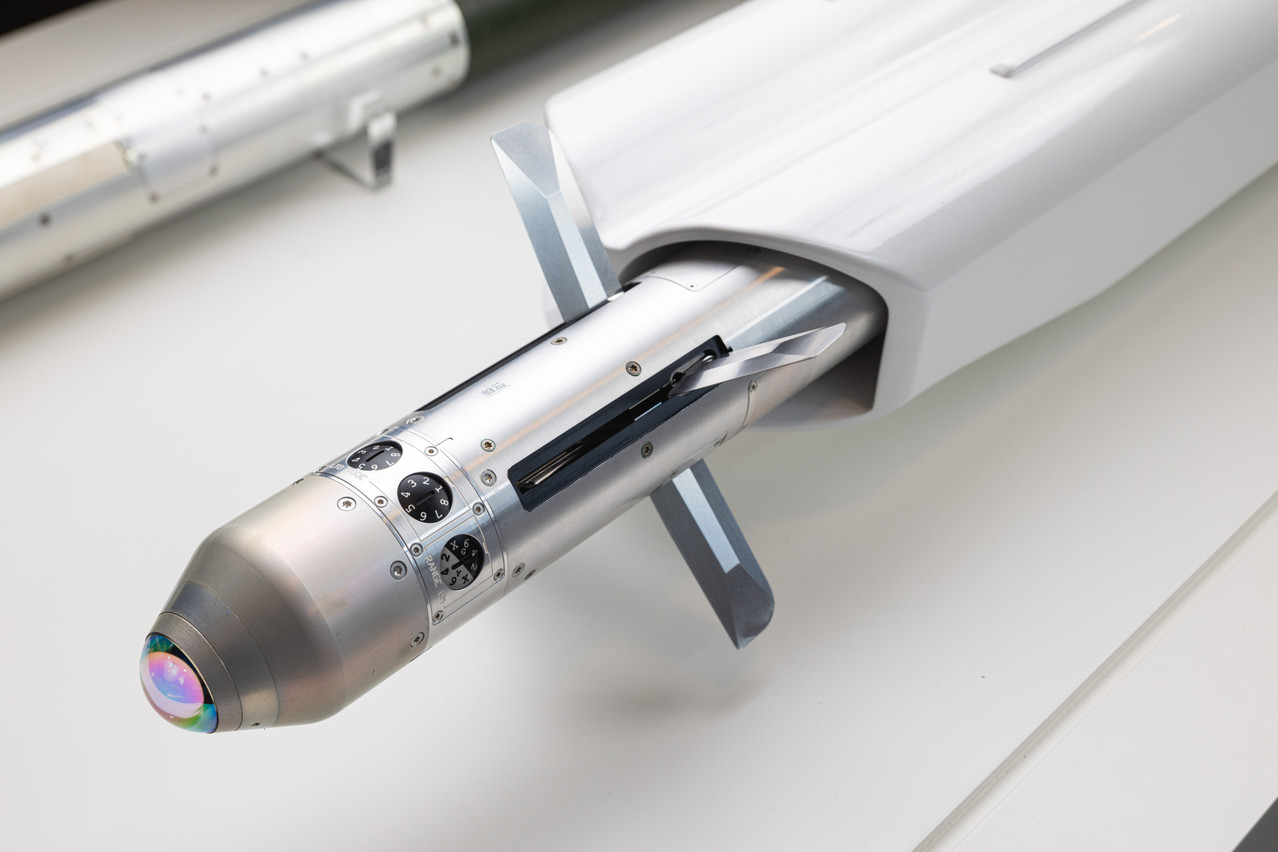
The short-range neutralisation layer also includes the use of laser-guided rockets. These munitions, which are less expensive than conventional anti-missile missiles, are designed to destroy drones or short-range rockets. Their use meets a central challenge in contemporary air defence: avoiding the use of interceptors costing several million euros to neutralise drones or rockets produced for a few thousand euros.
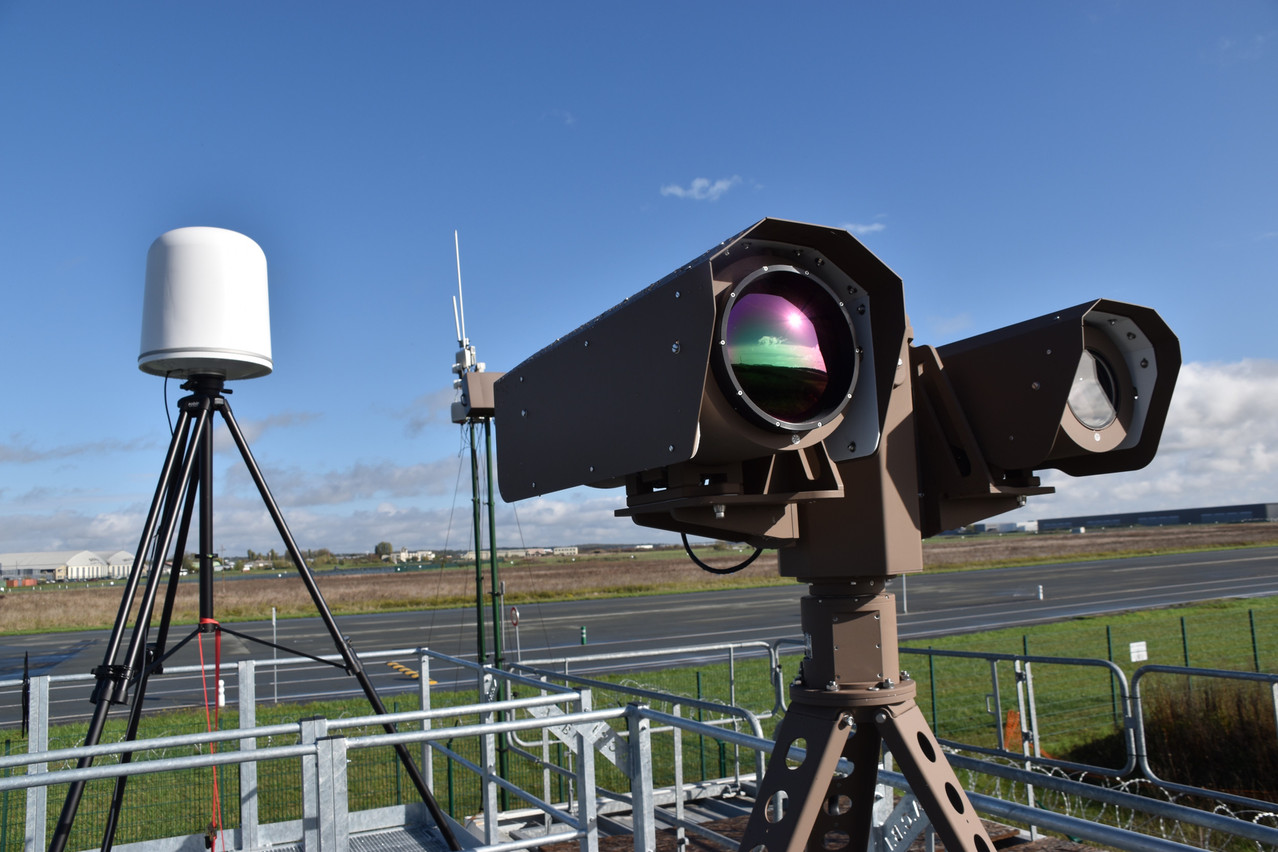
Developed with CS Group for the DGA, the modular “Parade” device is designed to detect, identify and neutralise micro-drones using a combination of radar, radio sensors and electronic jamming. (Photo: Thales)
At medium range, Sky Defender can rely on systems such as the Samp/T NG, developed by the Eurosam consortium (Thales and MBDA). This system uses Aster 30 missiles and is designed to intercept aircraft, cruise missiles and certain tactical ballistic missiles at ranges of up to around 150 kilometres.
All these sensors and effectors are linked by a digital command system designed to fuse radar, optical and electromagnetic data. Thales is highlighting the integration of artificial intelligence (AI) tools to speed up threat analysis, prioritise targets and coordinate the use of interceptors.
The era of missile defence shields
The concept of an air defence “dome” implicitly referred to by Sky Defender is often associated with Israel’s Iron Dome system, which came into service in 2011 to intercept rockets fired from Gaza and Lebanon. However, this system is only the bottom layer of a broader Israeli system, which also includes the David’s Sling and Arrow systems, capable of intercepting medium- and long-range ballistic missiles.
The idea of protecting a territory against missiles is, however, much older. The first anti-missile architectures appeared in the 1960s during the Cold War. The United States developed the experimental Nike-Zeus and then Safeguard systems, designed to intercept intercontinental ballistic missiles. The Soviet Union, for its part, deployed the A-35 system to protect Moscow.
This race for anti-missile shields led in 1972 to the signing of the ABM (Anti-Ballistic Missile) treaty between Washington and Moscow, which severely limited the deployment of such systems in order to preserve the balance of nuclear deterrence. Nevertheless, research continued. In the 1980s, the Reagan administration launched the Strategic Defense Initiative, which was already exploring the idea of intercepting missiles using space-based sensors and interceptors.
Since the 2000s, anti-missile architectures have evolved to respond to a broader spectrum of threats. The United States deploys a network combining Patriot, Thaad and Aegis naval systems. Russia is developing the S-400 and S-500 systems, while several European countries operate systems such as Nasams, Iris-T or Samp/T.
Recent conflicts have accelerated interest in these architectures. The war in Ukraine has shown the importance of air defence systems in the face of cruise missiles and drones. The attacks carried out in the Middle East since 2024 have illustrated the ability of states or non-state actors to saturate defences by combining kamikaze drones, ballistic missiles and cruise missiles.
These technological developments are profoundly changing the economics of air defence. The drones and rockets used in these attacks can cost a few thousand euros, while anti-missile interceptors can cost several million euros per shot. Manufacturers are therefore looking to develop intermediate solutions—guided rockets, lasers or electronic jamming—capable of neutralising numerous threats at lower cost.
A war of saturation
In this strategic landscape, Sky Defender appears as an attempt to adapt the European air defence architecture to this new generation of threats. Rather than a single system, it is an integrated architecture designed to connect sensors, anti-drone systems, air defence missiles and command resources into a coherent whole capable of protecting infrastructures or territories against complex air attacks.
The initiative is part of the wider European debate on the construction of a continental missile defence system, with around 20 Nato member states already participating in the European Sky Shield project. This initiative, launched in 2022 by Germany, aims to build a multi-layered air defence architecture combining several interception systems—Iris-T for short-range, Patriot for medium-range and Arrow-3 for ballistic missiles. Rather than a single system, the project relies on the interconnection of Member States’ existing radars and batteries.