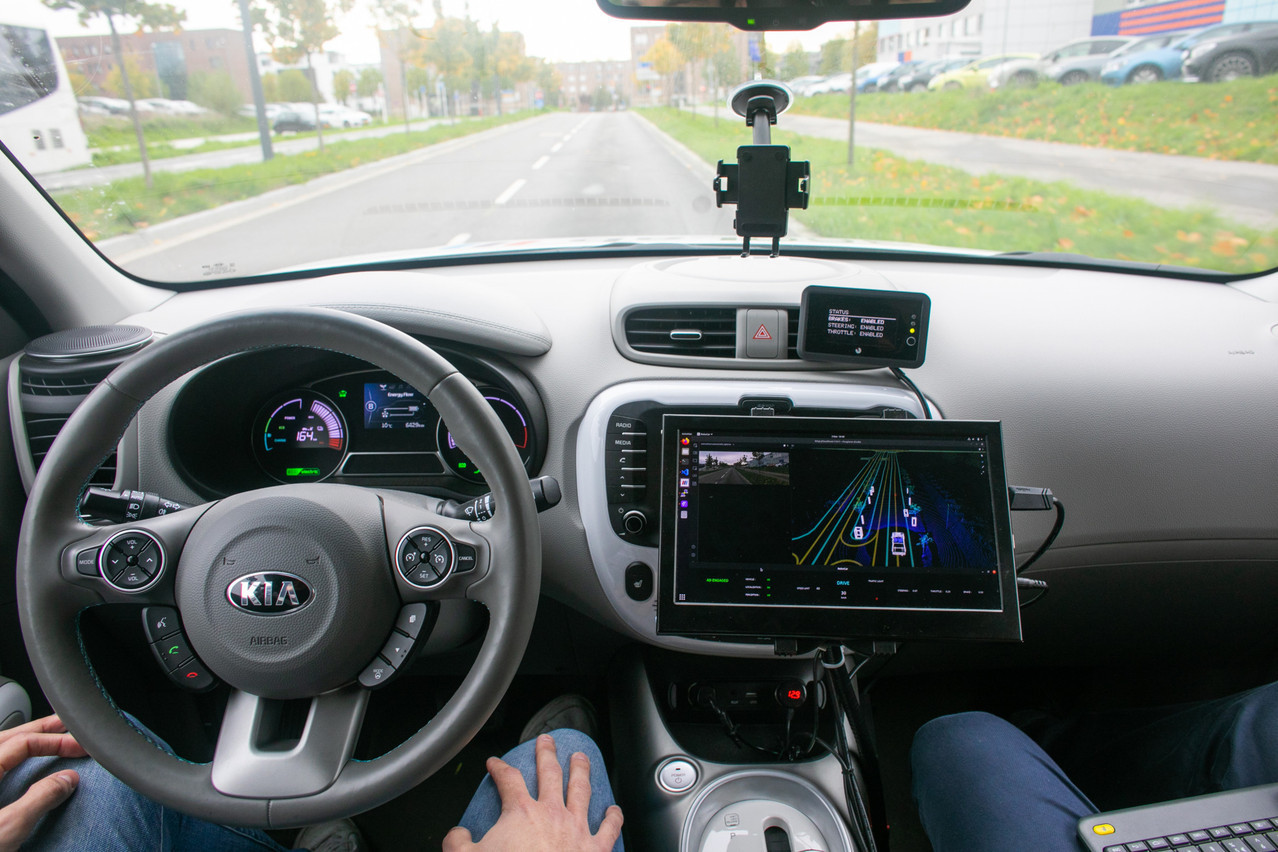
Could automated driving become a new growth driver for Luxembourg’s automotive industry? That’s the bet on autonomous mobility, jointly championed by Economy Minister 

“This project aims to make Luxembourg a European leader in autonomous driving, building on the automotive ecosystem that successive governments have developed over the years to further strengthen innovation,” says Lex Delles, who intends to capitalize on the presence of key players such as Pony.ai, ongoing projects led notably by the CFL in Belval, existing infrastructures like the Automotive Campus, as well as the country’s research and innovation ecosystem supported in particular by the National Research Fund (FNR).
“Autonomous driving is something that already exists in the United States and in Asia, where it is already in use, but it remains rare in Europe. In Europe, there is not yet a single country willing to go as far as we are.”
At stake is securing a significant share of a market that McKinsey estimates to be worth between €300 and €400 billion by 2030. This vast market encompasses project development, infrastructure adaptation, and the expansion of digital networks, and will have an impact on the automotive industry, the startup ecosystem, and traditional players in software, logistics, telecommunications, energy, and insurance.
Six priority areas for action…
To achieve this, the government has identified six priority areas for action: talent development, the strengthening of infrastructure and ecosystems, research and the promotion of innovation, the development of services and international cooperation, and the creation of an appropriate regulatory framework. These six areas will be the subject of interministerial collaboration involving the Ministries of Mobility, Digitalisation, Justice, Higher Education and Research, and European Affairs.
“A clear legal framework is essential to attract businesses,” stresses Lex Delles. Yuriko Backes is responsible for the legal aspect. Her department is working on a draft law that will be submitted before the end of the year and, the minister hopes, adopted in the course of 2027 — paving the way for the commercial rollout of autonomous driving. This framework “will make mobility safer, smarter, and more efficient.” It is designed to be flexible and evolve in step with technological progress, rather than hold it back, the minister explains. Currently, scientific road tests are permitted subject to ministerial authorization.
… and five use cases
Currently, five priority use cases have been defined for the integration of autonomous driving: robotaxis; “last-mile shuttles” – meaning automated shuttles integrated into the public transport network; valet parking and restricted-access sites – automation of maneuvers in controlled environments; the automated logistics sector, to address freight transport challenges; and highway autopilot, “to enhance safety on major routes.”
Across all these areas, key issues related to insurance – and therefore liability in the event of accidents – as well as cybersecurity will be addressed.
A sixth priority for the minister is the social acceptance of autonomous driving. This acceptance will depend on clear communication around key topics such as safety and employment impacts. “On this point, we are in discussions with social partners. I believe autonomous driving will benefit the logistics sector, which is currently facing a labor shortage.”
In any case, “people will remain at the heart of this evolution in mobility,” the minister assures.