"It's your advisor who follows you, not the cookies." In a few words, Sophie Pytel-Sahel (Banque de Luxembourg) set out the blind spot of many strategies: loyalty cannot be coded, it must be cultivated. "At Banque de Luxembourg, the average advisor stays for 17 years... Nicolas Vendredi really exists; if you call him, he'll answer." She unfolds a simple scene - a hushed lounge, a café, an adviser who knows "my family, my parents, my children", sometimes "a golf out of time". And the conclusion that slams home: "Our human sensitivity is so much more powerful than an algorithm... Technology and now AI are saving us time, but we can reinvest that time."
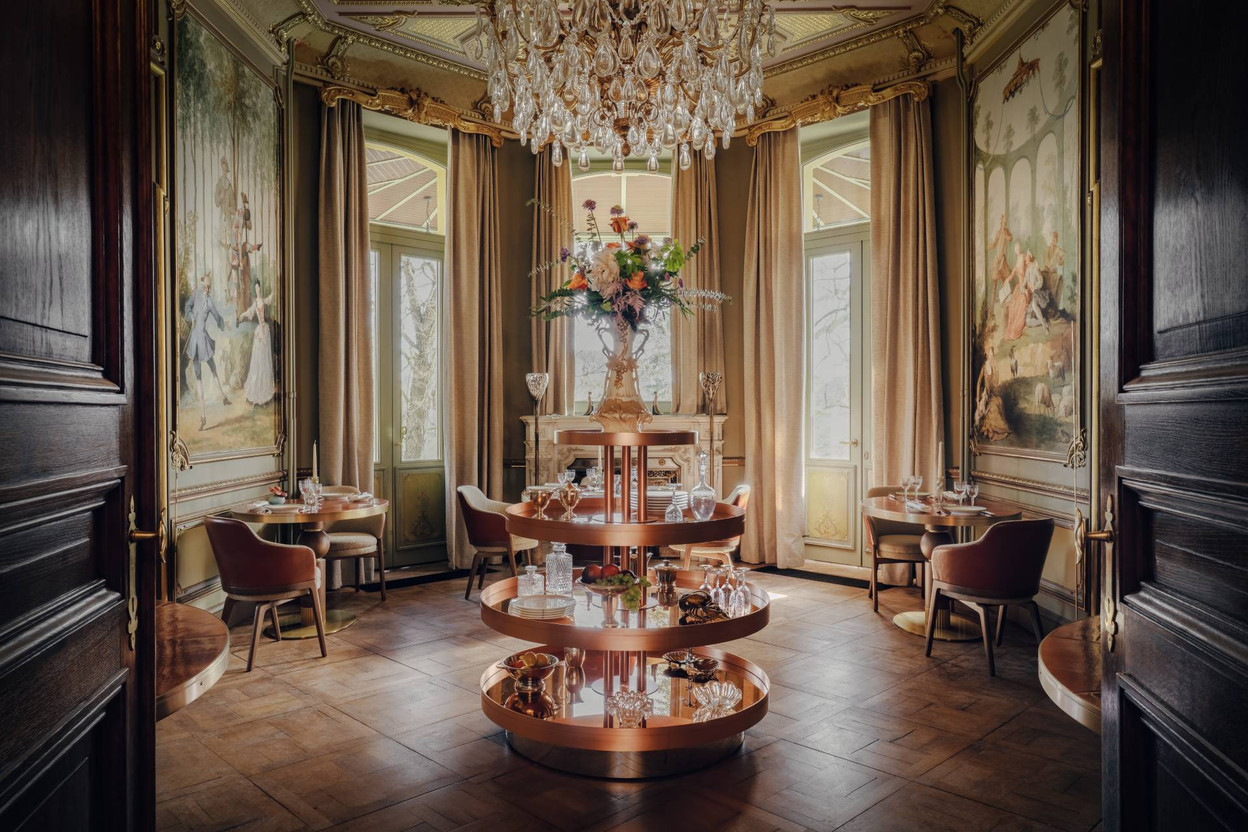
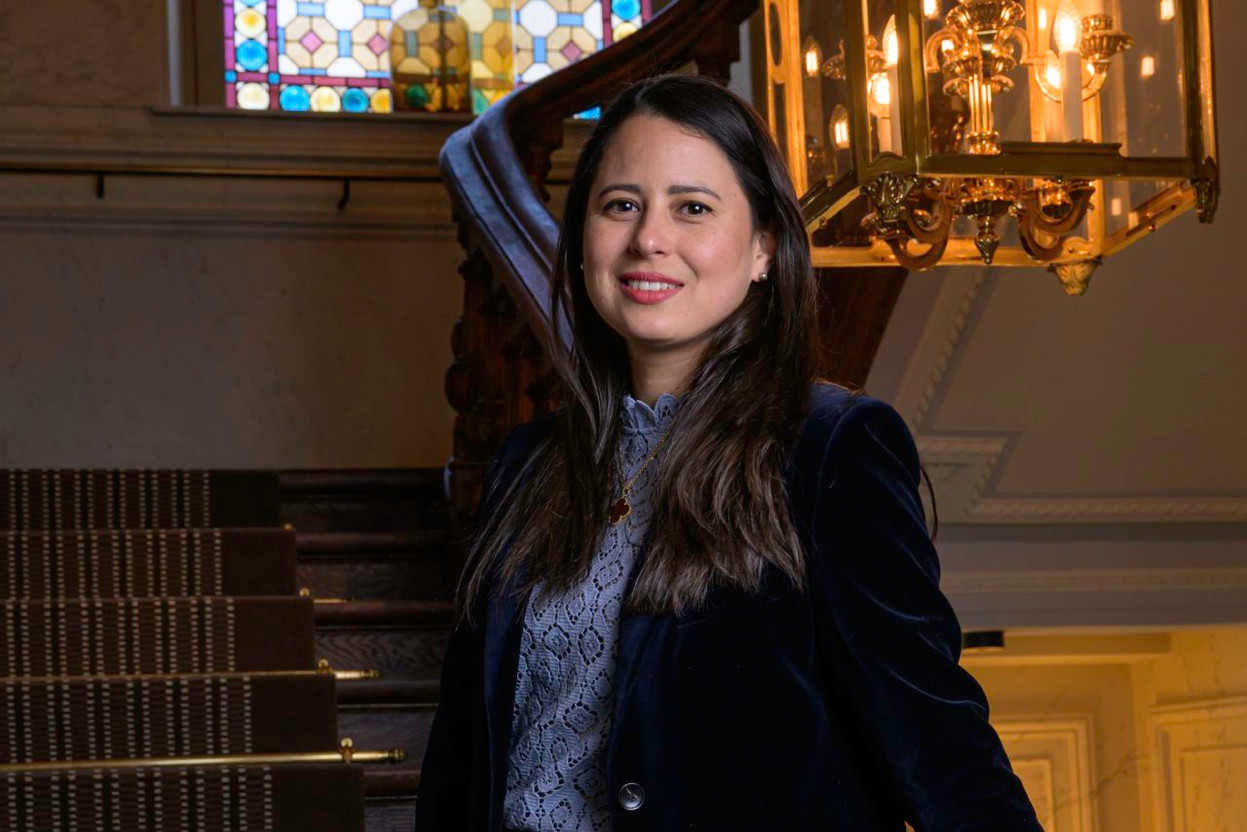
In the luxury hotel industry, the same conviction is translated into action. Stéphanie Raimbault (Villa Pétrusse) talks about "natural kindness" as the first recruitment criterion. She collects "little nuggets" - information that is converted into kindness: a coffee-table book on the Luxembourg châteaux left in the room of a guest who came to celebrate William's accession to the throne, a button sewn up in the linen room "before dinner", an improvised honey and ginger tea for a traveller with a cold. "AI helps us, corrects, anticipates... but it remains discreet, underlying. What we always remember is the emotion." This discreet "smile" has become her signature.
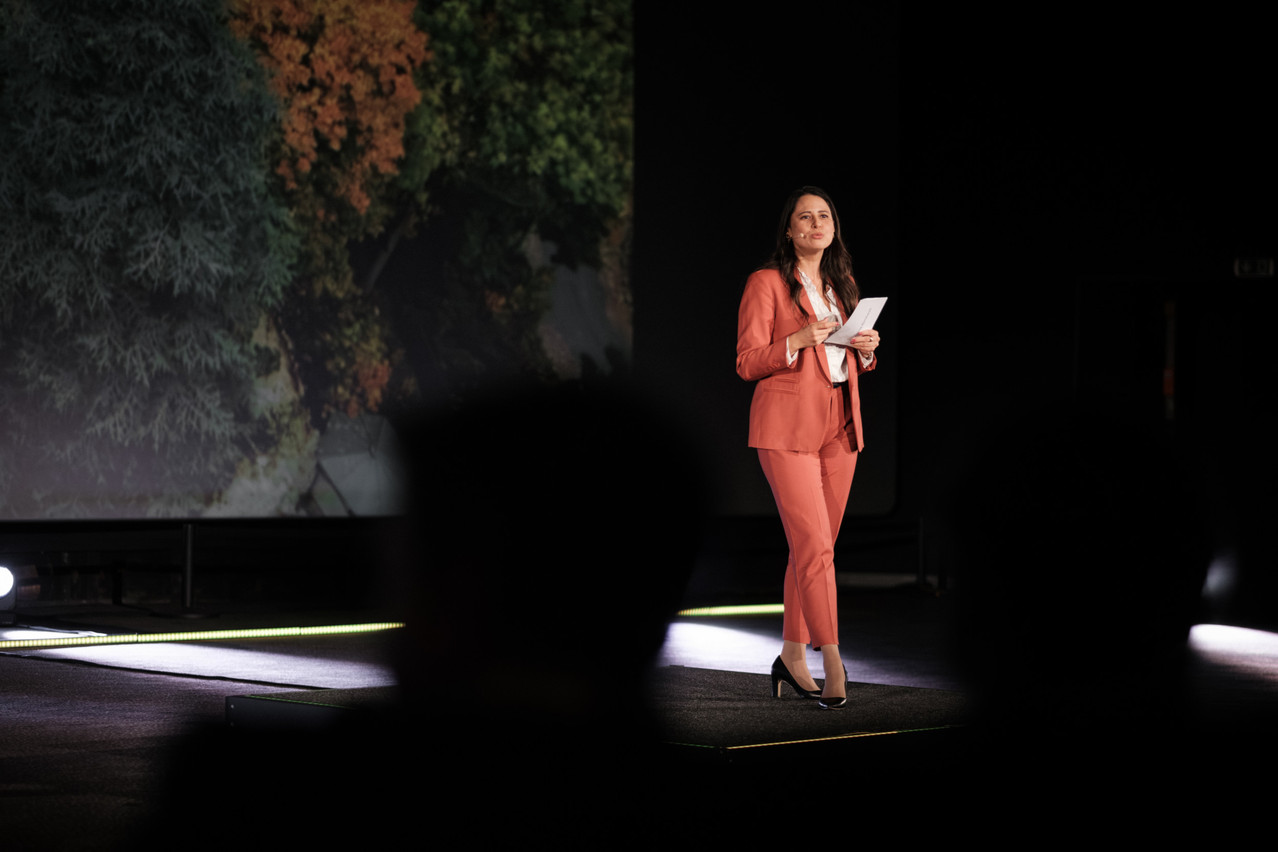
Stéphanie Raimbault (Villa Pétrusse) has placed "natural kindness" as her first recruitment criterion, so that she can pay particular attention to each individual customer. (Photo: Patricia Pitsch / Paperjam)
At the other end of the spectrum, the bank recounts its digital great divide. "It's not an evolution, it's a redefinition of what customer experience means," warns Weronika Mojsiej (Swissquote). Yesterday's image: "Fluorescent, forms, 2000s terminal". Today's image: "Open an account in seconds, freeze your card immediately, send money before the coffee is finished. Why: "Because the experience is no longer shaped by other banks but by Apple, Uber and Amazon." AI can be "smart, contextual and surprisingly human", but beware of trompe-l'oeil: "Digitalising a piece of the journey is like renovating the kitchen while forgetting the plumbing." The question she leaves hanging has the merit of being blunt: "Are you really up to speed, or just online?"
Post has made the field its driving force. Luc Welter (Post Group) starts by explaining the scale of the business: "Three business lines, 30 departments, 10 subsidiaries, 100 sales outlets, 4,500 employees, 500,000 customers...". Then comes the obligatory "stat": "In 2006, 300,000 parcels delivered; in 2025, 9,300,000. The challenge? "In 2023, more than 500,000 parcels will not be delivered to homes. The answer lies not in software but in trust: "We gave our agents the right to drop off a parcel in a place deemed safe, then we called the customer back the next day." Add an e-mail alert beforehand, the possibility of indicating a drop-off location, and "PackUp Home" went from 30,000 to 120,000 customers - "45% of households" - in less than two years. The result: "The non-delivery rate has fallen from 9.1% to 3%, satisfaction is up 12 points, 4,200 journeys avoided, 170 tonnes of CO2 saved, and we've put people back to work."
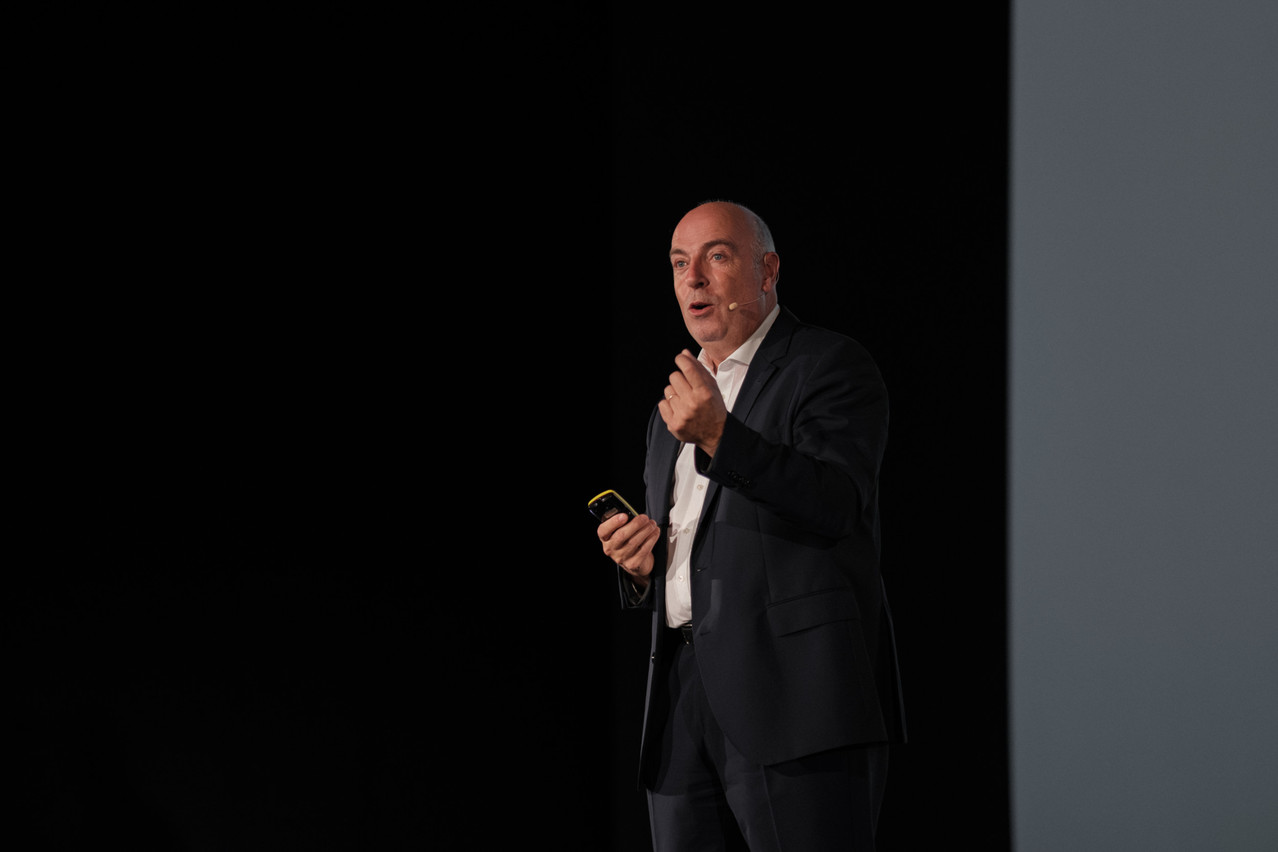
Almost ten years after the launch of the "customer experience" division, Luc Welter and Post have succeeded in making PackUp Home a benchmark. (Photo: Patricia Pitsch / Paperjam)
Physics has not said its last word, reminds Marie-Aude Hosten (NHOOD Luxembourg). "Where digital stops at the screen, the physical engages all five senses." She cites La Cloche d'Or, "a benchmark" for its experiential positioning and omnichannel approach, and three telling scenes: "Nike Rise", where people "no longer come simply to buy but to be part of a collective experience"; Lush, "a simple soap transformed into an emotion"; and Auchan Lifestore, "a brasserie in the heart of the shop" where people can taste "at the price of the shelf, just like at home". Verdict: "Sales, traffic, satisfaction: all the KPIs are in the green. The advice: "Next time you walk into a shop, don't think about what you're going to buy, think about what you're going to experience."
As far as architecture is concerned, Valentina Verri (STDM) transforms the client into a co-author: CAD, 3D printing, "BIM as a single base", collaborative platforms, photogrammetry and drones to "check conformity in real time", augmented and virtual reality to "visit a building before it is built". The building site is "no longer a discovery", but "the culmination of a transparent and participatory process". And a useful reminder: "Technology is not an end in itself; it links technology to emotion and builds trust."
Emotion, at Luxlait, tastes like warm milk. Gilles Gerard invites the audience to close their eyes: "Your first hot chocolate, made by your mother or grandmother... it's not just milk, it's an emotion, a memory". He rattles off the facts - "130 years of history, 300 farmers, 700 employees, 200m litres collected, 250 products" - but always comes back to proximity: "Tastings, open days, a visitor centre, talks in schools". The commitment is tangible - "producing locally, reducing the environmental footprint, QR codes on packaging to tell people about the origin" - and the attachment sometimes... indelible: "right down to getting a tattoo of a carton of Luxlait milk. It's not artificial intelligence, it's real."
What if advertising stopped interrupting and started playing? Fred Neuen (Radar Luxembourg - FDI group) redefines the grammar of the message: "Advergames offer a unique platform in a saturated landscape". They "differentiate, memorise, collect behavioural data", last "potentially forever" and are shared "because we share an experience, not a banner". He makes the decisive comparison: "It's not just a marketing evolution, it's a relational revolution". And his quip hits the nail on the head: "My mum plays Sudoku on her mobile every day... without knowing it, she's more of a gamer than I am."
There remains the policy of the link, on the city side. Astrid Agustsson (City of Luxembourg) does not beat about the bush: "We have lost our tolerance for waiting. Citizens no longer want "information somewhere", but "answers now, on their phone, in their language, without having to know the relevant department". AI? "Powerful, polite, confident - even when it's wrong." The risk: "biases that give better answers in French than in Luxembourgish", or "to names that are more 'German' than others". His protocol can be summed up in four verbs: "Design for real life, listen and adapt, speak in layers, keep humans in the loop." And this reminder that sounds like a safeguard: "Public communication isn't customer service. It is public service."
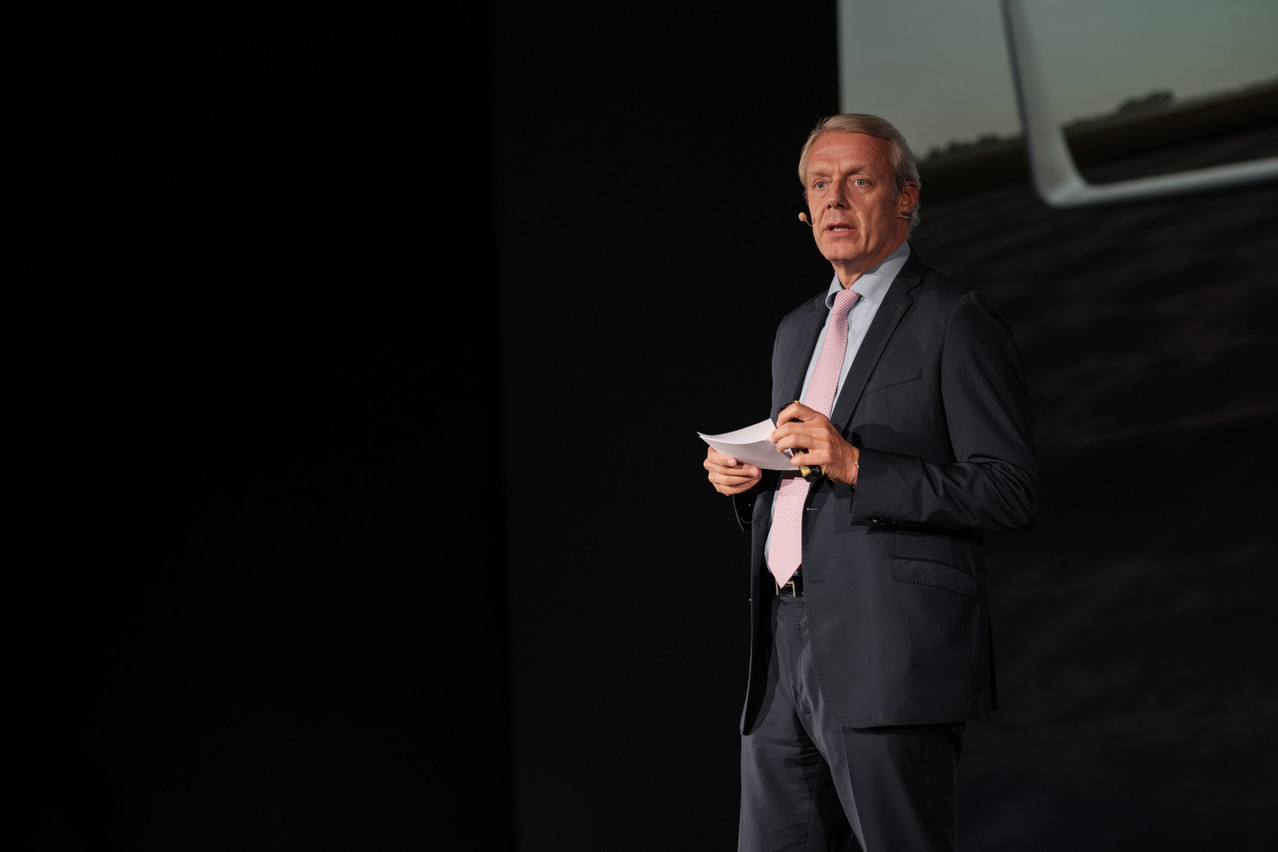
Of theory, practice or reality, only the customer's reality matters, said Robert Goeres. (Photo: Patricia Pitsch / Paperjam)
The room also fell silent before a composed voice. Robert Goeres (Goeres Horlogerie) necessarily took his time. "The customer doesn't buy an object, he buys an experience, an exclusivity. In high-end watchmaking, "digital hyper-personalisation" is giving way to "human hyper-personalisation". He distinguishes between "theory, practice and reality" - "the only one that counts is that of the customer". And he concludes, with a wry smile, with a phrase that has become a refrain: "In the early 1970s, the Chinese Prime Minister was asked what he thought of the French Revolution. He replied that it was too early to say. What about the customer experience revolution? It's too early to say."
From this 10x6, we leave with a compass. The experience is not a channel, "it's the whole relationship". It's written in an early warning e-mail before the postman rings, in an honest QR code, in a button sewn on quietly, in an adviser who picks up the phone, in a level completed and shared, in a BIM plan that soothes a future homeowner, in a hot chocolate you never forget. And what if the revolution was just that: putting time, consideration and precision back where process used to be? Post's stat proves it, Villa Pétrusse's smile embodies it, Goeres' prudence prevents us from confusing speed with haste.