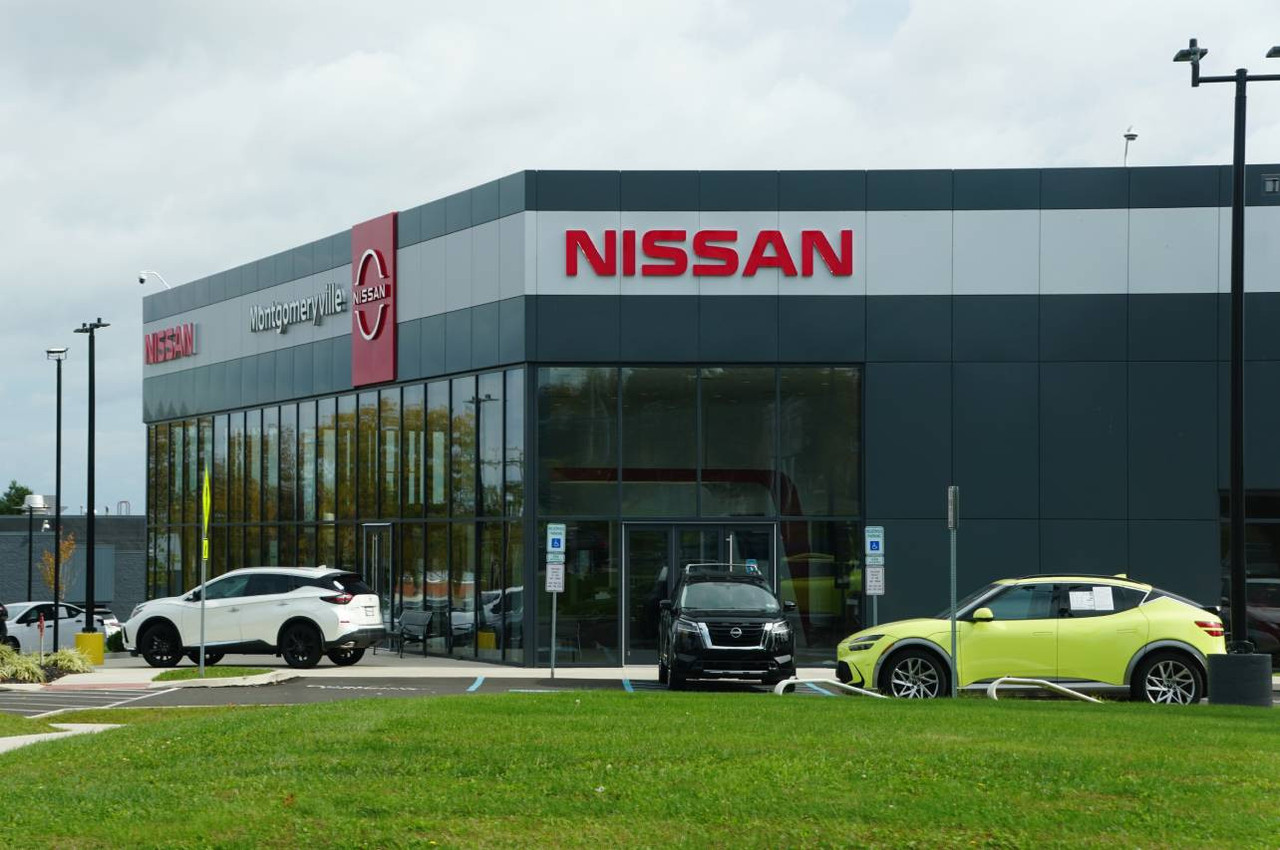
On Tuesday 13 May, Ivan Espinosa did not mince his words in front of the press. Nissan’s new CEO was blunt: “We have a very high cost structure. The global market is volatile and unpredictable, which makes planning and investment increasingly difficult.” The Japanese carmaker is preparing for drastic cuts.
To stem the bleeding, Nissan plans to close seven plants and cut 20,000 jobs by 2027, representing 15% of its global workforce. Investments will be refocused, as part of a strategy of deliberate contraction. Renault, which holds 35% of the capital, sees its partner entering a zone of severe turbulence. It expects Nissan’s depreciation and restructuring costs to have a negative impact of €2.2bn on its accounts for the first quarter of 2025.
The offbeat fiscal year, which ended 31 March, saw a loss of 671bn yen (€4.1bn euros). It’s one of the worst in the group’s history, just behind that of 1999-2000.
A double whammy
The damage is deep. The group is mired in a dual structural and cyclical crisis. In the space of a year, Nissan’s share price has fallen by 40%. Its massive indebtedness is a cause for concern: rating agencies have downgraded its debt to speculative grade. Moody’s points to inadequate profitability and an ageing catalogue of models, taking a toll on sales.
Added to this is an unfavourable global environment. Persistent inflation, geopolitical tensions, trade war: Nissan is feeling the full force of the 25% tariffs imposed by the United States on imported vehicles. The US market accounted for 30% of Nissan’s global sales last year, with almost half of all vehicles imported from Japan and Mexico. Amongst Japanese manufacturers, Nissan will probably be the hardest hit, Bloomberg Intelligence analyst Tatsuo Yoshida tells AFP.
Even future plans are being called into question. The company has just abandoned a project for a billion-dollar lithium battery factory in southern Japan, which had barely been validated.
A U-turn after a failed marriage
Fragilised for some time, Nissan at the end of 2024 began discussions with Honda for a merger that would have created the world’s third-largest carmaker. The project fell through in February, taking with it CEO Makoto Uchida, who was then replaced by Espinosa. Espinosa who to beef up the turnaround plan. “Nissan must prioritise its continuous improvement with increased urgency,” he emphasised.
By reducing its network of factories from 17 to 10, cutting investment and slashing its workforce, Nissan hopes to return to balance. But at what cost? After all, the question is no longer how Nissan will bounce back, but whether it will be able to. “We wouldn’t be doing this if it wasn’t necessary to survive,” the CEO concluded.
This article was originally published in French.