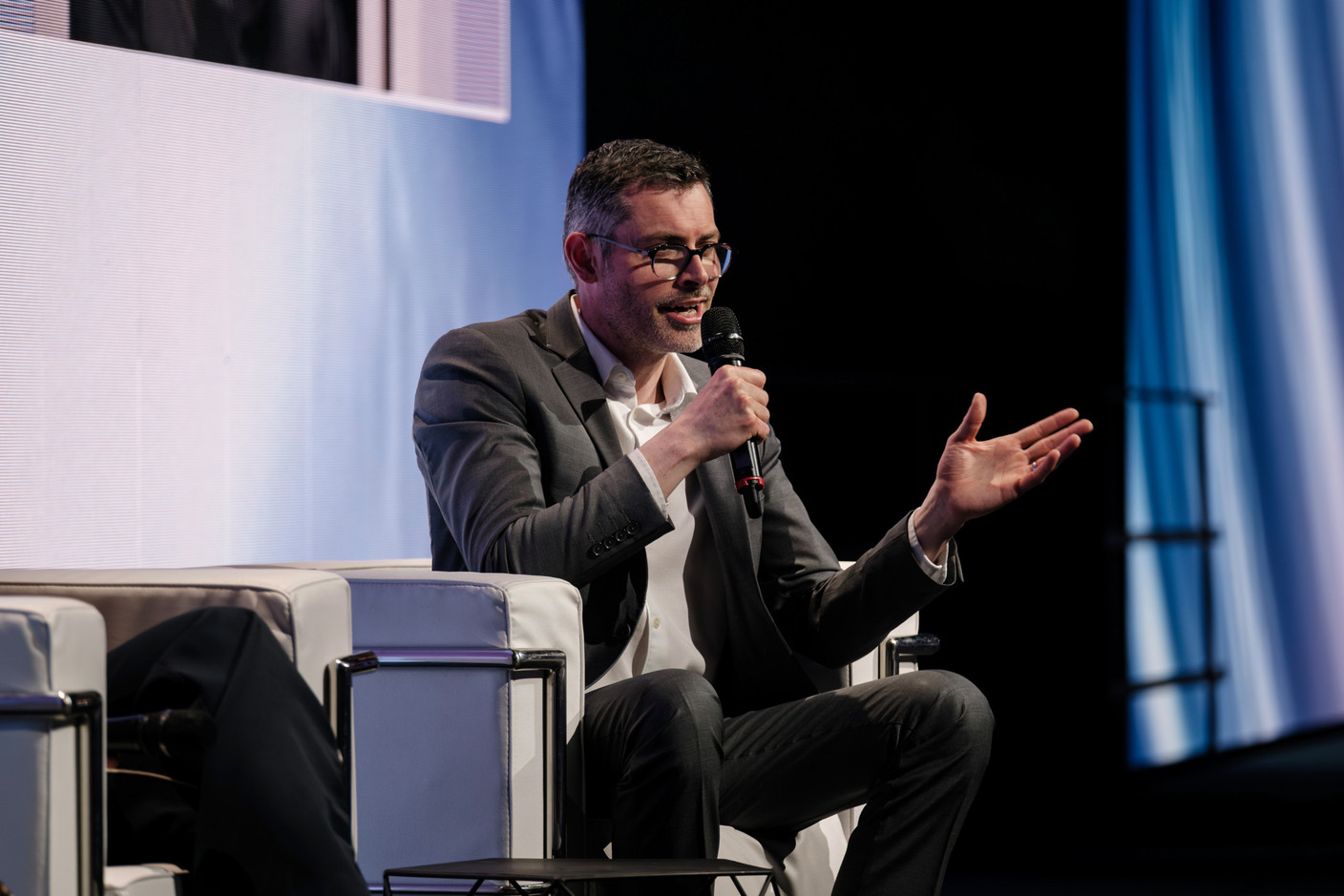
AI is driving a transformation in the financial services sector, noted 
Ebay is known mostly as an online marketplace, said panellist Michael Pechner, managing director and board member at Ebay. But there’s a huge amount of data that can be used to design better search tools, support sellers in the listing process and detect misleading images and potential counterparts. “AI is really a growth vector,” he said, and can help protect sellers, buyers and the platform.
“AI isn’t just a competitive edge anymore,” said Depowise managing director and panellist Mélanie Moos. “It’s the baseline for survival.” The fintech, which automates oversight and transaction monitoring for the asset servicing sector, uses AI in three pillars: product, implementation and development. Concrete uses include the use of AI to read and process capital calls, extract information, integrate with legacy systems, automate processes and review code. It’s a “strategic need” for companies.
Artificial intelligence is not just for development happening behind the scenes. It can also boost the user experience. At Ebay, for instance, AI is used to “smooth out” the customer journey, said Pechner. Thanks to the tech’s capacity to predict behaviour, customers can get what they actually want, whilst insight from users can be integrated into the platform to improve it. “The opportunities are infinite, and we’re only scratching the surface.”
And from the risk management and fraud detection perspective, added Pechner, large language models are helping the e-commerce platform to combat fraud. Behavioural data, logins and purchase histories can be used to identify fraud and set out preventative strategies.
In the banking sector, AI can indeed be used as a shield against fraud and to conduct anti-money laundering monitoring, noted Nicolas Chaperon, chief information officer at ING, as well as to boost productivity. But it’s also a threat, with cybercriminals themselves employing AI to carry out fraud attempts. “It’s an AI versus AI battle.”
No matter how AI is employed, it’s key to adapt products to the needs of clients and the Luxembourg market, said Moos. Proper education around the new technology is essential, added Chaperon. And for Pechner from Ebay, the key challenges will be how to ensure the ethical use of AI in the future, as well as how best to safeguard data.
Looking ahead: the potential impact of AI
The discussion closed with panellists looking ahead to how the financial services sector could be affected by artificial intelligence in the next two to three years.
Bohdan Mashtalir, co-founder of Spendbase, a platform for companies to optimise their software-as-a-service, cloud and corporate card spending, expects to see finance embedded across other fields, like e-commerce or operational tools. Pre-filling fields using AI, for instance, could make the user experience much smoother--all that a user would need to do is provide their consent to sign up for a service or make a purchase.
Don’t just look at the consumer approach, cautioned Pechner. We’re doing stuff today that wasn’t even possible four months ago. AI can also be used for real-time fraud detection and prevention and to hyper-personalise user experiences, increase efficiency and response rates and generally bring higher value to businesses.
Moos from Depowise had a more human take on the possibilities of AI in the future, arguing that it could help tackle mental issues and improve employee wellbeing. Agentic AI could, for instance, monitor behavioural and emotional patterns and point out potential health or workload issues “even before we know we need it.”
Just a few years ago, Chaperon pointed out, the novelty of a mobile phone was being able to make telephone calls away from your phone or office. Today, look at all the ways we use our mobile phones and how they’re a near-essential part of our lives. Chaperon, in a similar manner, expects to see AI-boosted financial services embedded in daily life.