Why our young people feel it most
In Western Europe and North America, young people are significantly less happy than they were fifteen years ago, even as the rest of the world’s youth has become happier. Not all screen time is equal—the report distinguishes between platforms that foster connection and those driven by algorithms, influencers, and social comparison, which are the most harmful. For girls, wellbeing is higher below one hour of social media a day and declines with every additional hour. The average adolescent is already spending 2.5 hours—more than double that threshold.
And if screens are part of what is crowding out joy, the question becomes: what should replace them?
Not one answer, but one foundation
Closing the generational wellbeing gap requires action across multiple fronts—in healthcare, in work culture, in digital policy. We have explored some of these in previous columns.
But one place builds the capacity for all the rest: education.
Education is where habits form, values take root, and relationships with the world begin. The emotional habits formed in a classroom—or a forest—don’t stay there. They travel into every workplace, relationship, and difficult moment that follows. Get it right, and you raise adults who are more resilient, more connected, and more capable. That is why education is not just one lever among many. It is the one that moves all the others.
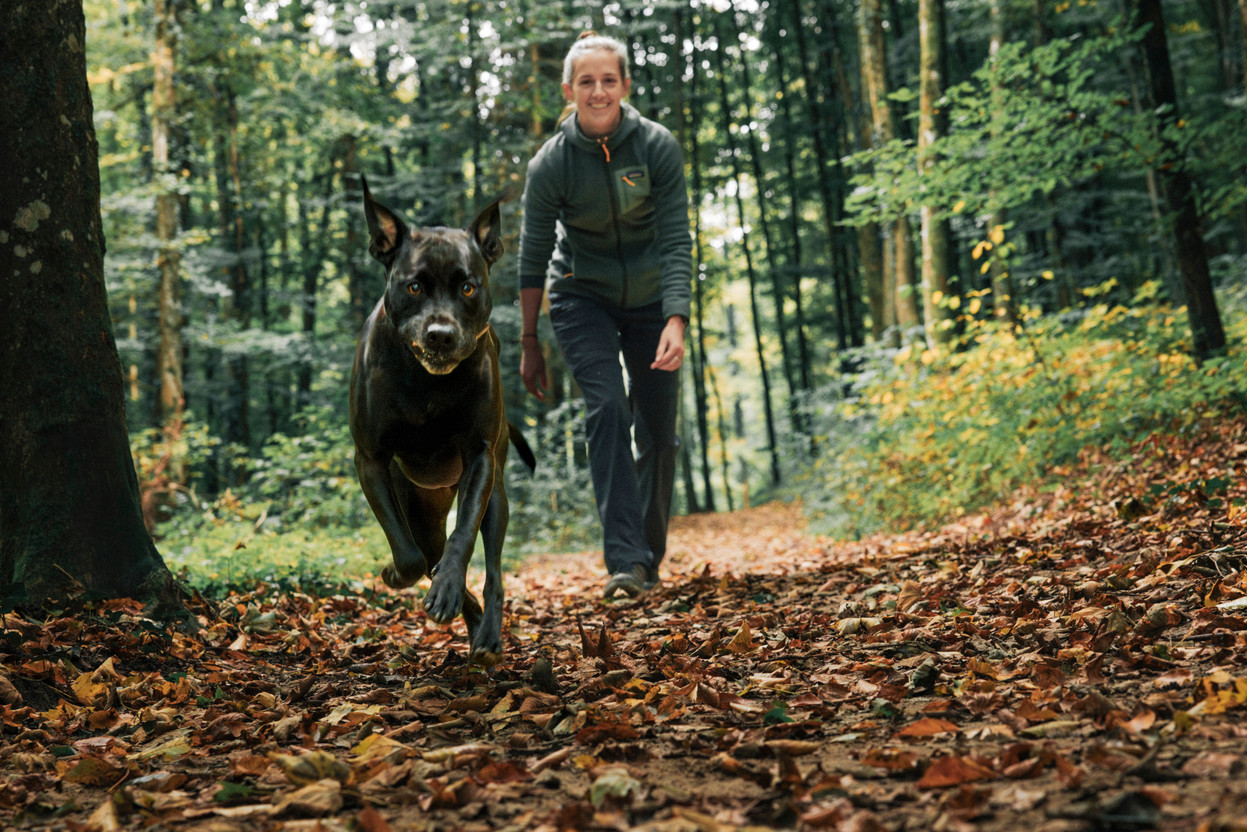
And the most powerful, most accessible tool education has right now is also the oldest one: nature. One we simply forgot—when we moved children from forests to fluorescent-lit classrooms, from unstructured afternoons outside to structured hours in front of screens.
What the research tells us
The contrast between what screens offer children and what nature offers them could not be more striking.
Research shows that children use five times more words when playing outdoors than indoors. They laugh more. They develop richer, more complex language—not from instruction, but from encounter: a beetle, a puddle, an uneven surface, another child trying to build the same thing.
Children with regular nature contact manage difficult emotions more effectively, recover from stress more quickly, and show lower levels of anxiety and depression. They arrive at school more focused, more curious, more ready to learn.
A nature-based learning programme run right here in Luxembourg—at the International School of Luxembourg—found that students’ enjoyment of learning doubled when time in nature was embedded in the school week. One student summed it up simply: “I can cope with Monday to Thursday if Fridays are going to be like this.”
That a child must negotiate four days to earn one tells us everything about what we’ve been asking of them—and what we could give instead. The outcomes were not marginal: joy, confidence, curiosity, calm, and engagement all improved. The programme has since been adopted school-wide.
The World Happiness Report itself finds that when young people have a strong sense of belonging—to a place, to others, to something real—the gains in their wellbeing are far greater than anything achieved by simply reducing screen time. This matters. Because the goal is not to raise children who have never seen a screen. It is to raise children who are rooted enough that screens don’t define them. Nature builds that rootedness. It draws children from passive consumption into active presence—and in doing so, gives them something no algorithm can: a self that exists beyond the feed.
What education needs to do next
Luxembourg’s Ministry of Education is already moving in the right direction, with a national campaign on screen use and plans to integrate health and wellbeing across the primary school curriculum in the next school year. Exactly the kind of thinking the moment requires.
The next step is to go further: to embed outdoor learning and regular nature contact into school life not as an enrichment activity, but as a structural pillar—on par with literacy and mathematics. The tool is there. It has always been. We just need to remember to use it.
So what if the forest became not an addition to our schools, but an extension of them? What if every child had a little bit of Friday to look forward to, every day?
That may be how Luxembourg closes the gap—not just between our children and nature, but between how we assess our lives and how we actually feel living them.
The science is clear. The political will is growing. And the children are waiting—not for another screen, but for a forest, a garden, a patch of ground to call their own. And when they find it, chances are, so will we.