Modest households are not necessarily adopting less healthy eating habits than affluent households, but the cost of a balanced diet weighs much more heavily on their budgets. This is the conclusion of the latest Statec study, which looks at the breakdown of household food expenditure according to income. The analysis compares the lowest 20% of households (less than €2,800 of disposable monthly income per person) with the highest 20% (more than €6,200). Here are the three main findings of the survey.
Restaurants: a more affordable luxury for affluent households
The first finding is that the places where food is consumed differ markedly according to income. Wealthier households spend 43.4% of their food budget in restaurants, compared with 35% for lower-income households. They also spend more in bistros, cafés and discos (15.4% compared with 13.7%), in company canteens (8.5% compared with 7.7%) and in fast food outlets (12.1% compared with 10.6%).
Conversely, lower-income households spend a higher proportion of their food budget on school canteens, a figure that stands at almost 19%, compared with just 11% for wealthier households. They are also more likely to opt for takeaway or delivered meals, spending 13.8% of their budget on this, compared with 9.5% among the wealthiest households.
Discount shops: a haven for the budget-conscious
The study also reveals a contrast in the places where households do their shopping. Unsurprisingly, affluent households prefer supermarkets, where they spend 77.3% of their food budget, compared with 60.3% for modest households. The latter, in search of the best bargains, turn more to discount shops, which account for 27% of their food expenditure, far more than the 3.5% spent by affluent households.
Local markets, which are often associated with fresh, quality produce--but are more expensive--appeal mainly to affluent households, who spend 15.7% of their budget on them, compared with 10.8% for modest households.
Meat: a heavier budget burden for modest households
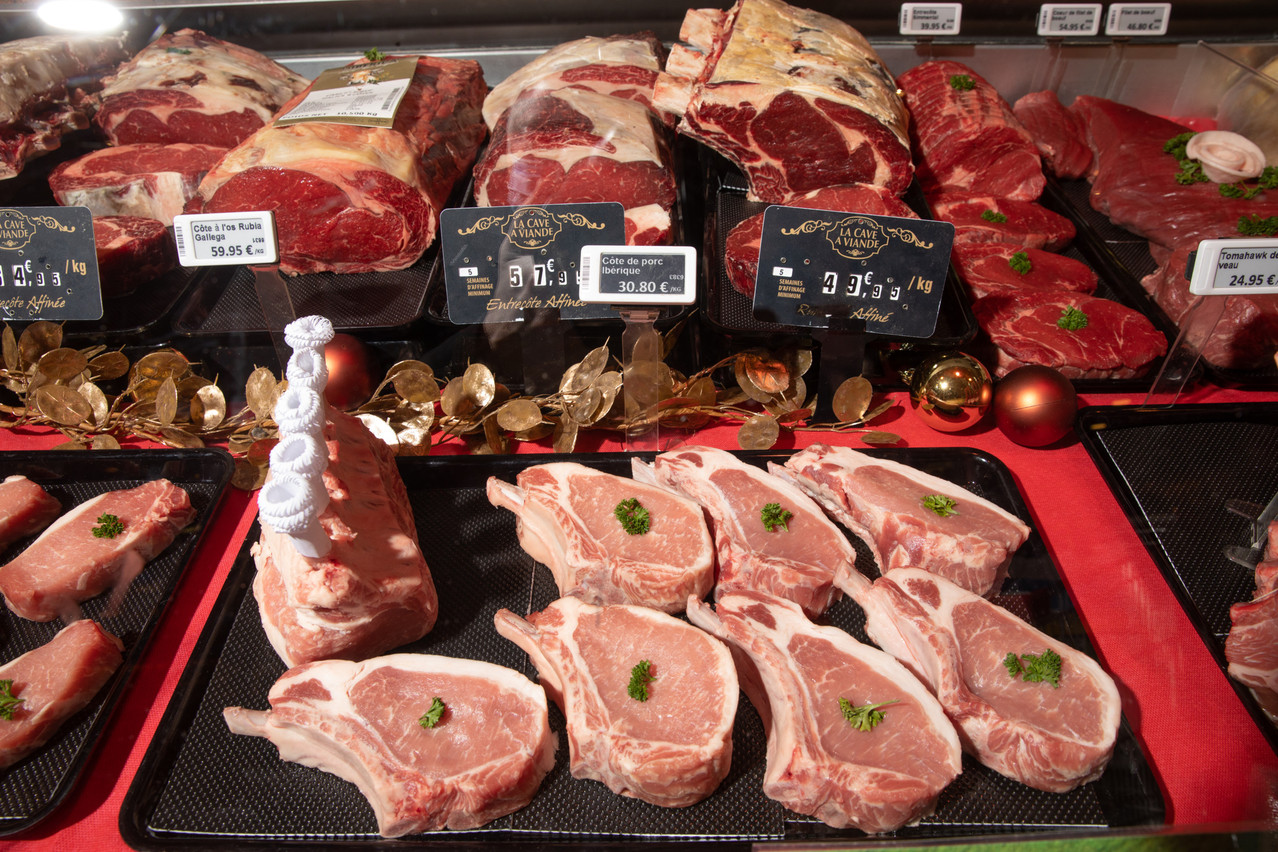
Income differences also influence food choices. Modest households spend a higher proportion of their budget on white meat (6.0% compared with 2.8% for wealthier households) and red meat (7.2% compared with 5.4%). These differences are mainly due to budgetary constraints: buying animal proteins represents a greater budgetary effort for the less well-off. Spending €100 on meat is equivalent to more than 3% of disposable income for a household earning €2,800, compared with barely 1% for a household earning €6,200. Modest households do not necessarily consume more meat, but it does weigh more heavily on their finances and forces them to make trade-offs, such as reducing their consumption of fruit and vegetables because they cannot afford to do so.
Products such as sugary drinks (5.2% compared with 3.8%), oils and fats (1.4% compared with 0.9%) and processed foods (4.3% compared with 3.4%) also account for a larger proportion of the budgets of modest households.
Wealthier households, on the other hand, focus on products that are often considered healthier and more ethical. Fruit and vegetables account for the lion’s share of their budget (18.7% of food expenditure, compared with 17.4% for modest households), as do fish (6.6% compared with 5.8%). It should be noted, however, that the differences between these social categories remain relatively small. It is on organic products, which are reputed to be more expensive, that the difference is most pronounced (5.6% compared with 2.1%).
However, affluent households do not neglect gourmet pleasures either, spending 14.4% of their budget on sweet products, compared with 12% for less affluent households.
This article was originally published in French.