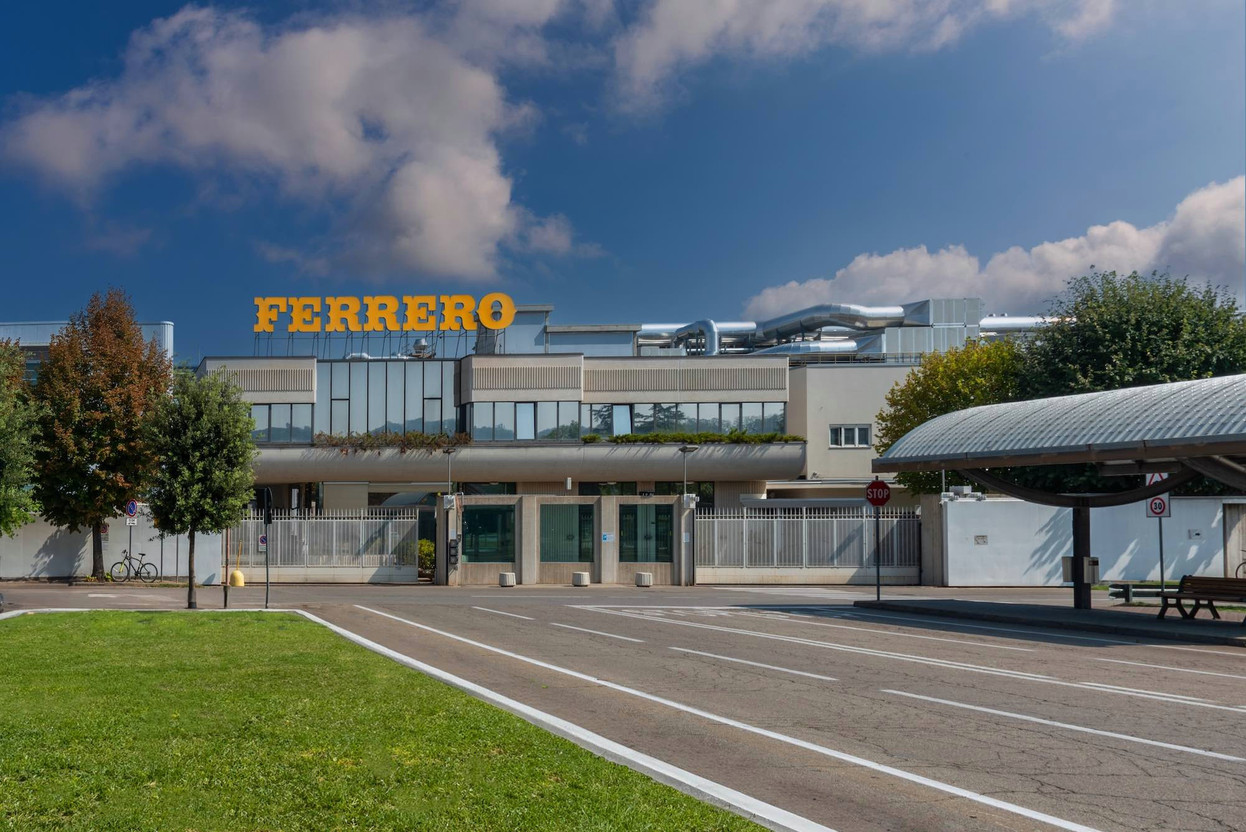
Reducing the environmental footprint of a chocolate or a jar of spread begins long before it reaches the supermarket. For Ferrero, it involves the farms supplying cocoa, milk and hazelnuts, as well as factories, packaging and transport.
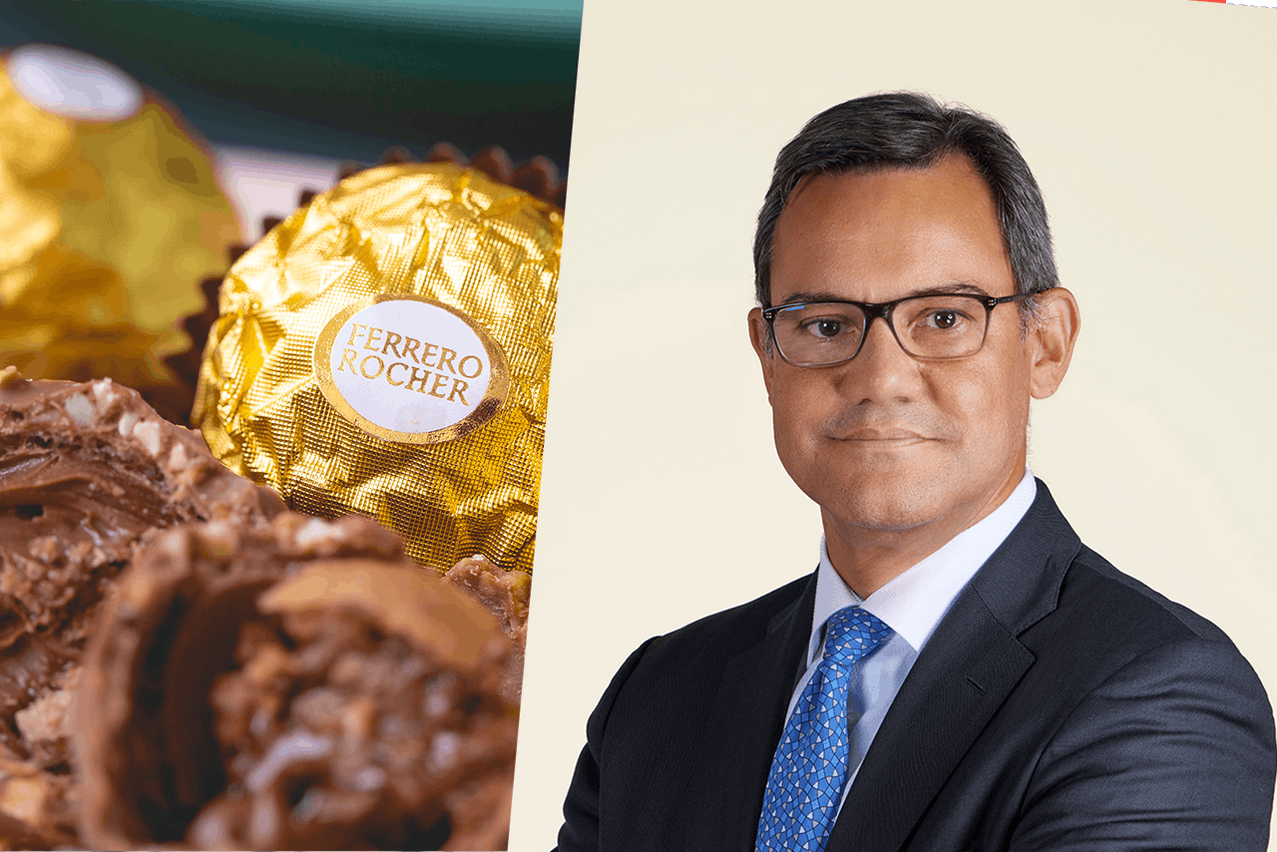
Mario Abreu oversees the group’s environmental and social commitments as Head of Group CSR and Sustainability. Based in Luxembourg, he joined Ferrero in 2020 after 21 years at Tetra Pak. In a rare media interview, he spoke to Paperjam following the publication of the group’s 2024/25 sustainability report.
The report shows progress in some areas: emissions from Ferrero’s operations and purchased energy fell by 7,2%. Its total reported footprint, however, remained broadly stable, rising by 0,4% to 10,23 million tonnes of CO₂ equivalent – a movement Abreu attributes mainly to changes in how emissions are calculated.
With around 95% of its footprint coming from its wider supply chain and other indirect activities, much of Ferrero’s challenge lies beyond its factories. How does it translate its commitments into measurable reductions while continuing to expand?
Measuring Ferrero’s footprint
What does being head of sustainability involve beyond producing the annual report?
Mario Abreu: – “My first responsibility is to ensure that sustainability is embedded in the group’s business strategy. Then we need to execute it, working with people across procurement, industrial operations and packaging.
Here in Luxembourg, my small team focuses mainly on reporting, disclosure and carbon accounting. We normally plan eight to ten years ahead and are currently looking towards 2035, with a particular focus on the next three years because of the budget implications.
Your report distinguishes between Scope 1, Scope 2 and Scope 3 emissions. What do these mean?
“Imagine a boiler at home. If you burn gas to heat water, the emissions occur there: that is Scope 1. If you use electricity from the grid, the emissions associated with generating that electricity occur elsewhere: that is Scope 2.
Scope 3 covers the other activities around our business, including producing and transporting ingredients, logistics, purchased services and advertising.
It represents approximately 95% of our footprint. That proportion also reflects the reductions we have already made in Scope 1 and Scope 2: as those become smaller, Scope 3 accounts for a larger share.
How do you interpret the slight increase in total emissions in 2024/25?
“I would describe emissions as relatively stable, with an increase of 0,4%. We did not make significant progress in reducing the overall footprint that year.
Many elements enter carbon accounting, including estimates that convert spending on activities such as advertising into emissions. The product mix also matters: even if we sell less overall, selling more of certain products can increase the footprint.
Our targets are for 2030, so we need to accelerate our efforts, particularly on Scope 3.
How do you distinguish better measurement from a real reduction in emissions?
“When you change methodology, you cannot call the resulting change an improvement or a deterioration. You need to recalculate the baseline and assess progress from there.
We work with HowGood to replace broader published estimates with information more closely linked to suppliers. A country average might give one footprint for peanuts grown in Argentina, while our supplier’s figure could be higher or lower.
Using that supplier’s data can change our reported footprint without a physical change in production. But it allows us to understand the figure, work with the supplier and identify reductions.
Where are the main opportunities to reduce supply chain emissions?
“Dairy is individually the largest source of our Scope 3 emissions. We use milk in chocolate and many Kinder products, so we work with suppliers to address emissions associated with raising cows and producing milk.
Our work with suppliers such as Arla involves thousands of farmers. We need to understand the options for each farm, including changes to cows’ feed or ways to capture methane and prevent its release into the atmosphere.
Growing while cutting emissions
Within your factories, how much further can electrification go?
“We have already replaced a lot of gas-powered equipment, including boilers. However, processes such as roasting hazelnuts or cocoa present technical difficulties.
Roasting with a flame is different from roasting with electricity. Think of roasting almonds in a pan or in an oven: the taste is different.
Where changing equipment affects consumers’ appreciation of the product, we need alternatives. We have been working with an energy partner on a plant in Italy to produce biomethane from food and agricultural waste as an alternative to natural gas.
We try to improve the carbon footprint of every product, but the balance of the portfolio remains closely connected to consumption.

Would Ferrero favour products with a lower carbon footprint?
“We try to improve the carbon footprint of every product, but the balance of the portfolio remains closely connected to consumption. We can develop alternatives, as we have done with Nutella Plant-Based. But if consumers really like classic Nutella, we will continue to sell classic Nutella.
We look at how to reduce its footprint, including through packaging. We try to provide products consumers enjoy while improving the overall footprint.
The moment that a new company becomes part of Ferrero, all our global commitments and global targets apply to this business as well.

How do acquisitions affect your commitments? Can environmental shortcomings stop a deal?
“We have acquired several businesses in recent years, including WK Kellogg in North America and, before that, Wells Ice Cream. We continue their operations, but bring them under Ferrero’s goals and commitments.
We carry out due diligence before every acquisition, including looking at environmental permits and basic legal requirements. However, not having Segregated palm oil, certified chocolate or a climate target does not in itself stop us from acquiring a business. Once it becomes part of Ferrero, our global commitments apply.
For carbon accounting, we need to revisit our baseline and include the acquired business in the starting point against which we measure reductions. We have not yet incorporated WK Kellogg into that baseline. I expect us to do that in 2027.
Acquisitions can also bring sourcing indicators down. We reached 100% RSPO-certified Segregated palm oil sourcing in 2015, but acquired businesses do not necessarily have the same practices. We work to bring the percentage back up, with additional action required if it falls below our 90% minimum threshold.
Supporting farmers in a changing climate
Has climate change forced you to change sourcing regions?
“Not yet. We continue to have access to the volumes we need in the regions where we source. But we need to prepare for changing conditions.
Could changing where you buy cocoa improve your carbon footprint?
“If it were just a matter of finding a better carbon footprint for the company, we could source more cocoa from Ecuador or Ghana instead of Côte d’Ivoire. But then the question is how to ensure a just transition for Ivorian farmers. They need to sell their product; that is part of their subsistence.
Rather than just looking at the numbers, we try to help those farmers become more resilient, prepare for climate change, diversify their income and reduce their footprint.
How do you help farmers become more resilient?
“One example is diversifying crops and income. If heavy rain damages cocoa flowers, another crop can provide a separate source of income. Better fertiliser use can also help avoid run-off and water contamination.
Traceability helps us identify the communities supplying our ingredients and direct programmes towards them. Our partnership with Save the Children in Côte d’Ivoire includes children’s education and village savings and loans associations that help women develop businesses. The communities do not necessarily sell all their cocoa to us, but we know some of what we buy comes from them.
Palm oil under scrutiny
Ferrero regularly faces criticism over its use of palm oil, particularly because of its links to deforestation. Why do you continue to use it, and have you compared its environmental impact with alternatives?
“Palm oil has the highest yield in terms of kilograms of oil per hectare among vegetable oils. Other oils used instead would require significantly more land.
We use palm oil for different reasons, including taste and formulation. It has acquired a bad reputation because of deforestation. What we try to do is ensure that our palm oil is RSPO-certified and Segregated, because we want to make sure it is not connected to deforestation. As we acquire businesses, our Segregated share goes down a bit and then we work to bring it back up.
We have been very supportive of the EU Deforestation Regulation.

We have been very supportive of the EU Deforestation Regulation. Ferrero was one of the companies asking for no further postponements. One reason is that we are very confident that our palm oil sourcing is not connected to deforestation. If the EU says palm oil linked to deforestation cannot enter the market, that is positive. It reduces palm oil’s bad reputation.
But its reputation also stems from concerns about its impact on people’s health. What is your response?
“I don’t have any evidence that says that, but that’s not my field. My focus really is on the environmental and social side of palm oil.
Approximately 95% of your palm oil sourcing is Segregated and 5% Mass Balance. What is the difference?
“Segregated means that the oil comes from certified plantations and has not been mixed with oil from uncertified sources. The RSPO standard includes environmental and social principles.
Mass Balance means there is a combination. Within that 5%, it is impossible to distinguish how much comes from certified sources and how much does not. It comes in a mix.
So there is a possibility that some of that oil does not meet the same environmental and social standards?
“There is a possibility. But you can still know the potential sources, even if some are certified and others are not. We use satellite monitoring to check that deforestation is not happening around those sites.
We compare satellite imagery, and if patches of trees are missing near those plantations, we can identify whether that is connected to our suppliers and act on it.
Climate change is definitely impacting prices.

Recyclability
Why does packaging designed for recycling not always qualify as recyclable in practice?
“Designing packaging for recycling means it meets technical standards. But not every technically recyclable package will be accepted by every household collection programme.
A rigid plastic box and a flexible wrapper can have different outcomes. A wrapper may use a single material and be technically recyclable, but still fall outside the collection system available to consumers.
The indicator for recyclability in practice and at scale applies thresholds concerning access to recycling and actual recycling levels. We do not trace each package after household disposal; we assess recyclability through those methodologies and the systems available.”