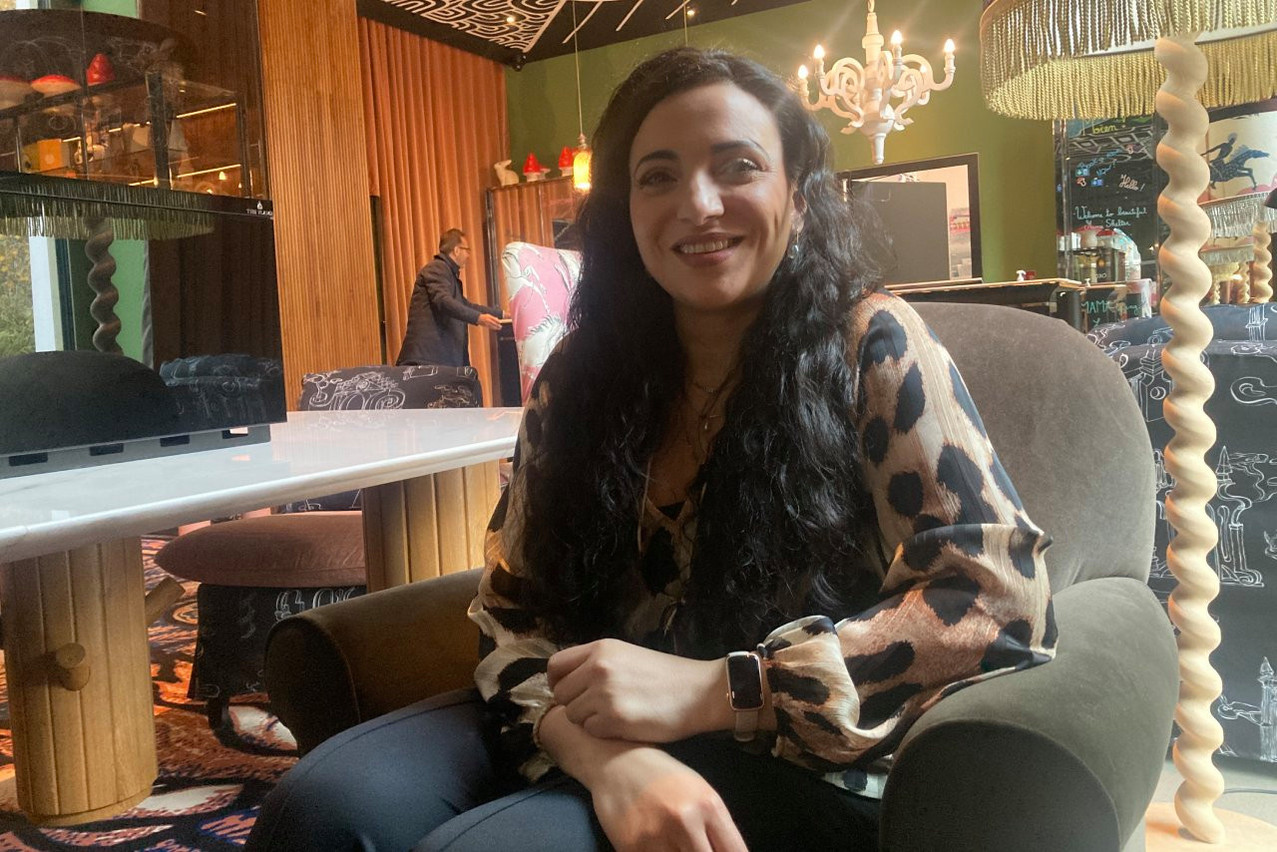
Officially launched in mid-October, the Luxembourg Franchise Association (LuxFA) describes itself as the country’s first organisation dedicated to the promotion and development of franchising. Its founder and president, Malika Lamamra, who is also managing director of XpandCo (whose core business is franchising), explains the driving forces and advantages of this business model.
You say that franchising could become one of Luxembourg’s next growth engines. What makes you think this model should play a key role in the country’s economic landscape?
Malika Lamamra. - “For me, franchising is an entrepreneurial catalyst. People think it’s just one element among others, but it’s totally integrated into the Luxembourg economy. People associate franchising with the commercial sector, but it’s much broader than that. There are franchises in B2B, logistics, cryptocurrency, training, coaching... Franchising can be found in all sectors and all economic verticals.
Let’s stay with physical commerce. We know that these are turbulent times. What do you think explains why franchising is faring better than independent retailing?
“Franchising allows you to maintain stability. Take the case of a restaurant: most of the time, self-employed people have a 50% 'chance' of stopping after about 4 years in business. By comparison, 90% of franchises still exist after 2 years, and 85% after 4 years. When you start out as a franchisee, you benefit from a business model that gives you a whole structure. The franchisor has already wiped the slate clean for the entrepreneur. The independent remains independent, even if he has to respect the codes and framework of the franchise. In my view, franchising provides security for entrepreneurs who are starting out for the first time. We see business school students coming out and saying to themselves: 'I’d like to have my own business model, but I don’t feel totally confident doing it on my own.' So they turn to franchising.
When they go to the banks, the entrepreneur arrives with a recognised model and with the results of several entities. That’s reassuring.

Aside from this 'plaster already wiped off' aspect, what additional levers or security does franchising offer compared with setting up a 'classic' business?
“Support. Particularly through training. In all franchises, this is an essential parameter. There’s also the 'research and development' aspect, because a good franchisor, for me, is someone who renews himself on a daily basis and feeds back information from the network to have a positive impact on the business, restaurant or hotel he’s in charge of. This also allows us to gather as much information as possible about our customers.
There is also the strength of the group, the sharing of IT tools, structured tools that enable expenses to be pooled. I’ll give you an example: I’m working with a franchise that specialises in automotive training and wants to expand into Luxembourg. They developed a CRM that cost them 150,000 euros. I can’t see a novice entrepreneur buying such an expensive CRM in addition to the simulators.
Bref, it’s a question of support, structure, sharing the model and shared marketing. Not to mention the fact that replicating a brand is also a guarantee of quality. In the case of gyms, for example... Once you’ve tried one, you know exactly what to expect in other locations run by the same brand. You find the same machines, the same customer experience. There’s a real focus on the customer experience, which isn’t necessarily a given when you start out as an entrepreneur. It’s reassuring for the customer. But it’s also reassuring for the entrepreneur, who has a tried and tested business model. When they go to the banks, they arrive with a recognised model and the results of several entities. We’re dealing with something concrete.
Franchise applicants start out without always knowing the scope of the business. What are the most common mistakes they make?
“Minimise the real cost and cash flow requirement. And the real investment required on a day-to-day basis. Just because you’ve invested in a franchise doesn’t mean you’ll get results straight away. There’s a buzz effect at the beginning but you have to maintain the quality of service, because the brand name isn’t everything.
So what you’re saying is that the parent company isn’t going to do everything for the independent.
“Exactly. Some applicants ask me if the franchisor lends money to open. When I was developing in Morocco, people would even say to me: ’Are you going to pay me this amount to open a franchise? No: there’s an entry fee, then an overall investment. Future franchisees are sometimes too optimistic in their business plans. You have to be realistic, even pessimistic. If you become the top performer in the network, so much the better. But you shouldn’t overestimate the potential of a franchise. You replicate the brand and use a network, but you have to make the effort as an entrepreneur. And be patient.
In general, I advise keeping entry prices more or less the same in cross-border areas.

Let’s talk about the entry ticket. What, in practical terms, should you expect to pay to open a franchise in Luxembourg? And what factors explain the differences in cost between neighbouring countries?
“Good question. Sometimes we overestimate certain countries by saying to ourselves: 'They have more money, so we’ll raise the entry fee. This has happened in England. Sometimes we change the entry fee, but the franchisee doesn’t understand because he’s asked around. Why is it 25,000 euros in France and 30,000 euros here?'
But what about Luxembourg?
“In general, my advice is to keep entry prices to cross-border zones more or less the same. Otherwise, it wouldn’t make sense for the investor. The amount only changes if the network has grown. The overall investment varies: rents are more expensive, salaries higher, by around 15 to 20%. Property can cost 20 to 35% more. On paper, you might say that it’s not profitable, but don’t forget that in Luxembourg the average ticket is also 30% higher. Some applicants from Metz sometimes say to me: 'Maybe I’ll invest in Luxembourg after all, because the rents are more or less the same'. Shopping centres are becoming very competitive. Gridx, for example, is very attractive. We’re seeing a real response in Luxembourg.
School case... I want to go into franchising, what would you recommend? A well-established brand or a concept that is new to the Luxembourg market?
“It all depends on the initial investment. You can be motivated, have found the premises, all the lights are green, but you have to look at the business plan. It’s not as pleasant as visiting franchises, but it’s essential. Then there’s the question of whether you want to be very structured or not. Big brands like McDonald’s, KFC or Burger King are much more demanding and less flexible than a new brand, which will listen more to the network. A big brand, which has already been seen and reviewed, has an R&D team that tests and passes on new recipes and new menus. This may suit franchisees who don’t necessarily have any ideas. Others want to add their own touch and wonder whether it will be heard. So it depends on how much you want to invest and the spirit in which you approach franchising.
For a brand, what is the advantage of choosing franchising rather than developing on your own?
“The capex. Opening your own store requires a lot of energy. I know branch operators with 20 points of sale. To speed up their development, they go for franchising, because it gives them more partners and more information from the field. Abroad, franchises are more popular than branches. There’s also the human factor: when one company takes over another, the employees don’t necessarily want to change the name. A local entrepreneur who is close to the ground will develop the business better than someone who arrives from abroad thinking that what has worked elsewhere will work here. Knowing Luxembourg is essential to the success of a project.
I want to make the government aware of the problem of franchising, because at the moment everything is based on case law.

What are the most promising franchise sectors in Luxembourg today?
“Personal services, particularly home services, because the initial investment is low and training is quick. Some entrepreneurs don’t want to go back to training and feel more comfortable with simple models. The catering sector is still very buoyant: fast casual, street food - a strong trend among Generation Z. There are also single products. SaaS models are starting to appear. With LuxFA, I want to push franchising in IT and fintech companies, given their massive presence in the country. This is not what we see most. Today, 70% of franchising is catering, 20% retail, 10% B2B.
When a franchise collapses, what does it cost the franchisor?
“Its reputation. The idea is replication and success. If the network is dissatisfied or loses sales, this spreads quickly. Franchisees are entrepreneurs, not employees. There is a risk of legal proceedings. That’s why, when you sign up, you should also analyse the exit conditions. Some people sign without reading the possible penalties.
A 'scandal' can weaken the strength of the network and slow its progress. We saw this in France, for example, with O’Tacos. When an investment fund comes in, it pushes to open more outlets, sometimes too close together. This creates cannibalisation, as with McDonald’s. A franchisee who thinks he’s going to make 2 million in sales may find himself the following year with 500,000 euros less. That’s huge for an entrepreneur.
In the end, what is LuxFA’s raison d’être?
“Until now, certain franchise issues have been absorbed by federations that do not necessarily master the specifics of the subject. There is no structuring law on franchising in Luxembourg, unlike in France or Belgium. Since 2023-2024, I have put together a team, including a vice-president (Ljiljana Kukec) who is a professor at the University of Luxembourg and teaches a 'franchising' module. I myself have been giving courses for two years to raise awareness among students. The idea is also to facilitate access to employment. It’s difficult for older people to get back to work in Luxembourg, so people aged 55-60 contact me and say they want to open a franchise. Since 2000, the population has increased by 64%, and the target is 1 million inhabitants by 2050. So there will be more entrepreneurs. It would be good to promote Luxembourg’s expertise internationally. We know Fischer, but other brands could emerge.
So you’re also calling for a law to regulate franchising?
“Yes. For the moment, it comes under common law, but the sector lacks a legal structure. It won’t happen overnight; we’ll need help from the institutions. I’m meeting with federations, the Chamber of Commerce, confederations... I want to make the government aware of this issue, because at the moment it’s all based on case law.”